THE ADVENTURE COLLECTIVE® · Independent discovery and booking for outdoor travel

Explore Tin City’s converted industrial blocks on a three-hour walking tasting that pairs small-batch wines, housemade pasta and craft spirits. Learn production stories, sample sustainably made pours, and enjoy a family-style lunch while touring Paso Robles’ most industrious artisan neighborhood.
Explore Tin City’s converted industrial blocks on a three-hour walking tasting that pairs small-batch wines, housemade pasta and craft spirits. Learn production stories, sample sustainably made pours, and enjoy a family-style lunch while touring Paso Robles’ most industrious artisan neighborhood.
A winded road of corrugated metal and converted warehouses gives way to the Tin City sign; here the air smells faintly of charred grain, crushed grapes, and citrus peel. Participants step off the sidewalk and into a compact industrial neighborhood where tasting rooms, a distillery and an Italian pastificio pulse with hands-on craft.
Verified experiences and guided adventures in the surrounding area.
Operated by Toast Tours · Paso Robles, California
A winded road of corrugated metal and converted warehouses gives way to the Tin City sign; here the air smells faintly of charred grain, crushed grapes, and citrus peel. Participants step off the sidewalk and into a compact industrial neighborhood where tasting rooms, a distillery and an Italian pastificio pulse with hands-on craft.
Tin City began as a working industrial park on the edge of Paso Robles and has been repurposed in recent decades by small producers who prioritized low-volume, high-quality products. The geology beneath is Paso Robles’ mix of alluvial fans and ancient marine terraces—soil that influences vineyards regionally—while the local culture is intensely maker-driven: winemakers, distillers and artisans swapping techniques and ingredients in shared warehouses.
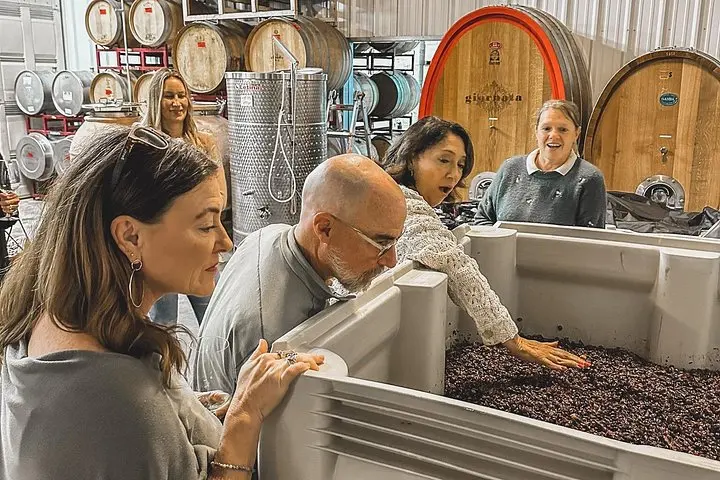
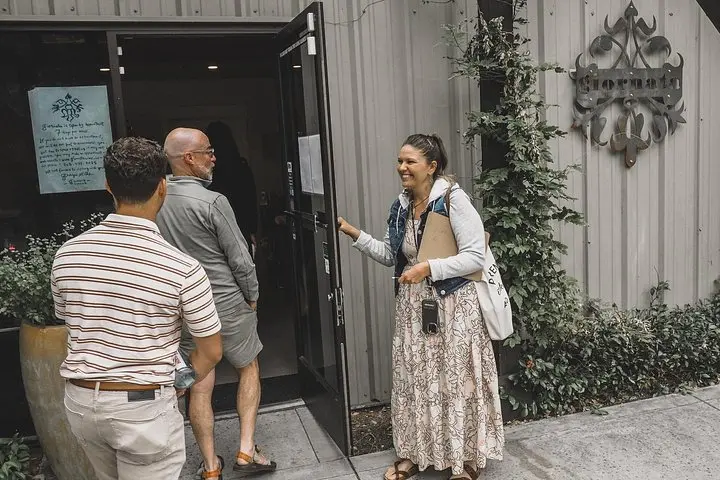
On this three-hour walking tour guests move between boutique wineries that emphasize sustainable viticulture and old-world methods, a pastificio serving housemade pasta, and a distillery producing small-batch spirits. Conversation centers on production techniques—amphora fermentation, small-lot distillation—and the practicalities of running a tasting room in a reclaimed industrial zone.
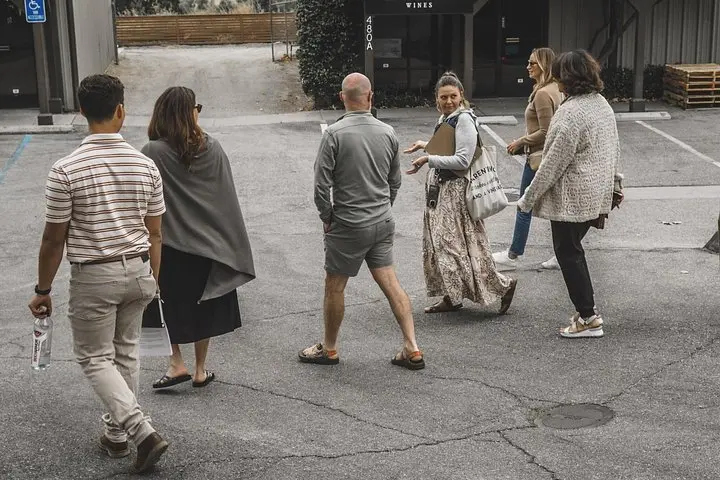
Practical guidance: wear sturdy, closed-toe shoes for short concrete walks and uneven thresholds. Bring ID for alcohol samples, a small payment method for market purchases, and a reusable water bottle to stay hydrated between tastings. Tours are accessible and family-style lunch is included, but this is not recommended for pregnant travelers. Best between late morning and afternoon for optimal light and open tasting rooms; expect approachable pours, social seating and chances to buy bottles or pantry items to take home.
Yes—Tin City’s paths and interiors visited on this tour are wheelchair accessible; accessibility is confirmed in the tour details.
Yes—samples at each location and a family-style lunch with water are included; additional beverages can be purchased at lunch.
Yes—many producers sell bottles, canned cocktails and pantry items; bring a card or cash for purchases.
The tour accommodates families, but it is not recommended for pregnant travelers due to alcohol samples; underage guests should be supervised.
Toast Tours operates guided outdoor trips and adventures with an emphasis on safety, stewardship, and memorable experiences.
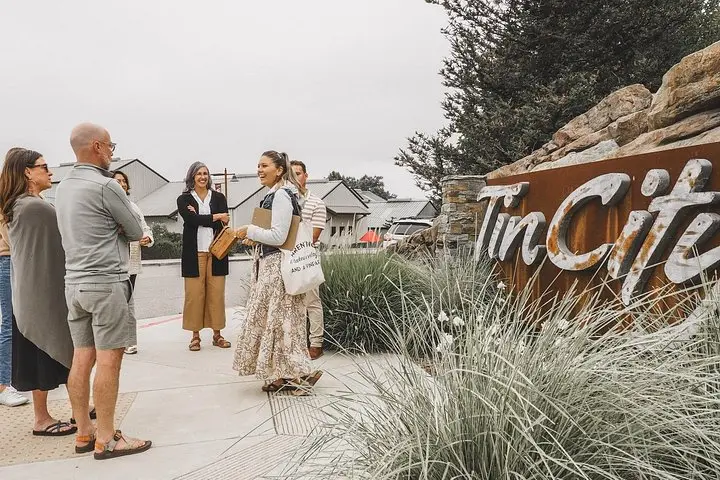
A winded road of corrugated metal and converted warehouses gives way to the Tin City sign; here the air smells faintly of charred grain, crushed grapes, and citrus peel. Participants step off the sidewalk and into a compact industrial neighborhood where tasting rooms, a distillery and an Italian pastificio pulse with hands-on craft.
A winded road of corrugated metal and converted warehouses gives way to the Tin City sign; here the air smells faintly of charred grain, crushed grapes, and citrus peel. Participants step off the sidewalk and into a compact industrial neighborhood where tasting rooms, a distillery and an Italian pastificio pulse with hands-on craft.
Tin City began as a working industrial park on the edge of Paso Robles and has been repurposed in recent decades by small producers who prioritized low-volume, high-quality products. The geology beneath is Paso Robles’ mix of alluvial fans and ancient marine terraces—soil that influences vineyards regionally—while the local culture is intensely maker-driven: winemakers, distillers and artisans swapping techniques and ingredients in shared warehouses.
On this three-hour walking tour guests move between boutique wineries that emphasize sustainable viticulture and old-world methods, a pastificio serving housemade pasta, and a distillery producing small-batch spirits. Conversation centers on production techniques—amphora fermentation, small-lot distillation—and the practicalities of running a tasting room in a reclaimed industrial zone.
Practical guidance: wear sturdy, closed-toe shoes for short concrete walks and uneven thresholds. Bring ID for alcohol samples, a small payment method for market purchases, and a reusable water bottle to stay hydrated between tastings. Tours are accessible and family-style lunch is included, but this is not recommended for pregnant travelers. Best between late morning and afternoon for optimal light and open tasting rooms; expect approachable pours, social seating and chances to buy bottles or pantry items to take home.