THE ADVENTURE COLLECTIVE® · Independent discovery and booking for outdoor travel

Walk Georgetown’s brick streets and sample acclaimed local bites while a guide connects each tasting to the neighborhood’s port-town past. This three-hour, small-group tour mixes culinary stops with compact urban history and practical local tips.
Walk Georgetown’s brick streets and sample acclaimed local bites while a guide connects each tasting to the neighborhood’s port-town past. This three-hour, small-group tour mixes culinary stops with compact urban history and practical local tips.
A late-morning crowd threads down cobblestones toward the Potomac as the guide gathers the small group outside Green Almond Pantry. The air carries bakery sugar, coffee, and a faint river chill; Georgetown’s brick facades and narrow alleys set the stage for stories that move as quickly as the group does.
Verified experiences and guided adventures in the surrounding area.
Operated by Blue Fern Travel · Washington, DC
A late-morning crowd threads down cobblestones toward the Potomac as the guide gathers the small group outside Green Almond Pantry. The air carries bakery sugar, coffee, and a faint river chill; Georgetown’s brick facades and narrow alleys set the stage for stories that move as quickly as the group does.
Once a 18th‑century port and milling center, Georgetown predates much of Washington, D.C. Its streets reveal layered geology — riverine silt under brick and sandstone bluffs that shaped early docks — and a mercantile culture that drew workers, merchants and immigrants from across the globe. On this three‑hour, eight‑person walk, tastings punctuate history lessons: James Beard‑nominated tarts, an acclaimed local pizza, and other stops that link recipes to the people who lived and worked here.
The narrative balances food and urban history: former flour mill sites, the evolution of 19th‑century shipping lanes into today's waterfront, and how neighborhoods adapted through waves of immigration. Guides point out architectural details and local anecdotes, and a portion of each ticket supports Bread For The City, a community nonprofit.
Practical notes follow the storytelling. Expect roughly 1.5–2 miles of easy walking on sidewalks and occasional steps; the tour runs rain or shine and is wheelchair accessible. Tell the operator about vegetarian needs at booking — the tour cannot reliably accommodate vegan, dairy, or gluten‑free allergies. Dress in layers, bring a refillable water bottle, and allow time for Metro or rideshare to reach 3210 Grace St NW. For visitors who want context with their calories, this tour delivers concise history, approachable eats, and clear local insight.
The tour lasts about three hours and covers roughly 1.5–2 miles of mostly flat city sidewalks with occasional short staircases.
Tastings sufficient for lunch are included; notify the operator at booking if you need vegetarian options—vegan, dairy, or gluten allergies cannot be guaranteed.
Tours are small-group (around eight people) and the route is wheelchair accessible, though notify the operator of any mobility needs in advance.
The tour runs in most weather; you can cancel for a full refund at least 24 hours before departure per the operator's policy.
Blue Fern Travel operates guided outdoor trips and adventures with an emphasis on safety, stewardship, and memorable experiences.


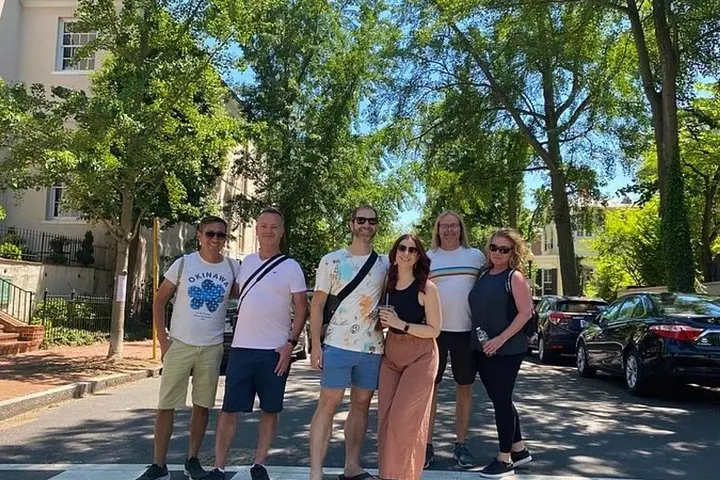

A late-morning crowd threads down cobblestones toward the Potomac as the guide gathers the small group outside Green Almond Pantry. The air carries bakery sugar, coffee, and a faint river chill; Georgetown’s brick facades and narrow alleys set the stage for stories that move as quickly as the group does.
A late-morning crowd threads down cobblestones toward the Potomac as the guide gathers the small group outside Green Almond Pantry. The air carries bakery sugar, coffee, and a faint river chill; Georgetown’s brick facades and narrow alleys set the stage for stories that move as quickly as the group does.
Once a 18th‑century port and milling center, Georgetown predates much of Washington, D.C. Its streets reveal layered geology — riverine silt under brick and sandstone bluffs that shaped early docks — and a mercantile culture that drew workers, merchants and immigrants from across the globe. On this three‑hour, eight‑person walk, tastings punctuate history lessons: James Beard‑nominated tarts, an acclaimed local pizza, and other stops that link recipes to the people who lived and worked here.
The narrative balances food and urban history: former flour mill sites, the evolution of 19th‑century shipping lanes into today's waterfront, and how neighborhoods adapted through waves of immigration. Guides point out architectural details and local anecdotes, and a portion of each ticket supports Bread For The City, a community nonprofit.
Practical notes follow the storytelling. Expect roughly 1.5–2 miles of easy walking on sidewalks and occasional steps; the tour runs rain or shine and is wheelchair accessible. Tell the operator about vegetarian needs at booking — the tour cannot reliably accommodate vegan, dairy, or gluten‑free allergies. Dress in layers, bring a refillable water bottle, and allow time for Metro or rideshare to reach 3210 Grace St NW. For visitors who want context with their calories, this tour delivers concise history, approachable eats, and clear local insight.