THE ADVENTURE COLLECTIVE® · Independent discovery and booking for outdoor travel

Trace the stone lanes and fortified granaries that inspired Star Wars on this 8-hour tour from Djerba. Visit Ksar Ouled Soltane, Douiret and Chenini to see Berber architecture, cinematic landscapes and hilltop villages where history and film meet.
Trace the stone lanes and fortified granaries that inspired Star Wars on this 8-hour tour from Djerba. Visit Ksar Ouled Soltane, Douiret and Chenini to see Berber architecture, cinematic landscapes and hilltop villages where history and film meet.
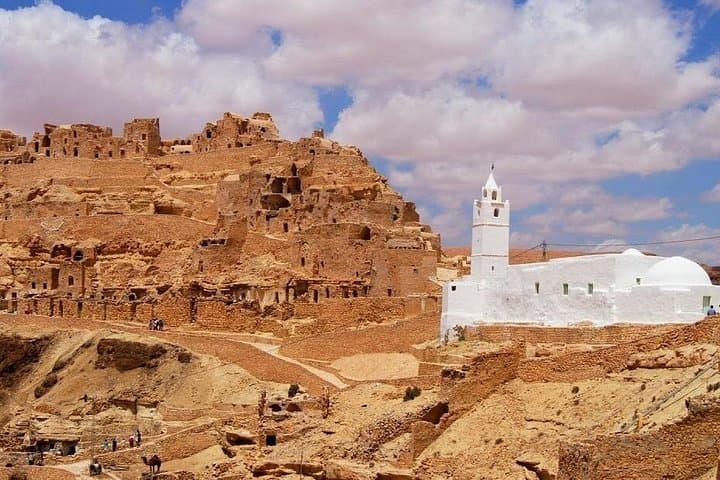
You step out of an air-conditioned van onto sun-baked stone and wind-shaped earth—the kind of landscape that made a galaxy far, far away believable. Low scrub brushes the base of jagged limestone and sandstone ridges; sunlight throws the village walls into high-contrast relief. The guide gestures toward layered granaries stacked like stepped honeycombs, and for a moment the ksar looks both ancient and cinematic.
Verified experiences and guided adventures in the surrounding area.
Operated by TUNISIVISION · Tataouine, Tataouine Governorate
You step out of an air-conditioned van onto sun-baked stone and wind-shaped earth—the kind of landscape that made a galaxy far, far away believable. Low scrub brushes the base of jagged limestone and sandstone ridges; sunlight throws the village walls into high-contrast relief. The guide gestures toward layered granaries stacked like stepped honeycombs, and for a moment the ksar looks both ancient and cinematic.
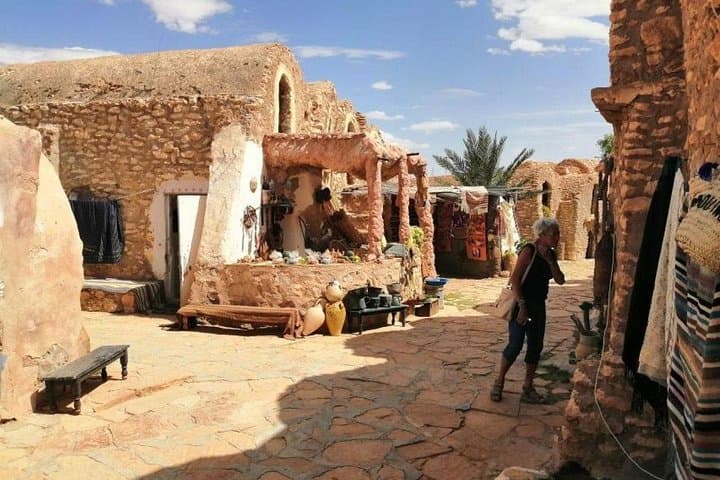
This full-day circuit touches three distinct pieces of southern Tunisian history. Ksar Ouled Soltane and Ksar Haddada are fortified granary complexes—ksour—built by Berber communities to protect grain and families from raids; their vaulted chambers and narrow passages also caught the eye of film crews looking for otherworldly textures. Douiret and Chenini are hilltop villages where centuries of life are evident in weathered stone houses, stepped alleys, and terraces carved into the slope. Geologically the region is arid, with soft sedimentary rock shaped by wind, and culturally it remains a living landscape of Berber architecture and local hospitality.
Practical guidance: the tour runs about 8 hours with multiple short walks—expect uneven stone steps, narrow lanes and intermittent uphill stretches (tens of meters). Wear sturdy closed-toe shoes, sun protection and carry a sun hat and 1–2 liters of water; bottled water is provided. Bring small-denomination Tunisian dinar for cafes or tips and dress conservatively when visiting villages. Photography is welcome but ask before entering private homes. If heat is intense, the guide times stops early morning or late afternoon to reduce exposure. The trip is low in physical demand but high in visual payoff—a cultural drive-and-walk day that rewards curiosity and respectful attention to place.
Yes — the tour typically includes hotel pickup in Djerba; confirm your pickup point when booking.
Some sites allow free access while others request small local fees; verify with the operator whether admissions are covered in your booking.
The itinerary is family-friendly; infants can ride in strollers for vehicle segments but expect uneven walking surfaces at village stops.
Photography is allowed at most outdoor sites, but always be respectful and ask before photographing people or private property.
TUNISIVISION operates guided outdoor trips and adventures with an emphasis on safety, stewardship, and memorable experiences.


You step out of an air-conditioned van onto sun-baked stone and wind-shaped earth—the kind of landscape that made a galaxy far, far away believable. Low scrub brushes the base of jagged limestone and sandstone ridges; sunlight throws the village walls into high-contrast relief. The guide gestures toward layered granaries stacked like stepped honeycombs, and for a moment the ksar looks both ancient and cinematic.
You step out of an air-conditioned van onto sun-baked stone and wind-shaped earth—the kind of landscape that made a galaxy far, far away believable. Low scrub brushes the base of jagged limestone and sandstone ridges; sunlight throws the village walls into high-contrast relief. The guide gestures toward layered granaries stacked like stepped honeycombs, and for a moment the ksar looks both ancient and cinematic.
This full-day circuit touches three distinct pieces of southern Tunisian history. Ksar Ouled Soltane and Ksar Haddada are fortified granary complexes—ksour—built by Berber communities to protect grain and families from raids; their vaulted chambers and narrow passages also caught the eye of film crews looking for otherworldly textures. Douiret and Chenini are hilltop villages where centuries of life are evident in weathered stone houses, stepped alleys, and terraces carved into the slope. Geologically the region is arid, with soft sedimentary rock shaped by wind, and culturally it remains a living landscape of Berber architecture and local hospitality.
Practical guidance: the tour runs about 8 hours with multiple short walks—expect uneven stone steps, narrow lanes and intermittent uphill stretches (tens of meters). Wear sturdy closed-toe shoes, sun protection and carry a sun hat and 1–2 liters of water; bottled water is provided. Bring small-denomination Tunisian dinar for cafes or tips and dress conservatively when visiting villages. Photography is welcome but ask before entering private homes. If heat is intense, the guide times stops early morning or late afternoon to reduce exposure. The trip is low in physical demand but high in visual payoff—a cultural drive-and-walk day that rewards curiosity and respectful attention to place.