THE ADVENTURE COLLECTIVE® · Independent discovery and booking for outdoor travel

Watch steam columns ignite at dawn on a high‑altitude geothermal field outside San Pedro de Atacama. This guided sunrise tour combines geyser views, short walks on mineral terraces, and a chance to warm up in natural pools.
Watch steam columns ignite at dawn on a high‑altitude geothermal field outside San Pedro de Atacama. This guided sunrise tour combines geyser views, short walks on mineral terraces, and a chance to warm up in natural pools.
The bus brakes in the blue-black predawn and the Atacama sky thins to a pale rim of light. Steam rises off the ground like an insistence; the geysers puncture the cold with hissing breaths that dare you closer. At 4,200+ meters the air is thin and clear, and the first sun slices across silica crusts and steaming pools, turning steam ribbons into gold.
Verified experiences and guided adventures in the surrounding area.
Operated by TourGo · San Pedro de Atacama, Antofagasta Region
The bus brakes in the blue-black predawn and the Atacama sky thins to a pale rim of light. Steam rises off the ground like an insistence; the geysers puncture the cold with hissing breaths that dare you closer. At 4,200+ meters the air is thin and clear, and the first sun slices across silica crusts and steaming pools, turning steam ribbons into gold.
This field—one of the highest geyser basins on Earth—forms where volcanic heat meets groundwater, producing jets, fumaroles and mineral terraces. Indigenous Atacameño communities have long known these hot springs; European explorers later catalogued them for their unusual high‑altitude activity. Geologically, El Tatio sits on volcanic substrates of the Central Volcanic Zone, so expect acidic siliceous deposits and noisy, unpredictable vents.
Culturally the site is accessed from San Pedro de Atacama at dawn; tours often include a light breakfast and a chance to soak in nearby thermal pools after the main viewing. Wildlife is sparse but resilient—look for high‑altitude birds and small mammals moving around the warm microclimates.
Practical guidance: depart well before sunrise, dress in layered warm clothes, and bring at least 2 liters of water to battle altitude dehydration. Footing is uneven and can be slippery from mineral runoff—sturdy boots recommended. Guides manage the route to avoid fragile crusts; stay on paths to protect both you and the geysers.
Plan for altitude; if you feel unwell, descend and seek assistance. The spectacle is immediate and brief—arrive ready to move, photograph, and then warm up in the pools or vehicle as the desert sun climbs.
Most tours are roughly 6–8 hours total with very early pickups (around 4:00–5:00 AM) to reach the geysers at sunrise.
The excursion is not recommended for pregnant travelers or those with serious heart or spinal conditions; check operator guidance for children and altitude tolerance.
Some tours include a supervised soak in nearby thermal pools away from the active geyser field; always follow guide instructions as temperatures vary.
Acclimate in San Pedro de Atacama for at least 24 hours, hydrate, avoid alcohol, ascend slowly, and inform guides of symptoms—descent is the primary treatment.
TourGo operates guided outdoor trips and adventures with an emphasis on safety, stewardship, and memorable experiences.
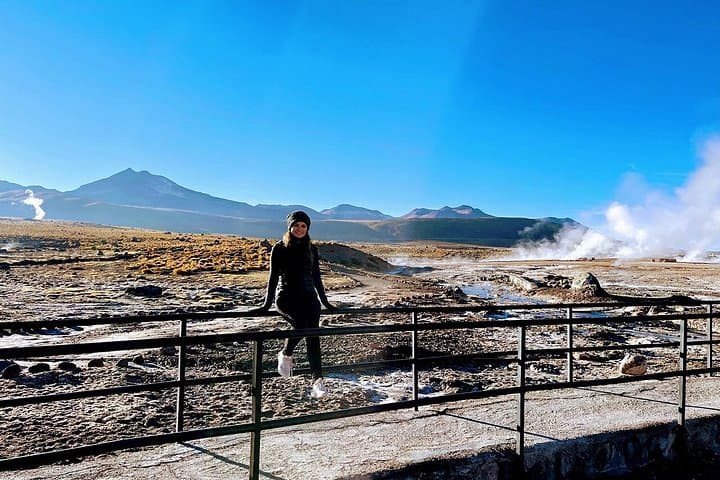
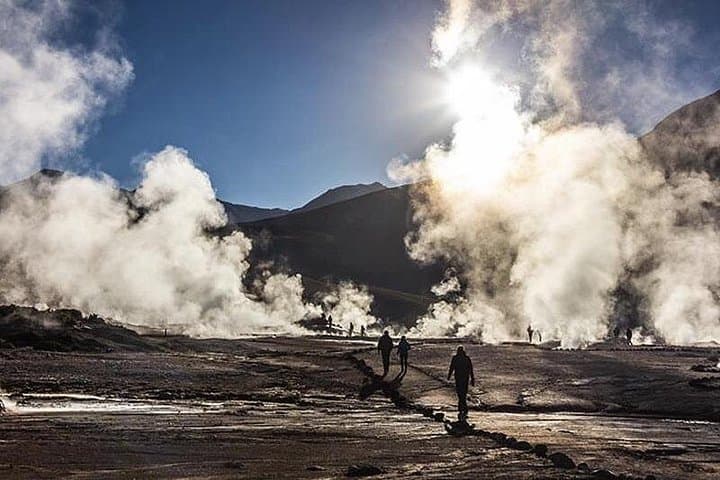

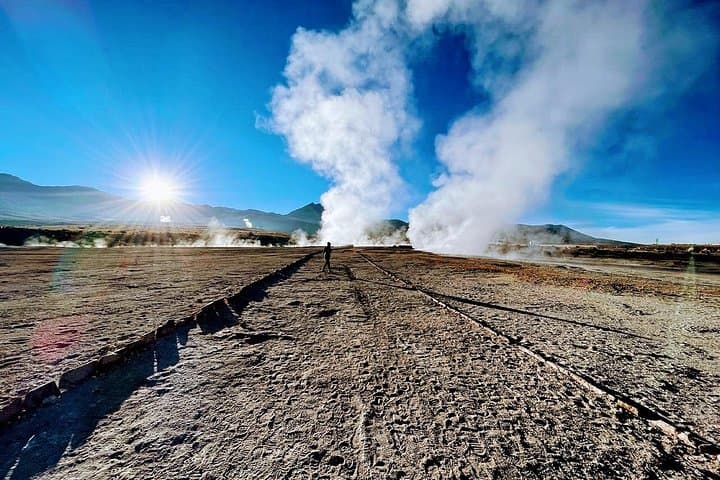
The bus brakes in the blue-black predawn and the Atacama sky thins to a pale rim of light. Steam rises off the ground like an insistence; the geysers puncture the cold with hissing breaths that dare you closer. At 4,200+ meters the air is thin and clear, and the first sun slices across silica crusts and steaming pools, turning steam ribbons into gold.
The bus brakes in the blue-black predawn and the Atacama sky thins to a pale rim of light. Steam rises off the ground like an insistence; the geysers puncture the cold with hissing breaths that dare you closer. At 4,200+ meters the air is thin and clear, and the first sun slices across silica crusts and steaming pools, turning steam ribbons into gold.
This field—one of the highest geyser basins on Earth—forms where volcanic heat meets groundwater, producing jets, fumaroles and mineral terraces. Indigenous Atacameño communities have long known these hot springs; European explorers later catalogued them for their unusual high‑altitude activity. Geologically, El Tatio sits on volcanic substrates of the Central Volcanic Zone, so expect acidic siliceous deposits and noisy, unpredictable vents.
Culturally the site is accessed from San Pedro de Atacama at dawn; tours often include a light breakfast and a chance to soak in nearby thermal pools after the main viewing. Wildlife is sparse but resilient—look for high‑altitude birds and small mammals moving around the warm microclimates.
Practical guidance: depart well before sunrise, dress in layered warm clothes, and bring at least 2 liters of water to battle altitude dehydration. Footing is uneven and can be slippery from mineral runoff—sturdy boots recommended. Guides manage the route to avoid fragile crusts; stay on paths to protect both you and the geysers.
Plan for altitude; if you feel unwell, descend and seek assistance. The spectacle is immediate and brief—arrive ready to move, photograph, and then warm up in the pools or vehicle as the desert sun climbs.