THE ADVENTURE COLLECTIVE® · Independent discovery and booking for outdoor travel

Walk Washington Square to SoHo on a two‑hour guided tour of Taylor Swift’s New York, visiting studios, bookshops, bakeries and sites tied to her life and lyrics. Expect flat city sidewalks, close‑up architecture, and stories that connect music, activism, and neighborhood history.
Walk Washington Square to SoHo on a two‑hour guided tour of Taylor Swift’s New York, visiting studios, bookshops, bakeries and sites tied to her life and lyrics. Expect flat city sidewalks, close‑up architecture, and stories that connect music, activism, and neighborhood history.
You meet beneath the NYU dorms at Washington Square, the arch and street musicians framing the first step of this 2‑hour urban walk. The city hums—subway rumbles, cafes steam, occasional brass from a busker—and the route threads through neighborhoods Taylor Swift has lived in, worked in, and referenced in song.
Verified experiences and guided adventures in the surrounding area.
Operated by Matthew LaSpata · New York, NY
You meet beneath the NYU dorms at Washington Square, the arch and street musicians framing the first step of this 2‑hour urban walk. The city hums—subway rumbles, cafes steam, occasional brass from a busker—and the route threads through neighborhoods Taylor Swift has lived in, worked in, and referenced in song.
Greenwich Village and SoHo are living layers of New York history: early 20th‑century brownstones, cast‑iron façades, and narrow lanes that once hosted writers, jazz musicians, and rights movements. Recording studios and independent bookshops on the route recall the city’s role in shaping modern American music and pop culture; a bar stop on the tour points to a riot and the ongoing arc of activism local to these streets. Geology matters here too—Manhattan’s glacially scoured bedrock underlies these neighborhoods and made tall buildings possible, concentrating the city’s cultural life on compact blocks.
Expect close-up architecture details, a whiff of bakery ovens, and the social history behind places you may already recognize from music videos and tabloids. The walking distance is modest—roughly 1.5–2 miles—over flat sidewalks, with several short stops to hear stories and see images of private interiors rather than enter celebrity homes.
Practical: arrive 10 minutes early, bring a charged phone for images and maps, wear cushioned shoes, and plan for public transit nearby. Morning walks dodge the biggest crowds; rainy days make the tour feel intimate but bring a compact rain shell. The experience balances fan-focused storytelling with neighborhood context—ideal for Swifties who want city sense with their set list.
Yes—meeting and most route surfaces are accessible; the operator lists wheelchair and stroller accessibility, though some sidewalks can be narrow.
In front of Lipton Hall at 33 Washington Square West between West 4th Street and West Washington Place; arrive 10 minutes early.
Yes—infants in carriers or strollers are allowed, and the pace is family‑friendly.
Most stops are external or photographic; a couple of independent shops allow brief interior visits, but celebrity residences are viewed from outside.
Matthew LaSpata operates guided outdoor trips and adventures with an emphasis on safety, stewardship, and memorable experiences.

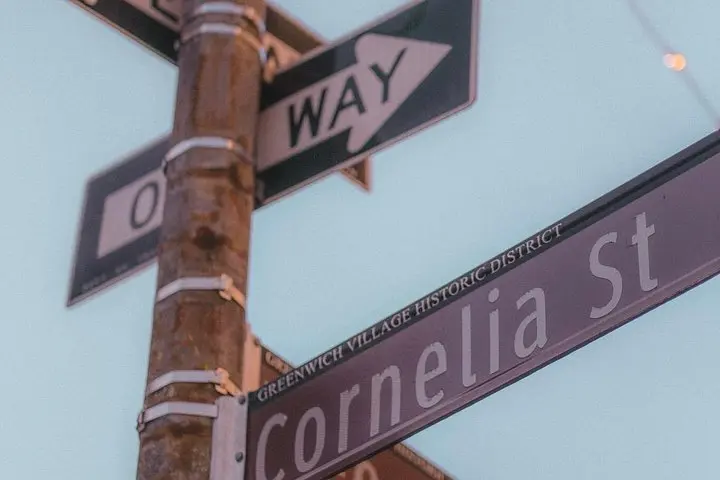


You meet beneath the NYU dorms at Washington Square, the arch and street musicians framing the first step of this 2‑hour urban walk. The city hums—subway rumbles, cafes steam, occasional brass from a busker—and the route threads through neighborhoods Taylor Swift has lived in, worked in, and referenced in song.
You meet beneath the NYU dorms at Washington Square, the arch and street musicians framing the first step of this 2‑hour urban walk. The city hums—subway rumbles, cafes steam, occasional brass from a busker—and the route threads through neighborhoods Taylor Swift has lived in, worked in, and referenced in song.
Greenwich Village and SoHo are living layers of New York history: early 20th‑century brownstones, cast‑iron façades, and narrow lanes that once hosted writers, jazz musicians, and rights movements. Recording studios and independent bookshops on the route recall the city’s role in shaping modern American music and pop culture; a bar stop on the tour points to a riot and the ongoing arc of activism local to these streets. Geology matters here too—Manhattan’s glacially scoured bedrock underlies these neighborhoods and made tall buildings possible, concentrating the city’s cultural life on compact blocks.
Expect close-up architecture details, a whiff of bakery ovens, and the social history behind places you may already recognize from music videos and tabloids. The walking distance is modest—roughly 1.5–2 miles—over flat sidewalks, with several short stops to hear stories and see images of private interiors rather than enter celebrity homes.
Practical: arrive 10 minutes early, bring a charged phone for images and maps, wear cushioned shoes, and plan for public transit nearby. Morning walks dodge the biggest crowds; rainy days make the tour feel intimate but bring a compact rain shell. The experience balances fan-focused storytelling with neighborhood context—ideal for Swifties who want city sense with their set list.