THE ADVENTURE COLLECTIVE® · Independent discovery and booking for outdoor travel

Travel from Tbilisi to Uplistsikhe’s rock-hewn streets, Gori’s Soviet museum, and the UNESCO churches of Mtskheta and Jvari in a single private day trip. Expect uneven stone, bold ridge views and compact cultural history packed into 7–8 hours.
Travel from Tbilisi to Uplistsikhe’s rock-hewn streets, Gori’s Soviet museum, and the UNESCO churches of Mtskheta and Jvari in a single private day trip. Expect uneven stone, bold ridge views and compact cultural history packed into 7–8 hours.
The day begins on a two-lane highway out of Tbilisi, the city falling away and the plain opening like a page of weathered parchment. By midmorning the driver drops you at Uplistsikhe, where wind and river have sanded a living city into the rock; corridors, vaulted halls and a cliffside theater push you toward the river’s edge and the worn steps that led caravans onward centuries ago.
Verified experiences and guided adventures in the surrounding area.
Operated by Travel To Georgia · Tbilisi, Tbilisi
The day begins on a two-lane highway out of Tbilisi, the city falling away and the plain opening like a page of weathered parchment. By midmorning the driver drops you at Uplistsikhe, where wind and river have sanded a living city into the rock; corridors, vaulted halls and a cliffside theater push you toward the river’s edge and the worn steps that led caravans onward centuries ago.
This circuit stitches together eras. Uplistsikhe (2nd–1st millennium B.C. onward) shows pre-Christian urban life carved into sandstone and basalt. Gori—a Soviet-era node—holds the Stalin Museum and the preserved birth house, a stark counterpoint to the ancient sites. Mtskheta, Georgia’s medieval capital, centers around 11th‑century Svetitskhoveli Cathedral; nearby Jvari Monastery (6th c.) crowns a ridge where the Aragvi and Mtkvari rivers meet, offering framed views that once guided pilgrims.
Geology is visible in every cut and crevice: eroded rock shelters, river terraces, and lime‑rich soils that supported ancient trade routes between Byzantium and the east.
Practical guidance: expect a 7–8 hour private excursion with multiple short walks over uneven stone and steep steps. Wear sturdy shoes, sun protection, and a modest outfit for churches. Pack cash for small local fees and food. Bring a light jacket—hilltop winds at Jvari bite faster than the valley heat. Plan pickup and any accessibility needs in advance; the tour moves at a steady cultural‑sightseeing pace, mixing open landscapes with enclosed cave passages.
This is a day that frames Georgian history in rock, river and village life—accessible, layered, and unvarnished.
Not all entry fees are included; some sites require separate admission paid on site—confirm with the operator before travel.
Yes—private transportation typically includes pickup from central Tbilisi hotels or a prearranged meeting point; specify your pickup when booking.
This tour involves uneven terrain, steps and cave passages and is not recommended for those with serious spinal or mobility limitations; check accessibility options in advance.
Conservative dress is advised—cover shoulders and knees; women may be asked to cover hair inside some churches, and men should remove hats.
Travel To Georgia operates guided outdoor trips and adventures with an emphasis on safety, stewardship, and memorable experiences.
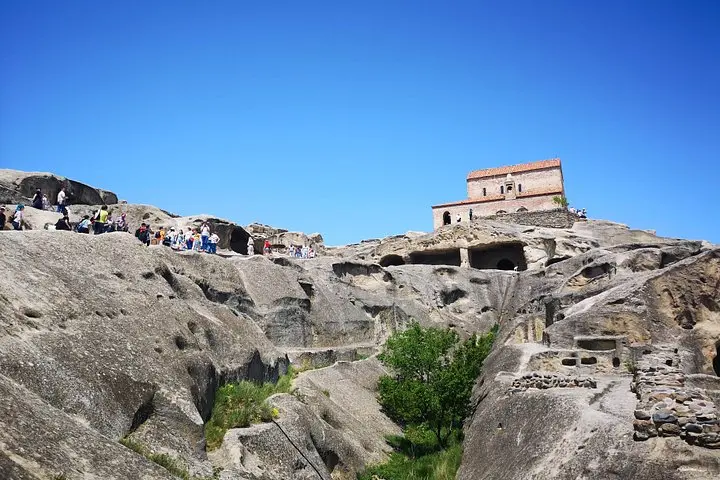
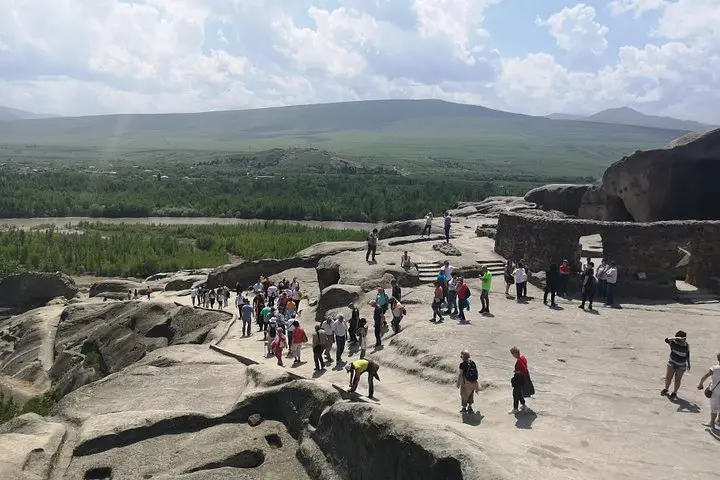
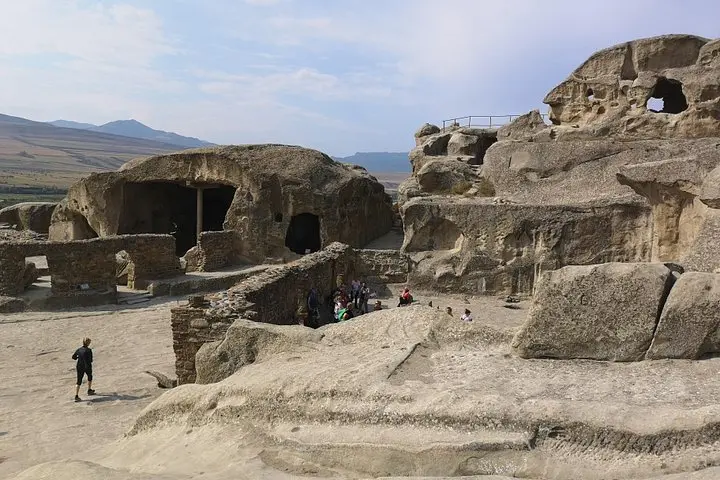
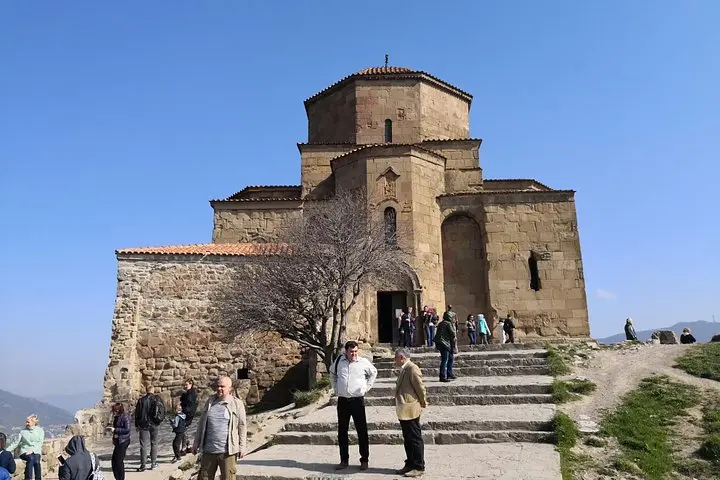
The day begins on a two-lane highway out of Tbilisi, the city falling away and the plain opening like a page of weathered parchment. By midmorning the driver drops you at Uplistsikhe, where wind and river have sanded a living city into the rock; corridors, vaulted halls and a cliffside theater push you toward the river’s edge and the worn steps that led caravans onward centuries ago.
The day begins on a two-lane highway out of Tbilisi, the city falling away and the plain opening like a page of weathered parchment. By midmorning the driver drops you at Uplistsikhe, where wind and river have sanded a living city into the rock; corridors, vaulted halls and a cliffside theater push you toward the river’s edge and the worn steps that led caravans onward centuries ago.
This circuit stitches together eras. Uplistsikhe (2nd–1st millennium B.C. onward) shows pre-Christian urban life carved into sandstone and basalt. Gori—a Soviet-era node—holds the Stalin Museum and the preserved birth house, a stark counterpoint to the ancient sites. Mtskheta, Georgia’s medieval capital, centers around 11th‑century Svetitskhoveli Cathedral; nearby Jvari Monastery (6th c.) crowns a ridge where the Aragvi and Mtkvari rivers meet, offering framed views that once guided pilgrims.
Geology is visible in every cut and crevice: eroded rock shelters, river terraces, and lime‑rich soils that supported ancient trade routes between Byzantium and the east.
Practical guidance: expect a 7–8 hour private excursion with multiple short walks over uneven stone and steep steps. Wear sturdy shoes, sun protection, and a modest outfit for churches. Pack cash for small local fees and food. Bring a light jacket—hilltop winds at Jvari bite faster than the valley heat. Plan pickup and any accessibility needs in advance; the tour moves at a steady cultural‑sightseeing pace, mixing open landscapes with enclosed cave passages.
This is a day that frames Georgian history in rock, river and village life—accessible, layered, and unvarnished.