THE ADVENTURE COLLECTIVE® · Independent discovery and booking for outdoor travel

Step aboard a restored motor yacht and cross Lake Te Anau toward the South Fiord, where glacial cliffs and ancient beech forests meet. A short guided walk, live commentary and afternoon tea make this a compact yet revealing Fiordland experience.
Step aboard a restored motor yacht and cross Lake Te Anau toward the South Fiord, where glacial cliffs and ancient beech forests meet. A short guided walk, live commentary and afternoon tea make this a compact yet revealing Fiordland experience.
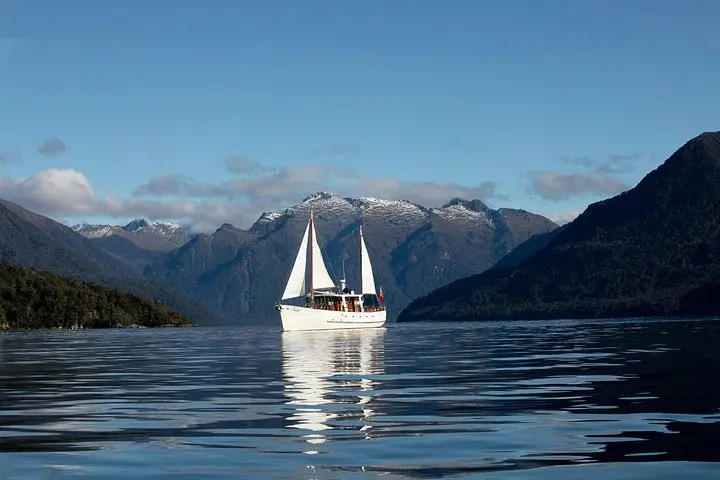
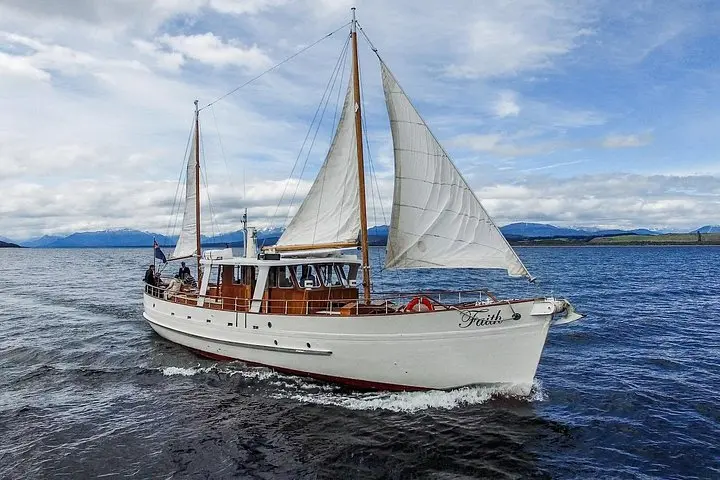
The motor yacht slips from the wharf and the shore recedes, leaving Te Anau Township as a neat strip of roofs and pines. A cool, clean breath of lake air moves across the deck; gulls wheel low and the boat’s polished timbers click with the rhythm of the engine. You ride toward the South Fiord and the valley walls rise like pages turned by ice—vertical, dark, and improbably still.
Verified experiences and guided adventures in the surrounding area.
Operated by Fiordland Historic Cruises · Te Anau, Southland
The motor yacht slips from the wharf and the shore recedes, leaving Te Anau Township as a neat strip of roofs and pines. A cool, clean breath of lake air moves across the deck; gulls wheel low and the boat’s polished timbers click with the rhythm of the engine. You ride toward the South Fiord and the valley walls rise like pages turned by ice—vertical, dark, and improbably still.
This stretch of water is carved by Pleistocene glaciers. For millions of years moving ice gouged the rock, then retreated to leave drowned valleys, sheer cliffs and hanging waterfalls. Māori from the Ngāi Tahu iwi have long-known these waterways as sources of food and customary travel; later European surveyors and steamers charted the fragile coastline and made the lake a waypoint for explorers. Today the route sits inside Fiordland National Park and the larger Te Wahipounamu UNESCO site, where protection rules shape how visitors move and what they take back.
The cruise is part viewing platform, part storytelling session. Guides narrate geology and history as the yacht threads toward the fiord entrance; rock faces hold their silence but the water answers with steady reflections. At a sheltered landing you step ashore for a guided walk—about a 40-minute stroll on an established track through ancient beech and rimu. The canopy leans over the path and streams dare you to glance at the dark reflections of hidden tarns. Rock faces bear striations from ice, and small clear pools mirror the sky.
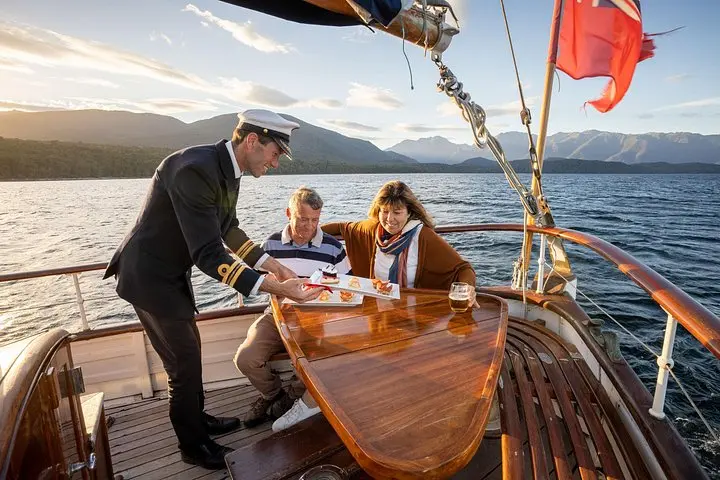
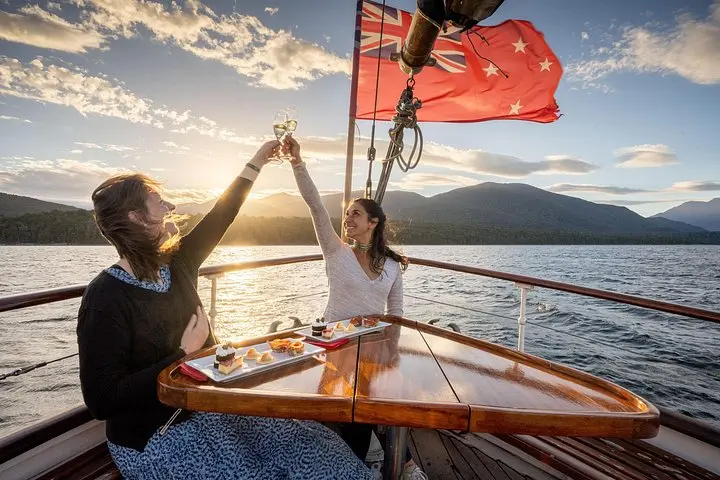
Canapés and afternoon tea are served on board, a civilized counterpoint to a wild landscape. The return passage gives long-angled light that paints the cliffs and puts the forest in high relief—prime time for photography and quiet thinking.
Practical guide: the whole outing runs roughly 3 hours (about 2 hours cruising, 40 minutes ashore). The shore hike is short, mainly low-grade with some uneven roots and rock; expect around 1.5–2 km total with minimal elevation gain. Wheelchair access is available for parts of the tour, but the walk requires steady footing. Weather in Fiordland changes rapidly—bring a waterproof outer layer, sturdy shoes, and a camera you can trust.
Why go: this trip is compact but layered—history, geology, forest and water in a single afternoon. It’s ideal for travelers who want a taste of Fiordland’s scale without committing to multi-day tracks, and who appreciate informed local commentary matched with comfortable, small-boat service.
The guided walk is approximately 40 minutes round-trip on an established track, covering roughly 1.5–2 km with minimal elevation gain.
Yes—operators note the activity is suitable for all fitness levels, though the walk involves some uneven sections; infant seating and wheelchair access are available for parts of the tour.
Tours may be canceled in poor weather; the operator offers a full refund if you cancel at least 24 hours before departure or if the trip is called off for safety reasons.
Yes—light canapés and afternoon tea are included on board, and dietary requirements should be advised at booking.
Service animals are allowed, but other pets are not; check with the operator in advance for specifics.
The departure point is Te Anau wharf in Te Anau Township—public transport options and clear meeting instructions are provided at booking.
Fiordland Historic Cruises operates guided outdoor trips and adventures with an emphasis on safety, stewardship, and memorable experiences.
The motor yacht slips from the wharf and the shore recedes, leaving Te Anau Township as a neat strip of roofs and pines. A cool, clean breath of lake air moves across the deck; gulls wheel low and the boat’s polished timbers click with the rhythm of the engine. You ride toward the South Fiord and the valley walls rise like pages turned by ice—vertical, dark, and improbably still.
The motor yacht slips from the wharf and the shore recedes, leaving Te Anau Township as a neat strip of roofs and pines. A cool, clean breath of lake air moves across the deck; gulls wheel low and the boat’s polished timbers click with the rhythm of the engine. You ride toward the South Fiord and the valley walls rise like pages turned by ice—vertical, dark, and improbably still.
This stretch of water is carved by Pleistocene glaciers. For millions of years moving ice gouged the rock, then retreated to leave drowned valleys, sheer cliffs and hanging waterfalls. Māori from the Ngāi Tahu iwi have long-known these waterways as sources of food and customary travel; later European surveyors and steamers charted the fragile coastline and made the lake a waypoint for explorers. Today the route sits inside Fiordland National Park and the larger Te Wahipounamu UNESCO site, where protection rules shape how visitors move and what they take back.
The cruise is part viewing platform, part storytelling session. Guides narrate geology and history as the yacht threads toward the fiord entrance; rock faces hold their silence but the water answers with steady reflections. At a sheltered landing you step ashore for a guided walk—about a 40-minute stroll on an established track through ancient beech and rimu. The canopy leans over the path and streams dare you to glance at the dark reflections of hidden tarns. Rock faces bear striations from ice, and small clear pools mirror the sky.
Canapés and afternoon tea are served on board, a civilized counterpoint to a wild landscape. The return passage gives long-angled light that paints the cliffs and puts the forest in high relief—prime time for photography and quiet thinking.
Practical guide: the whole outing runs roughly 3 hours (about 2 hours cruising, 40 minutes ashore). The shore hike is short, mainly low-grade with some uneven roots and rock; expect around 1.5–2 km total with minimal elevation gain. Wheelchair access is available for parts of the tour, but the walk requires steady footing. Weather in Fiordland changes rapidly—bring a waterproof outer layer, sturdy shoes, and a camera you can trust.
Why go: this trip is compact but layered—history, geology, forest and water in a single afternoon. It’s ideal for travelers who want a taste of Fiordland’s scale without committing to multi-day tracks, and who appreciate informed local commentary matched with comfortable, small-boat service.