THE ADVENTURE COLLECTIVE® · Independent discovery and booking for outdoor travel

Walk steaming terraces, watch Pōhutu erupt, and see kiwis up close at Te Puia. This guided day tour blends Māori culture, geothermal geology and native wildlife viewing—ideal for travelers from Tauranga seeking a full Rotorua immersion.
Walk steaming terraces, watch Pōhutu erupt, and see kiwis up close at Te Puia. This guided day tour blends Māori culture, geothermal geology and native wildlife viewing—ideal for travelers from Tauranga seeking a full Rotorua immersion.
A thin column of steam threads the morning air as the guide leads a small group across the boardwalks of Te Whakarewarewa Thermal Valley. The sulphur-rich scent hangs low; Pōhutu Geyser rumbles nearby and, when it erupts, the ground seems to answer with a distant, reverberating exhale.
Verified experiences and guided adventures in the surrounding area.
Operated by Tino Pai Tours · Rotorua, Bay of Plenty
A thin column of steam threads the morning air as the guide leads a small group across the boardwalks of Te Whakarewarewa Thermal Valley. The sulphur-rich scent hangs low; Pōhutu Geyser rumbles nearby and, when it erupts, the ground seems to answer with a distant, reverberating exhale.
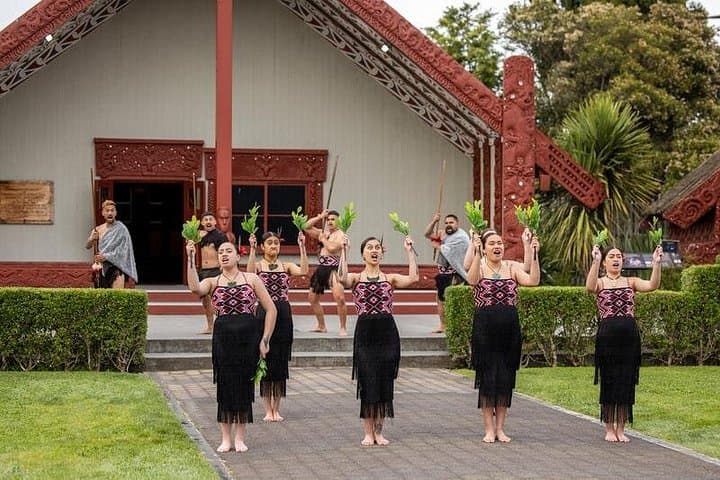
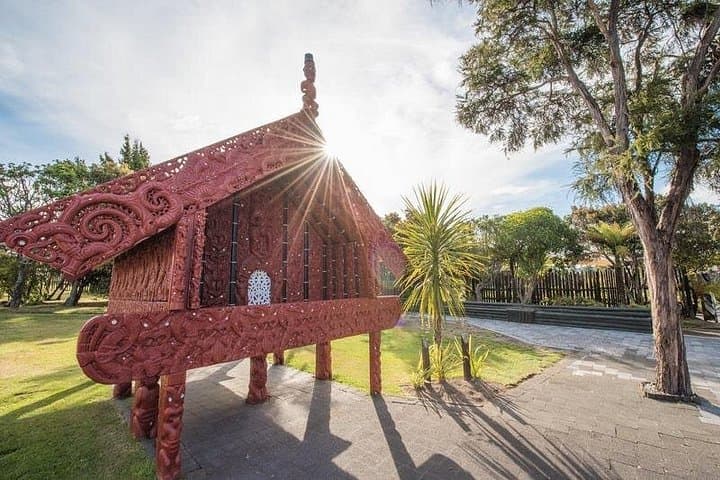
This day tour centers on Te Puia, Rotorua’s Māori Arts and Crafts Institute and geothermal precinct. Geologically the valley is young and volatile—silica terraces, boiling mud pools, and fumaroles mark the boundary between earth and steam. Culturally, Te Puia has been a living centre of Māori carving, weaving and performance since the mid-20th century, and visitors usually witness a pōwhiri-style welcome followed by haka, poi and waiata in a carved meeting house.
The experience pairs spectacle with stewardship: the Kiwi Conservation Centre offers behind-glass viewing of nocturnal kiwis cared for in a controlled environment, while short stops at the Redwoods and Government Gardens add forest and colonial-era context to the day. Sulphur Bay’s milky waters and birdlife round out the landscape.
Practically, expect 6–8 hours including coach transfer from Tauranga, snack service, and a guided 2-hour Te Puia visit. Stay on marked paths—thermal features are unstable and dangerous off-route. Bring layered clothing for sudden steam and wind shifts, sturdy shoes for mixed boardwalk and gravel surfaces, and a camera with a lens hood for steam-glow photos. Lunch is typically bought in Rotorua town; allow time to browse local Māori crafts and support conservation-focused exhibits before returning to the port.
Yes, the tour includes admission to Te Puia and access to the Kiwi Conservation Centre as part of the guided visit.
The coach drive from Tauranga to Rotorua is roughly 1–1.5 hours each way, dependent on traffic and stops.
Wild kiwis are nocturnal and rarely seen on daytime tours; the Kiwi Conservation Centre provides safe, close-up viewing in a managed, low-light setting.
Yes, when visitors stay on marked paths and follow guides’ directions; the site is family-friendly but requires vigilance around hot springs and vents.
Tino Pai Tours operates guided outdoor trips and adventures with an emphasis on safety, stewardship, and memorable experiences.
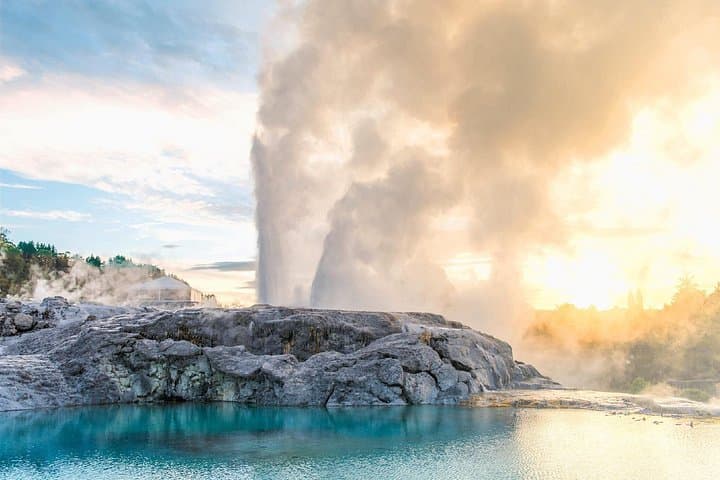

A thin column of steam threads the morning air as the guide leads a small group across the boardwalks of Te Whakarewarewa Thermal Valley. The sulphur-rich scent hangs low; Pōhutu Geyser rumbles nearby and, when it erupts, the ground seems to answer with a distant, reverberating exhale.
A thin column of steam threads the morning air as the guide leads a small group across the boardwalks of Te Whakarewarewa Thermal Valley. The sulphur-rich scent hangs low; Pōhutu Geyser rumbles nearby and, when it erupts, the ground seems to answer with a distant, reverberating exhale.
This day tour centers on Te Puia, Rotorua’s Māori Arts and Crafts Institute and geothermal precinct. Geologically the valley is young and volatile—silica terraces, boiling mud pools, and fumaroles mark the boundary between earth and steam. Culturally, Te Puia has been a living centre of Māori carving, weaving and performance since the mid-20th century, and visitors usually witness a pōwhiri-style welcome followed by haka, poi and waiata in a carved meeting house.
The experience pairs spectacle with stewardship: the Kiwi Conservation Centre offers behind-glass viewing of nocturnal kiwis cared for in a controlled environment, while short stops at the Redwoods and Government Gardens add forest and colonial-era context to the day. Sulphur Bay’s milky waters and birdlife round out the landscape.
Practically, expect 6–8 hours including coach transfer from Tauranga, snack service, and a guided 2-hour Te Puia visit. Stay on marked paths—thermal features are unstable and dangerous off-route. Bring layered clothing for sudden steam and wind shifts, sturdy shoes for mixed boardwalk and gravel surfaces, and a camera with a lens hood for steam-glow photos. Lunch is typically bought in Rotorua town; allow time to browse local Māori crafts and support conservation-focused exhibits before returning to the port.