THE ADVENTURE COLLECTIVE® · Independent discovery and booking for outdoor travel

Walk boardwalks that cross simmering earth, watch Pōhutu geyser reach skyward and meet Māori carvers continuing centuries-old crafts. This private full-day tour pairs Rotorua’s geothermal drama with cultural performance and the chance to see the nocturnal kiwi.
Walk boardwalks that cross simmering earth, watch Pōhutu geyser reach skyward and meet Māori carvers continuing centuries-old crafts. This private full-day tour pairs Rotorua’s geothermal drama with cultural performance and the chance to see the nocturnal kiwi.
Steam lifts from the valley like a slow exhale, and the air smells faintly of sulphur as you step onto the boardwalk at Te Puia. Pōhutu geyser punctuates the silence with sudden, towering bursts of water and the earth seems to breathe beneath your feet; nearby, guided voices explain how Māori families have read and lived with this geothermal language for generations.
Verified experiences and guided adventures in the surrounding area.
Operated by Black Car Transfers & Tours · Rotorua, Bay of Plenty
Steam lifts from the valley like a slow exhale, and the air smells faintly of sulphur as you step onto the boardwalk at Te Puia. Pōhutu geyser punctuates the silence with sudden, towering bursts of water and the earth seems to breathe beneath your feet; nearby, guided voices explain how Māori families have read and lived with this geothermal language for generations.
Rotorua sits on a rift of the Taupō Volcanic Zone, where heat from deep within the Earth forces water and gases through fractured rock to create boiling pools, mud vents and geysers. Te Puia is also the home of the New Zealand Māori Arts and Crafts Institute—artists carve and weave using traditions passed down, while the Kiwi Conservation Centre works quietly at night to protect the country’s emblematic flightless bird.
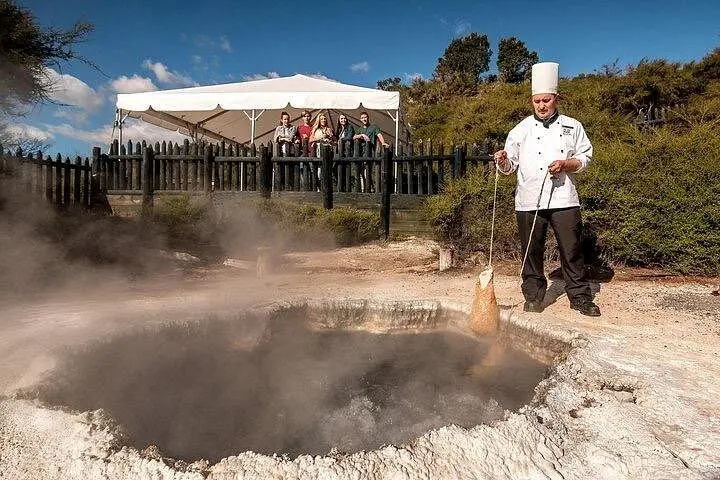
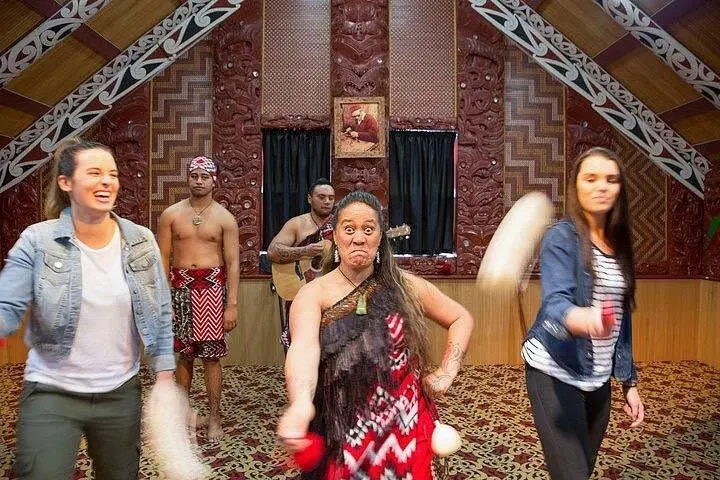
This private day tour weaves geology and culture: guided walks past steaming terraces, a live haka performance in many departures, and a Hāngi buffet that lets you taste the earth-cooked flavors local to Rotorua.
Practical guide: bring sturdy, closed shoes for uneven, often wet boardwalks; early arrival or late afternoon visits cut the crowds and sharpen the steam’s contrast with the sky. Stick to marked trails—thermal features are fragile and dangerous off-path. Expect about a full day if you’re coming from Auckland; the tour typically includes return transfers. Hydrate well, wear layers (sulphur air can be cool in pockets), and keep camera batteries warm—the cold and steam sap charge fast. Respect performers and wildlife viewing rules at the Kiwi Centre; quiet observation aids conservation and increases your chance of sightings.
The listed duration is about 12.5 hours overall; this private tour commonly includes return transfers to Auckland CBD and selected pickup/drop-off points.
Pōhutu typically erupts once or twice an hour, reaching up to around 30 meters, but eruptions are natural events and timing can vary.
Private departures commonly include an authentic Māori performance and Hāngi lunch, but shared small-group variations may not—confirm at booking.
Yes—the Kiwi Conservation Centre at Te Puia allows close viewing in controlled conditions, though sightings are nocturnal and guided to protect the birds.
Black Car Transfers & Tours operates guided outdoor trips and adventures with an emphasis on safety, stewardship, and memorable experiences.
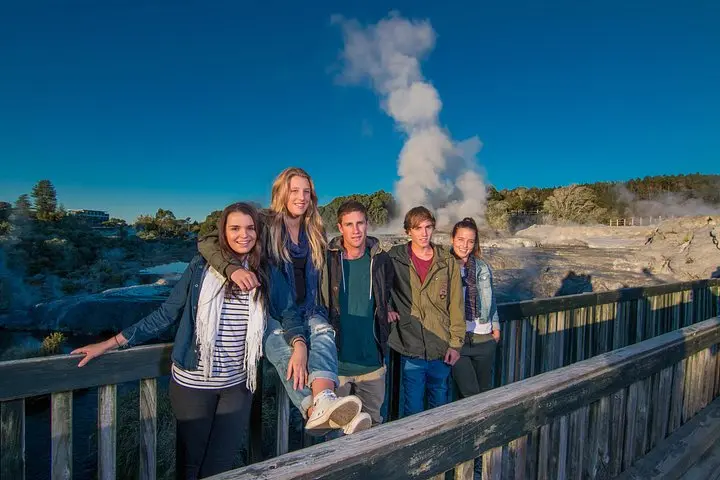
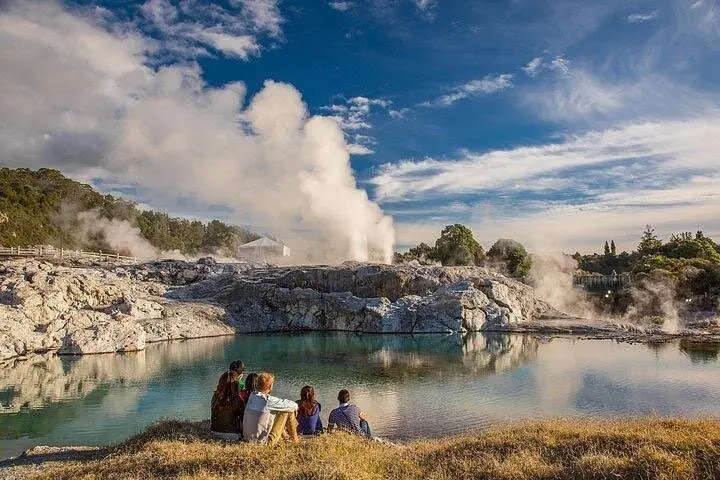
Steam lifts from the valley like a slow exhale, and the air smells faintly of sulphur as you step onto the boardwalk at Te Puia. Pōhutu geyser punctuates the silence with sudden, towering bursts of water and the earth seems to breathe beneath your feet; nearby, guided voices explain how Māori families have read and lived with this geothermal language for generations.
Steam lifts from the valley like a slow exhale, and the air smells faintly of sulphur as you step onto the boardwalk at Te Puia. Pōhutu geyser punctuates the silence with sudden, towering bursts of water and the earth seems to breathe beneath your feet; nearby, guided voices explain how Māori families have read and lived with this geothermal language for generations.
Rotorua sits on a rift of the Taupō Volcanic Zone, where heat from deep within the Earth forces water and gases through fractured rock to create boiling pools, mud vents and geysers. Te Puia is also the home of the New Zealand Māori Arts and Crafts Institute—artists carve and weave using traditions passed down, while the Kiwi Conservation Centre works quietly at night to protect the country’s emblematic flightless bird.
This private day tour weaves geology and culture: guided walks past steaming terraces, a live haka performance in many departures, and a Hāngi buffet that lets you taste the earth-cooked flavors local to Rotorua.
Practical guide: bring sturdy, closed shoes for uneven, often wet boardwalks; early arrival or late afternoon visits cut the crowds and sharpen the steam’s contrast with the sky. Stick to marked trails—thermal features are fragile and dangerous off-path. Expect about a full day if you’re coming from Auckland; the tour typically includes return transfers. Hydrate well, wear layers (sulphur air can be cool in pockets), and keep camera batteries warm—the cold and steam sap charge fast. Respect performers and wildlife viewing rules at the Kiwi Centre; quiet observation aids conservation and increases your chance of sightings.