THE ADVENTURE COLLECTIVE® · Independent discovery and booking for outdoor travel

Step into Whakarewarewa’s steaming valley on the Tuku Iho Trail: a 2 hour 45 minute guided walk that combines geothermal geology with Māori art, legends and a live cultural performance. Expect uneven terrain, hands‑on demonstrations and a finale of song and haka.
Step into Whakarewarewa’s steaming valley on the Tuku Iho Trail: a 2 hour 45 minute guided walk that combines geothermal geology with Māori art, legends and a live cultural performance. Expect uneven terrain, hands‑on demonstrations and a finale of song and haka.
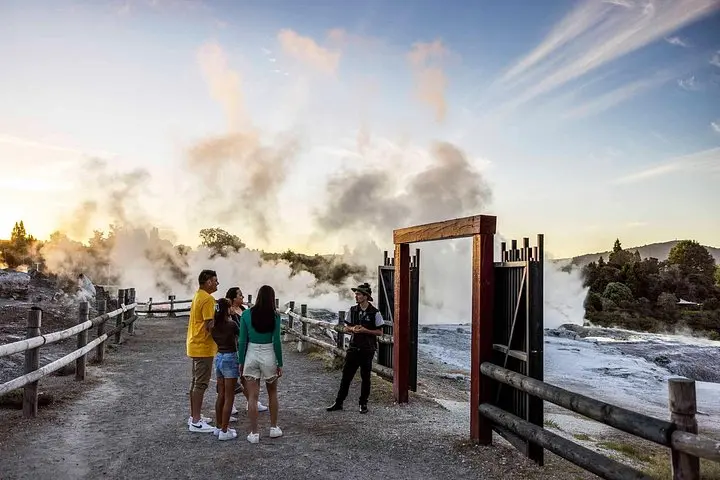
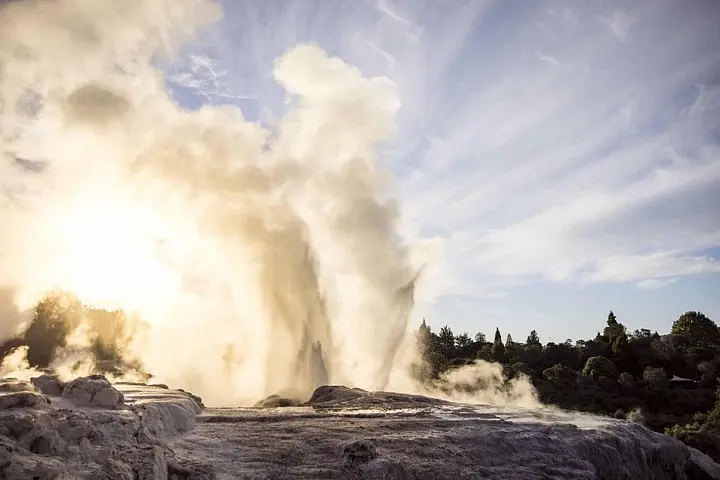
Steam lifts from mineral pools like a low winter fog, the air flavored with sulphur and warm earth as the Tuku Iho Trail threads into Whakarewarewa’s living geothermal valley. Walkers step off the city streets and into a landscape where boiling ngāwhā bubble beside fern-clad tracks and carved meeting houses peek through canopy light.
Verified experiences and guided adventures in the surrounding area.
Operated by Te Puia · Rotorua, Bay of Plenty
Steam lifts from mineral pools like a low winter fog, the air flavored with sulphur and warm earth as the Tuku Iho Trail threads into Whakarewarewa’s living geothermal valley. Walkers step off the city streets and into a landscape where boiling ngāwhā bubble beside fern-clad tracks and carved meeting houses peek through canopy light.
The valley is both geological laboratory and cultural archive. Volcanic forces beneath the Taupō Volcanic Zone heat groundwater to create terraces, sinter deposits and patterned steam vents. For centuries, Tūhourangi and Ngāti Whakaue iwi used these pools for cooking, bathing and medicine; the trail’s stories—like the Hatupatu and Kurungaituku legend—tie landscape features to whakapapa and practical life.
Visitors pass the New Zealand Māori Arts and Crafts Institute and carving and flax-weaving schools, where bone, stone and timber are shaped with lineage techniques. The Kiwi Conservation Centre nearby highlights efforts to protect native species that share the valley’s edge.
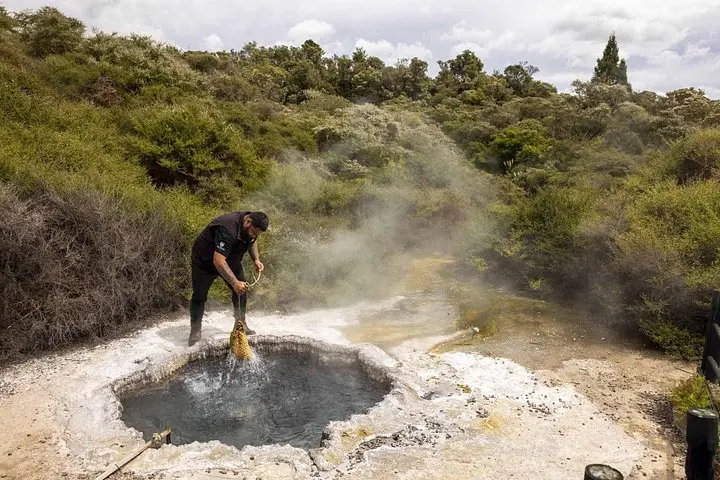
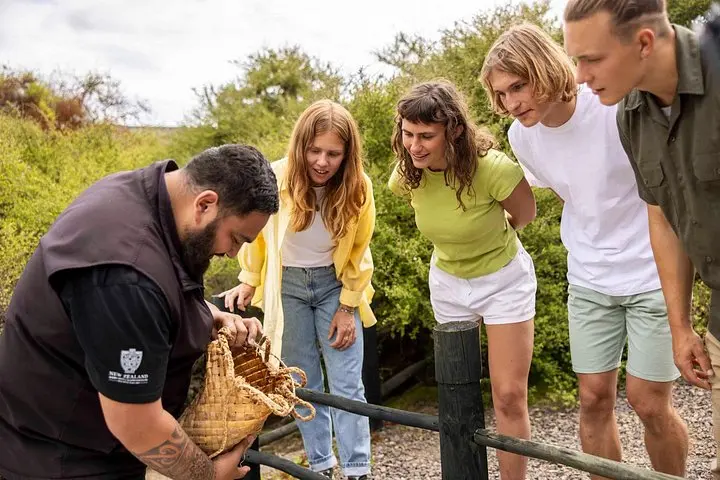
Practical note: the Tuku Iho Trail is a guided, 2 hour 45 minute moderate walk with uneven paths, boardwalks and short stairs—good footwear and steady pace matter. Expect admission to cultural sites and a 30-minute performance including pōhiri, waiata, mōteatea, poi and haka. Sample sweetcorn cooked in a hot pool during the experience; it’s safe and staged by guides.
Plan for changeable weather, bring layers and a water bottle, and allow 3–4 hours total for the visit if you add the Arts Institute and Kiwi Centre. Respect cultural protocols during performances and photography—ask before filming inside the meeting house.
The guided experience runs about 2 hours 45 minutes and commonly requires 3–4 hours total including exhibits and the Kiwi Centre.
Yes—infants and small children can use strollers on many sections, though some boardwalk stairs may require a carry or short detour.
Photographs are often permitted outside performances but ask guides before filming or photographing inside Te Aronui a Rua to respect cultural protocols.
Yes—samples cooked in managed ngāwhā are prepared by guides following safety procedures and offered as part of the cultural demonstration.
Te Puia operates guided outdoor trips and adventures with an emphasis on safety, stewardship, and memorable experiences.
Steam lifts from mineral pools like a low winter fog, the air flavored with sulphur and warm earth as the Tuku Iho Trail threads into Whakarewarewa’s living geothermal valley. Walkers step off the city streets and into a landscape where boiling ngāwhā bubble beside fern-clad tracks and carved meeting houses peek through canopy light.
Steam lifts from mineral pools like a low winter fog, the air flavored with sulphur and warm earth as the Tuku Iho Trail threads into Whakarewarewa’s living geothermal valley. Walkers step off the city streets and into a landscape where boiling ngāwhā bubble beside fern-clad tracks and carved meeting houses peek through canopy light.
The valley is both geological laboratory and cultural archive. Volcanic forces beneath the Taupō Volcanic Zone heat groundwater to create terraces, sinter deposits and patterned steam vents. For centuries, Tūhourangi and Ngāti Whakaue iwi used these pools for cooking, bathing and medicine; the trail’s stories—like the Hatupatu and Kurungaituku legend—tie landscape features to whakapapa and practical life.
Visitors pass the New Zealand Māori Arts and Crafts Institute and carving and flax-weaving schools, where bone, stone and timber are shaped with lineage techniques. The Kiwi Conservation Centre nearby highlights efforts to protect native species that share the valley’s edge.
Practical note: the Tuku Iho Trail is a guided, 2 hour 45 minute moderate walk with uneven paths, boardwalks and short stairs—good footwear and steady pace matter. Expect admission to cultural sites and a 30-minute performance including pōhiri, waiata, mōteatea, poi and haka. Sample sweetcorn cooked in a hot pool during the experience; it’s safe and staged by guides.
Plan for changeable weather, bring layers and a water bottle, and allow 3–4 hours total for the visit if you add the Arts Institute and Kiwi Centre. Respect cultural protocols during performances and photography—ask before filming inside the meeting house.