THE ADVENTURE COLLECTIVE® · Independent discovery and booking for outdoor travel

Spend a full day on Telaga Waja River’s rapids, then chase light through Tukad Cepung and relax beneath Kanto Lampo. This private, air‑conditioned combo tour from Ubud blends 3 hours of rafting with two of Bali’s most photogenic waterfalls.
Spend a full day on Telaga Waja River’s rapids, then chase light through Tukad Cepung and relax beneath Kanto Lampo. This private, air‑conditioned combo tour from Ubud blends 3 hours of rafting with two of Bali’s most photogenic waterfalls.
A long, carved canyon opens as your driver drops you at the Telaga Waja launch point: limestone walls rising like pages, the river a bright, restless ribbon threading through them. Guides run through safety checks with practiced calm; helmets click, lifejackets tighten. For the next three hours the river does the talking — surging you through class II–III rapids, pushing rafts under small plunges and past cliffside ferns that drip like slow rain. Water splashes high enough that it demands your attention; it’s easy to feel present.
Verified experiences and guided adventures in the surrounding area.
Operated by Bali Rafting Tours · Ubud, Bali
A long, carved canyon opens as your driver drops you at the Telaga Waja launch point: limestone walls rising like pages, the river a bright, restless ribbon threading through them. Guides run through safety checks with practiced calm; helmets click, lifejackets tighten. For the next three hours the river does the talking — surging you through class II–III rapids, pushing rafts under small plunges and past cliffside ferns that drip like slow rain. Water splashes high enough that it demands your attention; it’s easy to feel present.
This one-day combination catches three very different faces of Bali. Telaga Waja — born in the island’s central highlands — is a volcanic river cut through layers of ash and lava; its channels reflect century-long changes in flow after eruptions and monsoon cycles. Tukad Cepung, later in the day, rewards the patient with an amphitheater of stone where a shaft of light pierces mist in the late morning. Kanto Lampo, lower down, tumbles across stepped basalt, evidence of cooled lava flows that now funnel water into quiet plunge pools.
Beyond geology, the route brushes through village life: rice paddies where farmers work traditional subak terraces, roadside shrines where offerings are set each morning, and small warungs selling kopi and fried bananas. Guides here often double as cultural interpreters — ask about local ritual schedules and they’ll point to temple days or provide context for the carved gates you pass.
Practical essentials: the whole tour runs about 8–10 hours from hotel pickup in Ubud and other southern hubs; rafting itself is ~3 hours. Expect uneven paths and 100–200 stone steps at Tukad Cepung and Kanto Lampo; bring footwear that grips and dries fast. The operator supplies safety-approved rafting gear, towels, showers and changing rooms, and a buffet lunch after the river. Note health limits: minimum age 6, maximum 65; not recommended for pregnant travelers or those with serious back or heart conditions.
Timing matters. Morning departures avoid afternoon downpours in wet season and give the best light inside the Tukad Cepung canyon. Bring sunscreen, a waterproof phone pouch or small dry bag, a change of clothes and a small towel if you prefer your own. Cash small bills are handy at waterfalls for donations, souvenirs or quick snacks.
If you want the day to feel curated rather than rushed, ask for a quieter pickup window (some operators stagger hotels) and tell your guide if you’d like extra time at a particular fall for photos. Safety-first is the rule: follow guide instructions on rapid lines and re-entry technique. At the end of the day you’ll have a mix of adrenaline, soaked clothes, and views that read like a primer on Bali’s water and stone — active, instructive, and unmistakably local.
The Telaga Waja rafting portion is approximately 3 hours on the water, with gear and safety briefing included.
Yes — the route is suitable for beginners; children aged 6+ may join under guide supervision. Inform the operator of ages at booking.
You’ll get helmets, U.S. Coast Guard-style lifejackets, spray jackets where needed, and an English-speaking professional rafting guide.
Yes — the rafting operator provides towels, showers and changing areas at the finish before lunch.
Bring swimwear, a change of clothes, sunscreen, a waterproof phone pouch, small bills and any necessary medications.
The operator may cancel for heavy rain or unsafe river conditions; cancellation policy allows a full refund if made at least 24 hours prior, and they cancel if bad weather makes the trip unsafe.
Bali Rafting Tours operates guided outdoor trips and adventures with an emphasis on safety, stewardship, and memorable experiences.


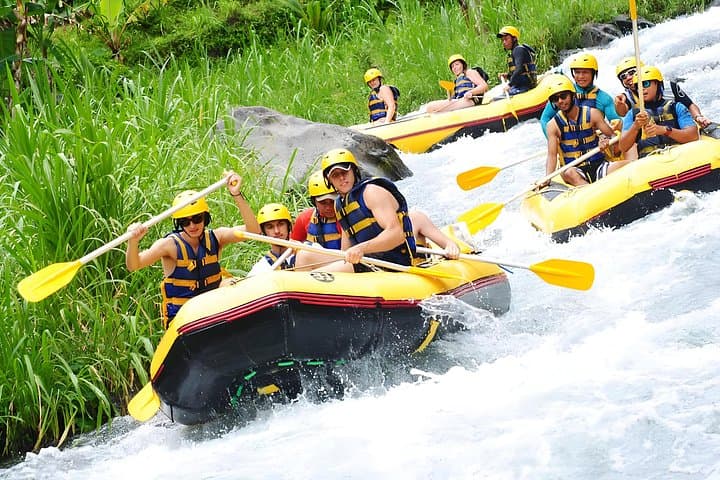
A long, carved canyon opens as your driver drops you at the Telaga Waja launch point: limestone walls rising like pages, the river a bright, restless ribbon threading through them. Guides run through safety checks with practiced calm; helmets click, lifejackets tighten. For the next three hours the river does the talking — surging you through class II–III rapids, pushing rafts under small plunges and past cliffside ferns that drip like slow rain. Water splashes high enough that it demands your attention; it’s easy to feel present.
A long, carved canyon opens as your driver drops you at the Telaga Waja launch point: limestone walls rising like pages, the river a bright, restless ribbon threading through them. Guides run through safety checks with practiced calm; helmets click, lifejackets tighten. For the next three hours the river does the talking — surging you through class II–III rapids, pushing rafts under small plunges and past cliffside ferns that drip like slow rain. Water splashes high enough that it demands your attention; it’s easy to feel present.
This one-day combination catches three very different faces of Bali. Telaga Waja — born in the island’s central highlands — is a volcanic river cut through layers of ash and lava; its channels reflect century-long changes in flow after eruptions and monsoon cycles. Tukad Cepung, later in the day, rewards the patient with an amphitheater of stone where a shaft of light pierces mist in the late morning. Kanto Lampo, lower down, tumbles across stepped basalt, evidence of cooled lava flows that now funnel water into quiet plunge pools.
Beyond geology, the route brushes through village life: rice paddies where farmers work traditional subak terraces, roadside shrines where offerings are set each morning, and small warungs selling kopi and fried bananas. Guides here often double as cultural interpreters — ask about local ritual schedules and they’ll point to temple days or provide context for the carved gates you pass.
Practical essentials: the whole tour runs about 8–10 hours from hotel pickup in Ubud and other southern hubs; rafting itself is ~3 hours. Expect uneven paths and 100–200 stone steps at Tukad Cepung and Kanto Lampo; bring footwear that grips and dries fast. The operator supplies safety-approved rafting gear, towels, showers and changing rooms, and a buffet lunch after the river. Note health limits: minimum age 6, maximum 65; not recommended for pregnant travelers or those with serious back or heart conditions.
Timing matters. Morning departures avoid afternoon downpours in wet season and give the best light inside the Tukad Cepung canyon. Bring sunscreen, a waterproof phone pouch or small dry bag, a change of clothes and a small towel if you prefer your own. Cash small bills are handy at waterfalls for donations, souvenirs or quick snacks.
If you want the day to feel curated rather than rushed, ask for a quieter pickup window (some operators stagger hotels) and tell your guide if you’d like extra time at a particular fall for photos. Safety-first is the rule: follow guide instructions on rapid lines and re-entry technique. At the end of the day you’ll have a mix of adrenaline, soaked clothes, and views that read like a primer on Bali’s water and stone — active, instructive, and unmistakably local.