THE ADVENTURE COLLECTIVE® · Independent discovery and booking for outdoor travel

Drop into the Telaga Waja and let the river set the tempo: punchy rapids, jungle cliffs and waterfall splashes make this a three‑hour rafting trip that’s big on scenery and accessible to fit beginners. Read on for what to expect, how to prepare, and local tips for framing the best photos.
Drop into the Telaga Waja and let the river set the tempo: punchy rapids, jungle cliffs and waterfall splashes make this a three‑hour rafting trip that’s big on scenery and accessible to fit beginners. Read on for what to expect, how to prepare, and local tips for framing the best photos.
You step off the minivan and the world shifts: the road-side noise folds into birdsong and the bright rice paddies give way to a corridor of green where the Telaga Waja River cuts a fast, silver line. Guides are already checking helmets and life jackets; the air smells of wet stone and tropical leaf mold. When the raft drops into the current, the river takes command—rocky ledges nudge the raft, short, punchy rapids shove you sideways, and a curtain of waterfall drums the surface nearby. It’s an easy-on-paper run with enough teeth to make you grin.
Verified experiences and guided adventures in the surrounding area.
Operated by Bali Day Tour · Ubud, Bali
You step off the minivan and the world shifts: the road-side noise folds into birdsong and the bright rice paddies give way to a corridor of green where the Telaga Waja River cuts a fast, silver line. Guides are already checking helmets and life jackets; the air smells of wet stone and tropical leaf mold. When the raft drops into the current, the river takes command—rocky ledges nudge the raft, short, punchy rapids shove you sideways, and a curtain of waterfall drums the surface nearby. It’s an easy-on-paper run with enough teeth to make you grin.
Telaga Waja has been carved out of volcanic soils from Mount Agung and the surrounding uplands, its channel scoured through basalt and sediment laid down over millennia. The river’s course passes through cultivated lowlands and forested gorges that have supported Balinese villages for generations. Locally the river plays a part in temple rituals and the rhythms of the subak irrigation system that defines rice-growing life on Bali.
Culturally, this stretch of east Bali still feels quieter than the west coast: you’ll see small shrines along the bank, and families working rice terraces in the distance. Geologically, the cliffs that frame the rapids are a reminder of Bali’s volcanic youth—hard layers broken by the river’s persistence. Guides will point out the shallow pools where kingfishers dart and the moss-slick stones that host tiny orchids.
Practical side: the advertised outing is about three hours total—roughly 2.5 hours on the water—covering approximately 8–10 kilometers of river depending on water level. Raft difficulty is moderate: rapids are punchy but technical extremes are rare; that makes the run suitable for beginners with a healthy appetite for adrenaline and for families with children age 6 and up (provider limits apply).
Expect a pre-trip safety briefing and demonstration of paddling commands, a guided photographer at key rapids, and a mid-journey break for photos at a calm pool or a waterfall splash. Operators typically provide safety-approved helmets, lifejackets, a waterproof bag, a buffet lunch, towels and shower facilities at the finish.
Timing matters: aim for a morning departure when light softens the jungle and levels are more predictable. Wear quick-dry layers and secure footwear; tape or small straps for cameras help. Listen to your guide—moving together as a team through the rapids is the core of the experience. If you’re planning from Ubud, allow 60–90 minutes for transfer depending on traffic. Leave your single-use plastics at the hotel and bring a small dry bag for essentials—the river will try to take anything loose.
On the river you’ll spend about 2–2.5 hours paddling; the full activity from meetup to finish runs roughly 3 hours, not including transfers.
No — guides will brief you and coach paddling commands; the run is suitable for beginners and families (minimum age 6).
Operators supply safety‑approved helmets, lifejackets, a waterproof bag, trained guides, and rescue equipment; a briefing is given before launch.
Yes with limits — children 6+ may join and operators state trips are suitable for all fitness levels, but guests with back/heart conditions or pregnancy are discouraged.
Wear quick‑dry clothes and water shoes, bring sunscreen, a change of clothes, and a small dry bag; waterproof camera gear is recommended.
Pickup from Ubud is commonly offered and takes about 60–90 minutes depending on traffic — confirm local pickup location and time when booking.
Bali Day Tour operates guided outdoor trips and adventures with an emphasis on safety, stewardship, and memorable experiences.
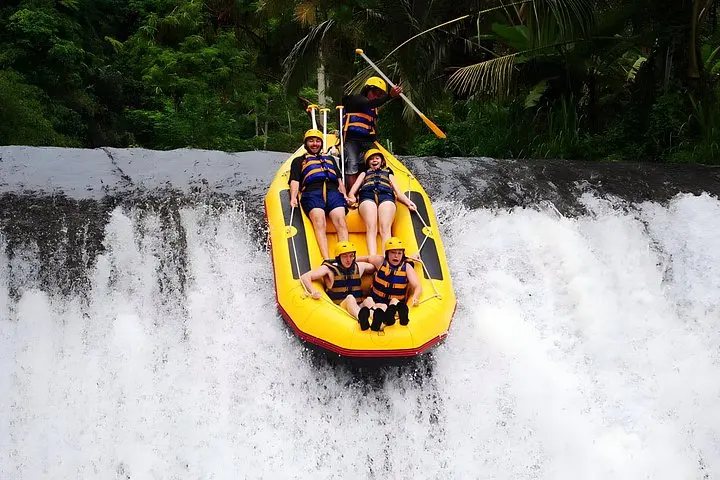
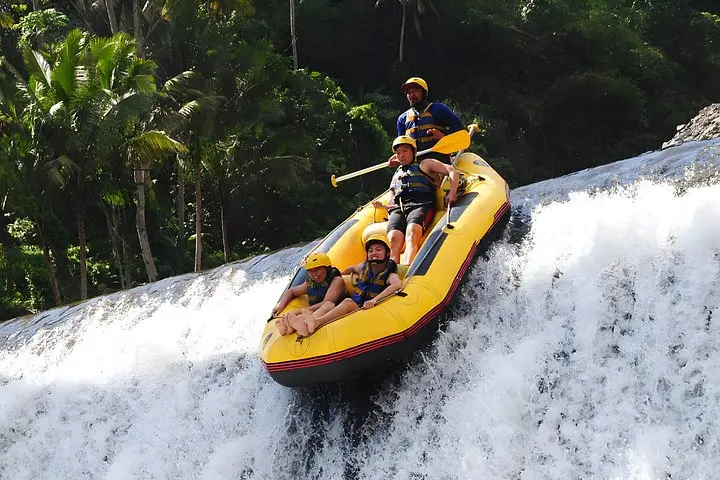
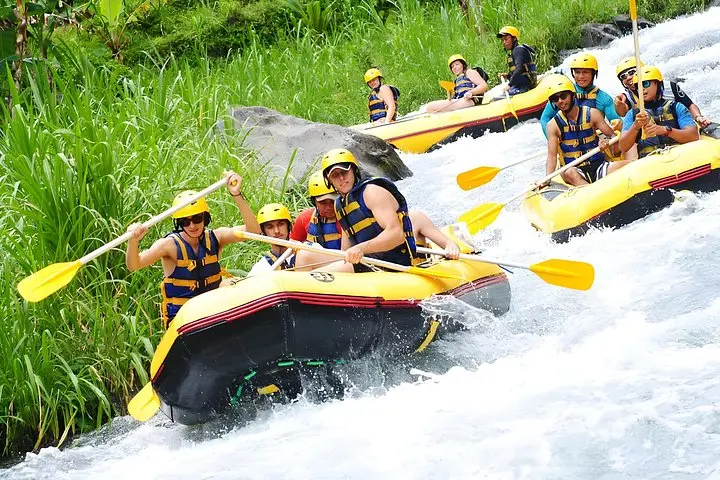
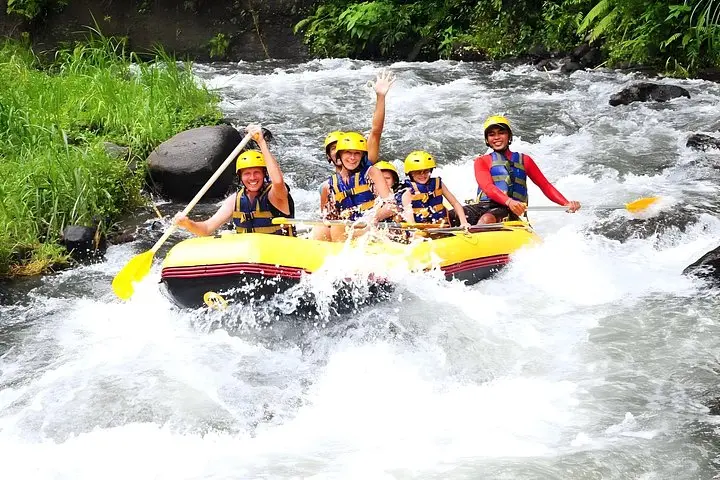
You step off the minivan and the world shifts: the road-side noise folds into birdsong and the bright rice paddies give way to a corridor of green where the Telaga Waja River cuts a fast, silver line. Guides are already checking helmets and life jackets; the air smells of wet stone and tropical leaf mold. When the raft drops into the current, the river takes command—rocky ledges nudge the raft, short, punchy rapids shove you sideways, and a curtain of waterfall drums the surface nearby. It’s an easy-on-paper run with enough teeth to make you grin.
You step off the minivan and the world shifts: the road-side noise folds into birdsong and the bright rice paddies give way to a corridor of green where the Telaga Waja River cuts a fast, silver line. Guides are already checking helmets and life jackets; the air smells of wet stone and tropical leaf mold. When the raft drops into the current, the river takes command—rocky ledges nudge the raft, short, punchy rapids shove you sideways, and a curtain of waterfall drums the surface nearby. It’s an easy-on-paper run with enough teeth to make you grin.
Telaga Waja has been carved out of volcanic soils from Mount Agung and the surrounding uplands, its channel scoured through basalt and sediment laid down over millennia. The river’s course passes through cultivated lowlands and forested gorges that have supported Balinese villages for generations. Locally the river plays a part in temple rituals and the rhythms of the subak irrigation system that defines rice-growing life on Bali.
Culturally, this stretch of east Bali still feels quieter than the west coast: you’ll see small shrines along the bank, and families working rice terraces in the distance. Geologically, the cliffs that frame the rapids are a reminder of Bali’s volcanic youth—hard layers broken by the river’s persistence. Guides will point out the shallow pools where kingfishers dart and the moss-slick stones that host tiny orchids.
Practical side: the advertised outing is about three hours total—roughly 2.5 hours on the water—covering approximately 8–10 kilometers of river depending on water level. Raft difficulty is moderate: rapids are punchy but technical extremes are rare; that makes the run suitable for beginners with a healthy appetite for adrenaline and for families with children age 6 and up (provider limits apply).
Expect a pre-trip safety briefing and demonstration of paddling commands, a guided photographer at key rapids, and a mid-journey break for photos at a calm pool or a waterfall splash. Operators typically provide safety-approved helmets, lifejackets, a waterproof bag, a buffet lunch, towels and shower facilities at the finish.
Timing matters: aim for a morning departure when light softens the jungle and levels are more predictable. Wear quick-dry layers and secure footwear; tape or small straps for cameras help. Listen to your guide—moving together as a team through the rapids is the core of the experience. If you’re planning from Ubud, allow 60–90 minutes for transfer depending on traffic. Leave your single-use plastics at the hotel and bring a small dry bag for essentials—the river will try to take anything loose.