THE ADVENTURE COLLECTIVE® · Independent discovery and booking for outdoor travel

Charge down 18 km of mountain-fed water on Telaga Waja: a 2–2.5 hour class III–IV rafting run with professional guides, included lunch and return transport. Read on for what to expect, safety tips and local context.
Charge down 18 km of mountain-fed water on Telaga Waja: a 2–2.5 hour class III–IV rafting run with professional guides, included lunch and return transport. Read on for what to expect, safety tips and local context.
The river takes charge before you do: cool mountain water tumbling off Mount Agung pushes a raft down a raw corridor of rock and jungle. On Telaga Waja the first paddle strokes are a negotiation with current—small surges that build to bold, choppy drops—while the valley opens into rice terraces and remote villages that watch the line of boats slip by.
Verified experiences and guided adventures in the surrounding area.
Operated by Bali White Water Rafting · Ubud, Bali
The river takes charge before you do: cool mountain water tumbling off Mount Agung pushes a raft down a raw corridor of rock and jungle. On Telaga Waja the first paddle strokes are a negotiation with current—small surges that build to bold, choppy drops—while the valley opens into rice terraces and remote villages that watch the line of boats slip by.
Telaga Waja’s flow begins on volcanic slopes of Mount Agung, carrying volcanic sediment and carving a narrow gorge that alternates calm pools with class III–IV rapids. Locals have used the river for irrigation and small-scale transport for generations; modern rafting arrived in the early 2000s as adventure tourism expanded from central Bali to the island’s eastern rivers.
Expect an 18 km downstream run taking roughly 2–2.5 hours on the water with professional guides, helmets, life jackets and waterproof bags included. The route threads through forested banks, exposed limestone, occasional cliff walls and clear mountain-fed water. Lunch, towels, changing facilities and return transport (shared AC van) are commonly provided.
Practical advice: arrive with swimwear under quick-dry clothes, secure shoes or reef sandals, sun protection and a small dry bag for essentials. If you’re new to rapids, communicate with your guide about ability and listen to safety briefings—this river is beginner-friendly but physically engaging. Aim for morning departures during the dry season for lower chance of heavy rain and smoother logistics. Hydrate before boarding and stash cameras in waterproof cases or leave them behind.
The on-water portion covers about 18 km and typically takes 2–2.5 hours; plan for extra time for transfers and changing.
Rapids range from class III to IV—suitable for beginners with a guide and engaging for experienced paddlers; expect some strong currents and drops.
Most operators include shared return transport, a simple Indonesian buffet lunch, towels and shower/changing facilities as part of the package.
Operators commonly accept guests roughly aged 6–65; not recommended for pregnant travelers or those with serious heart conditions—check provider limits before booking.
Bali White Water Rafting operates guided outdoor trips and adventures with an emphasis on safety, stewardship, and memorable experiences.
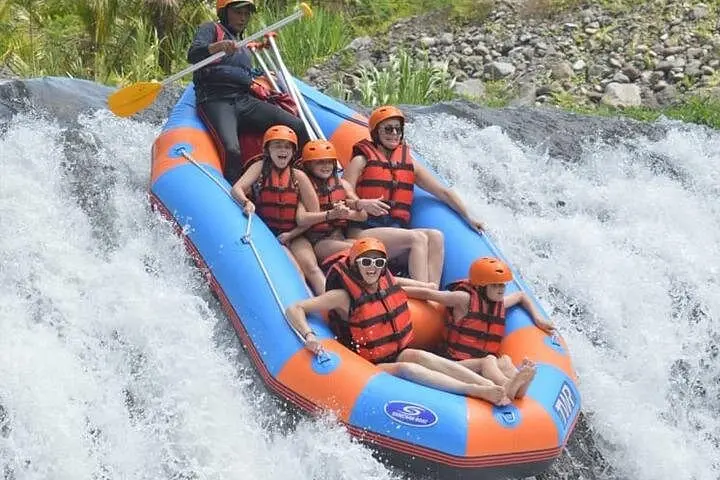
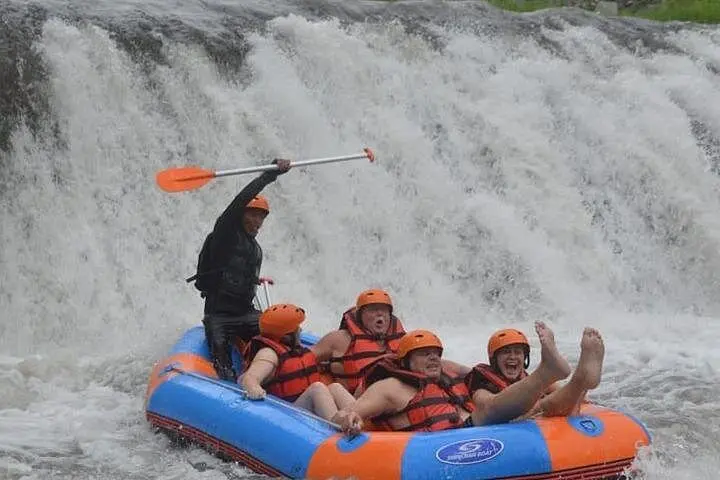
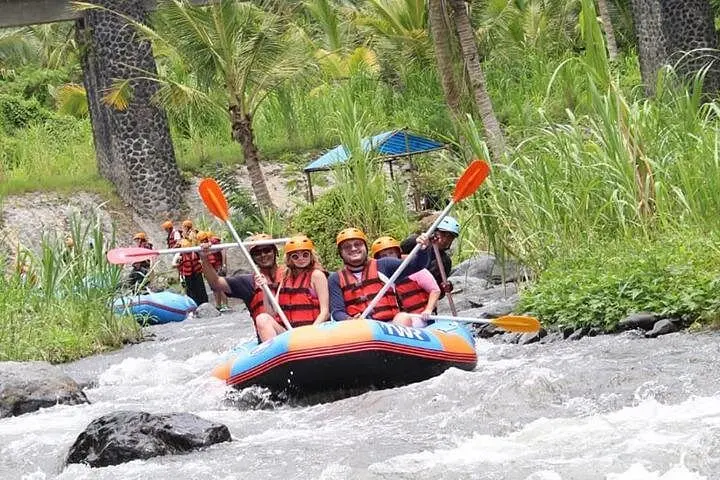
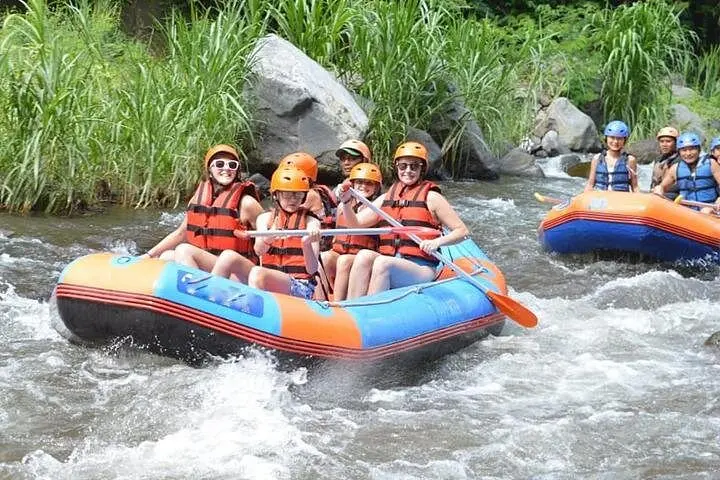
The river takes charge before you do: cool mountain water tumbling off Mount Agung pushes a raft down a raw corridor of rock and jungle. On Telaga Waja the first paddle strokes are a negotiation with current—small surges that build to bold, choppy drops—while the valley opens into rice terraces and remote villages that watch the line of boats slip by.
The river takes charge before you do: cool mountain water tumbling off Mount Agung pushes a raft down a raw corridor of rock and jungle. On Telaga Waja the first paddle strokes are a negotiation with current—small surges that build to bold, choppy drops—while the valley opens into rice terraces and remote villages that watch the line of boats slip by.
Telaga Waja’s flow begins on volcanic slopes of Mount Agung, carrying volcanic sediment and carving a narrow gorge that alternates calm pools with class III–IV rapids. Locals have used the river for irrigation and small-scale transport for generations; modern rafting arrived in the early 2000s as adventure tourism expanded from central Bali to the island’s eastern rivers.
Expect an 18 km downstream run taking roughly 2–2.5 hours on the water with professional guides, helmets, life jackets and waterproof bags included. The route threads through forested banks, exposed limestone, occasional cliff walls and clear mountain-fed water. Lunch, towels, changing facilities and return transport (shared AC van) are commonly provided.
Practical advice: arrive with swimwear under quick-dry clothes, secure shoes or reef sandals, sun protection and a small dry bag for essentials. If you’re new to rapids, communicate with your guide about ability and listen to safety briefings—this river is beginner-friendly but physically engaging. Aim for morning departures during the dry season for lower chance of heavy rain and smoother logistics. Hydrate before boarding and stash cameras in waterproof cases or leave them behind.