THE ADVENTURE COLLECTIVE® · Independent discovery and booking for outdoor travel

Set out from Puerto Colón for a focused two-hour eco-tour through the Teno‑Rasca Marine Protected Area. Biologist-guides, a hydrophone, and a small-group RIB make this a practical, educational way to observe whales and dolphins off southern Tenerife.
Set out from Puerto Colón for a focused two-hour eco-tour through the Teno‑Rasca Marine Protected Area. Biologist-guides, a hydrophone, and a small-group RIB make this a practical, educational way to observe whales and dolphins off southern Tenerife.
A morning breeze off the Atlantic brushes the marina as the boat slips free of Puerto Colón. Cushioned bench seats and the low profile of an 8‑meter rigid-hull inflatable keep you close to the water: the sea here doesn’t wait — it dares you to watch.
Verified experiences and guided adventures in the surrounding area.
Operated by Whale Watch Tenerife · Costa Adeje, Santa Cruz de Tenerife
A morning breeze off the Atlantic brushes the marina as the boat slips free of Puerto Colón. Cushioned bench seats and the low profile of an 8‑meter rigid-hull inflatable keep you close to the water: the sea here doesn’t wait — it dares you to watch.
The two-hour route threads the Teno‑Rasca Marine Protected Area, a stretch of deep shelf and underwater canyons where currents concentrate prey and, in turn, whales and dolphins. The Canary Islands carry a long maritime history — from early trade routes to modern conservation — and these waters now host research-minded tours run by biologists who pair live commentary with hydrophone listening.
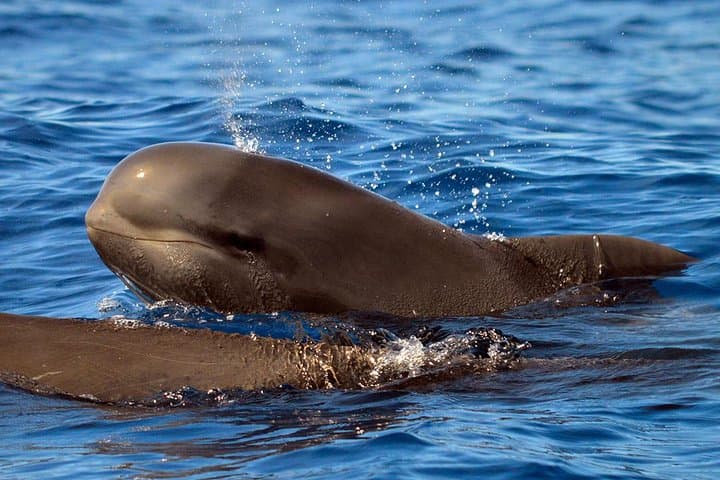
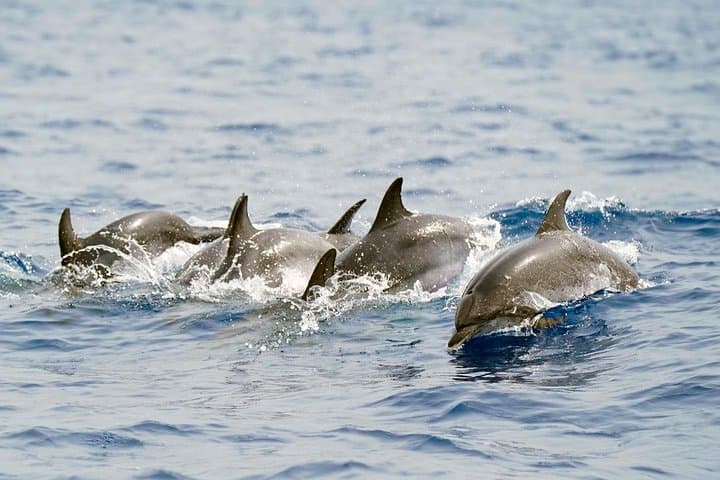
Geology shapes the show: volcanic slopes drop sharply offshore, creating nutrient-rich upwellings that attract short‑finned pilot whales and common and bottlenose dolphins. Culturally, Tenerife’s south coast blends tourist hubs with a working fishing tradition; onboard guides will point out both natural features and local practices.
Practically, tours run from Puerto Colón at fixed times and limit guests to around 10, improving sightlines and reducing disturbance. Expect a compact, informative experience rather than a high-speed chase: wear layers against spray, bring sunscreen and a small pack for essentials, and plan for 2 hours including boarding. Cameras are welcome; guides often email edited photos afterward. If seas are rough, operators reschedule or refund — safety and wildlife welfare guide decisions. For travelers wanting a focused, educational encounter with Atlantic cetaceans, this small-group outing balances access, science, and respect for the animals.
Tours are two hours long and commonly depart at 9:30am, 12:00pm, and 2:30pm from Puerto Colón Marina.
No sighting can be guaranteed, but the operator offers a sightings guarantee and runs in an area with frequent cetacean activity; they may reschedule or refund if nothing is seen.
Tours limit infants under 3 and have weight and mobility restrictions; guests should be able to board a small boat and remain seated or steady during the trip.
Yes — the boat carries a hydrophone so the biologist guide can share underwater sounds when animals are nearby.
Whale Watch Tenerife operates guided outdoor trips and adventures with an emphasis on safety, stewardship, and memorable experiences.
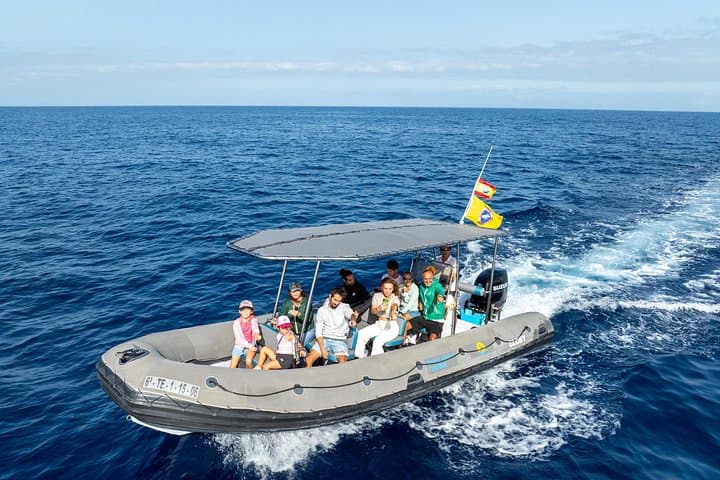
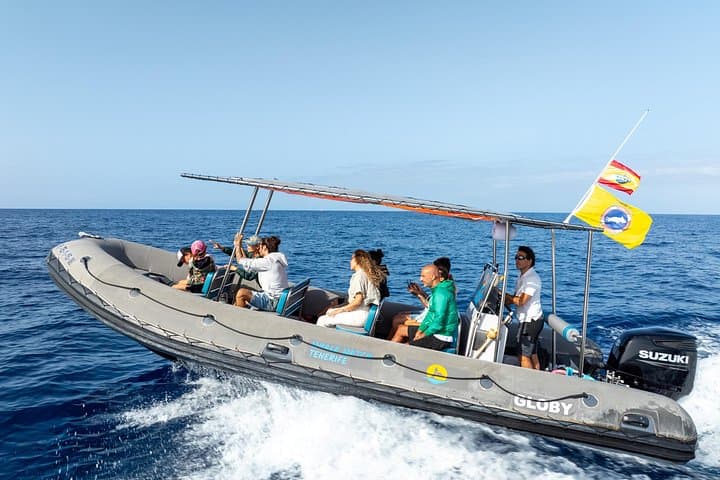
A morning breeze off the Atlantic brushes the marina as the boat slips free of Puerto Colón. Cushioned bench seats and the low profile of an 8‑meter rigid-hull inflatable keep you close to the water: the sea here doesn’t wait — it dares you to watch.
A morning breeze off the Atlantic brushes the marina as the boat slips free of Puerto Colón. Cushioned bench seats and the low profile of an 8‑meter rigid-hull inflatable keep you close to the water: the sea here doesn’t wait — it dares you to watch.
The two-hour route threads the Teno‑Rasca Marine Protected Area, a stretch of deep shelf and underwater canyons where currents concentrate prey and, in turn, whales and dolphins. The Canary Islands carry a long maritime history — from early trade routes to modern conservation — and these waters now host research-minded tours run by biologists who pair live commentary with hydrophone listening.
Geology shapes the show: volcanic slopes drop sharply offshore, creating nutrient-rich upwellings that attract short‑finned pilot whales and common and bottlenose dolphins. Culturally, Tenerife’s south coast blends tourist hubs with a working fishing tradition; onboard guides will point out both natural features and local practices.
Practically, tours run from Puerto Colón at fixed times and limit guests to around 10, improving sightlines and reducing disturbance. Expect a compact, informative experience rather than a high-speed chase: wear layers against spray, bring sunscreen and a small pack for essentials, and plan for 2 hours including boarding. Cameras are welcome; guides often email edited photos afterward. If seas are rough, operators reschedule or refund — safety and wildlife welfare guide decisions. For travelers wanting a focused, educational encounter with Atlantic cetaceans, this small-group outing balances access, science, and respect for the animals.