THE ADVENTURE COLLECTIVE® · Independent discovery and booking for outdoor travel

A compact day trip from Ulaanbaatar that pairs the soaring Genghis Khan statue with the granite spires and nomadic hospitality of Terelj National Park. Expect short hikes, a visit to Aryabal Meditation Temple, and lunch with a local family in a traditional ger.
A compact day trip from Ulaanbaatar that pairs the soaring Genghis Khan statue with the granite spires and nomadic hospitality of Terelj National Park. Expect short hikes, a visit to Aryabal Meditation Temple, and lunch with a local family in a traditional ger.
You turn east out of Ulaanbaatar and the city’s edge melts into rolling steppe; granite towers poke through grasslands and a broad bronze horseman watches the plain. The Genghis Khan statue rises on the horizon—an iron-eyed landmark that signals the gateway to Terelj National Park. Wind pushes at your jacket and the air tastes of cold grass and wood smoke.
Verified experiences and guided adventures in the surrounding area.
Operated by Nomadic Hospitality Mongolia · Ulaanbaatar, Töv Province
You turn east out of Ulaanbaatar and the city’s edge melts into rolling steppe; granite towers poke through grasslands and a broad bronze horseman watches the plain. The Genghis Khan statue rises on the horizon—an iron-eyed landmark that signals the gateway to Terelj National Park. Wind pushes at your jacket and the air tastes of cold grass and wood smoke.
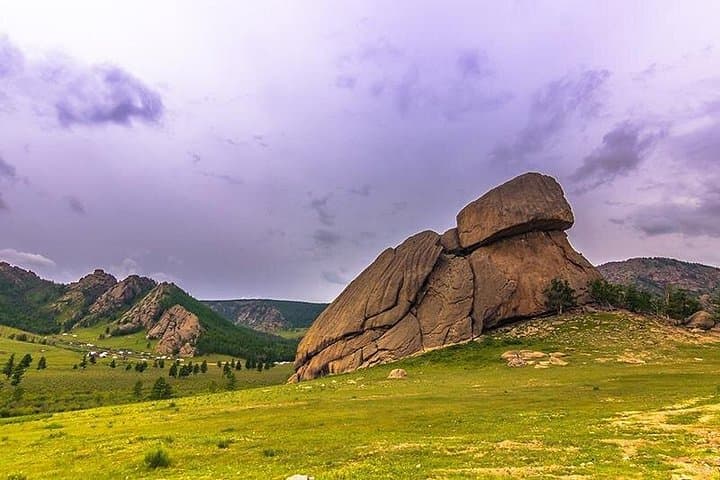
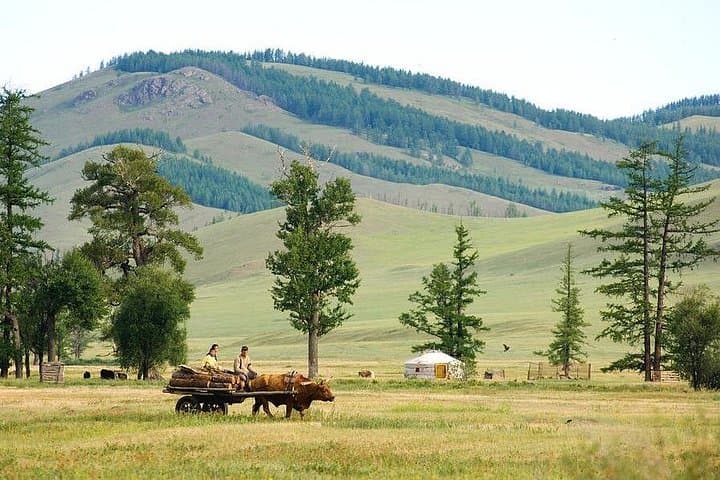
This day trip threads culture and landscape: the equestrian statue at Tsonjin Boldog commemorates Mongolia’s most famous leader and sits near a site where legend says the Khan found a golden whip. Terelj itself is a range of carved granite outcrops, glacially-scoured valleys, and river flats that shepherd nomadic life. Buddhist influence is visible at the Aryabal Meditation Temple—stone steps, prayer flags, and a handful of colorful stupas—while local nomadic families welcome visitors into gers for boiled mutton and milk tea.
Expect a mix of short hikes and cultural stops. The walk to Aryabal is steep stone steps—roughly 0.5–1 km round-trip with about 150–200 m of elevation gain—on uneven footing. Trails through the park vary from flat river-side walks to more rugged scrambling around rock formations. Guides typically provide bottled water and a cooked lunch at a family ger.
Practical planning: start early to avoid mid-day winds, wear grippy shoes, and bring layered clothing and sun protection. Photography rewards time spent on low light; conversations with nomads and a slow climb to temple viewpoints will give the clearest sense of why this route is Mongolia’s most-visited half-day escape.
Round-trip drive time is typically 1–1.5 hours each way depending on traffic, with a total tour length of about 6–8 hours.
Yes—it includes time in a private ger with a family who prepare local dishes; offerings and interactions vary by family but are genuine homestead visits.
The hike is short but steep—stone steps make the ascent more strenuous than the distance suggests; take it slow if you’re sensitive to inclines.
The tour notes stroller access for infants; however, steep steps and uneven trails at some stops may limit stroller use—bring a carrier for rough sections.
Nomadic Hospitality Mongolia operates guided outdoor trips and adventures with an emphasis on safety, stewardship, and memorable experiences.


You turn east out of Ulaanbaatar and the city’s edge melts into rolling steppe; granite towers poke through grasslands and a broad bronze horseman watches the plain. The Genghis Khan statue rises on the horizon—an iron-eyed landmark that signals the gateway to Terelj National Park. Wind pushes at your jacket and the air tastes of cold grass and wood smoke.
You turn east out of Ulaanbaatar and the city’s edge melts into rolling steppe; granite towers poke through grasslands and a broad bronze horseman watches the plain. The Genghis Khan statue rises on the horizon—an iron-eyed landmark that signals the gateway to Terelj National Park. Wind pushes at your jacket and the air tastes of cold grass and wood smoke.
This day trip threads culture and landscape: the equestrian statue at Tsonjin Boldog commemorates Mongolia’s most famous leader and sits near a site where legend says the Khan found a golden whip. Terelj itself is a range of carved granite outcrops, glacially-scoured valleys, and river flats that shepherd nomadic life. Buddhist influence is visible at the Aryabal Meditation Temple—stone steps, prayer flags, and a handful of colorful stupas—while local nomadic families welcome visitors into gers for boiled mutton and milk tea.
Expect a mix of short hikes and cultural stops. The walk to Aryabal is steep stone steps—roughly 0.5–1 km round-trip with about 150–200 m of elevation gain—on uneven footing. Trails through the park vary from flat river-side walks to more rugged scrambling around rock formations. Guides typically provide bottled water and a cooked lunch at a family ger.
Practical planning: start early to avoid mid-day winds, wear grippy shoes, and bring layered clothing and sun protection. Photography rewards time spent on low light; conversations with nomads and a slow climb to temple viewpoints will give the clearest sense of why this route is Mongolia’s most-visited half-day escape.