THE ADVENTURE COLLECTIVE® · Independent discovery and booking for outdoor travel

Leave Prague for a measured day at Terezín: an 18th-century fortress turned wartime ghetto whose brick walls now hold museums and memorials. This guided trip includes admissions to the Small Fortress and Big Fortress exhibits for a focused, six-hour historical visit.
Leave Prague for a measured day at Terezín: an 18th-century fortress turned wartime ghetto whose brick walls now hold museums and memorials. This guided trip includes admissions to the Small Fortress and Big Fortress exhibits for a focused, six-hour historical visit.
A low sun slides across the gray brick of Terezín as the coach drops you at the gate: ramparts rise like a deliberate challenge, and the town’s geometry announces itself in bastions and broad glacis. Walking through the gate, you feel the weight of a place built for defense, then repurposed into a prison of people and memory.
Verified experiences and guided adventures in the surrounding area.
Operated by BEST TOUR · Terezín, Ústí nad Labem Region
A low sun slides across the gray brick of Terezín as the coach drops you at the gate: ramparts rise like a deliberate challenge, and the town’s geometry announces itself in bastions and broad glacis. Walking through the gate, you feel the weight of a place built for defense, then repurposed into a prison of people and memory.
Terezín was laid out in the late 18th century under Emperor Joseph II as a star-shaped fortress to guard approaches to Bohemia. Its walls are layered history—masonry from the Habsburg military era and rooms hollowed into sites of the Second World War’s human tragedy. In 1940 the Germans converted the Big Fortress into a ghetto and the adjacent Small Fortress into a Gestapo prison; today both are museums documenting deportations, daily life under siege, and survivor testimony.
Geologically, Terezín sits on the low floodplain of the Labe (Elbe) with firm clay and compacted earth around the fortifications—expect weathered cobbles and firm walking along the defensive ring. Culturally, small local memorials and quiet plaques ask for respectful movement and time to read.
Practicalities: the guided day trip from Prague runs about six hours with included admissions and an air-conditioned vehicle; much of the visit is outdoors with interior museum stops. Wear sturdy shoes for uneven surfaces, bring a government ID (often required), and allow time to move slowly through exhibits—this is a listening, not a sprint. Photography rules apply in certain rooms; follow signage. Whether you come for study or reflection, Terezín asks for attention and leaves a durable impression.
The coach ride is roughly 60–80 minutes each way depending on traffic; the full tour lasts about six hours including admissions.
Yes—this tour includes entry fees to the designated museums and the Small Fortress as stated in the itinerary.
The tour is described as physically easy, but there are stairs, uneven ground and long exhibits; contact the operator about wheelchair access and special assistance before booking.
Tours can be operated bilingually; confirm your preferred language when booking as availability varies by departure date.
BEST TOUR operates guided outdoor trips and adventures with an emphasis on safety, stewardship, and memorable experiences.


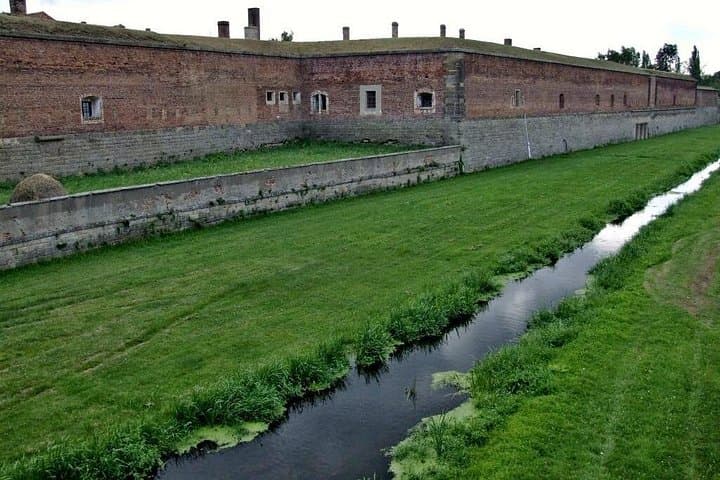

A low sun slides across the gray brick of Terezín as the coach drops you at the gate: ramparts rise like a deliberate challenge, and the town’s geometry announces itself in bastions and broad glacis. Walking through the gate, you feel the weight of a place built for defense, then repurposed into a prison of people and memory.
A low sun slides across the gray brick of Terezín as the coach drops you at the gate: ramparts rise like a deliberate challenge, and the town’s geometry announces itself in bastions and broad glacis. Walking through the gate, you feel the weight of a place built for defense, then repurposed into a prison of people and memory.
Terezín was laid out in the late 18th century under Emperor Joseph II as a star-shaped fortress to guard approaches to Bohemia. Its walls are layered history—masonry from the Habsburg military era and rooms hollowed into sites of the Second World War’s human tragedy. In 1940 the Germans converted the Big Fortress into a ghetto and the adjacent Small Fortress into a Gestapo prison; today both are museums documenting deportations, daily life under siege, and survivor testimony.
Geologically, Terezín sits on the low floodplain of the Labe (Elbe) with firm clay and compacted earth around the fortifications—expect weathered cobbles and firm walking along the defensive ring. Culturally, small local memorials and quiet plaques ask for respectful movement and time to read.
Practicalities: the guided day trip from Prague runs about six hours with included admissions and an air-conditioned vehicle; much of the visit is outdoors with interior museum stops. Wear sturdy shoes for uneven surfaces, bring a government ID (often required), and allow time to move slowly through exhibits—this is a listening, not a sprint. Photography rules apply in certain rooms; follow signage. Whether you come for study or reflection, Terezín asks for attention and leaves a durable impression.