THE ADVENTURE COLLECTIVE® · Independent discovery and booking for outdoor travel

Glide through Costa Rica’s largest mangrove complex on a three-hour naturalist-led tour from the Térraba river mouth. Choose boat or kayak and watch birds, monkeys, and estuarine life in a slow-moving, tidal maze.
Glide through Costa Rica’s largest mangrove complex on a three-hour naturalist-led tour from the Térraba river mouth. Choose boat or kayak and watch birds, monkeys, and estuarine life in a slow-moving, tidal maze.
Morning light slices across the black water as the boat eases out of the Térraba river mouth; mangrove roots reach down like the fingers of an old reef, holding soil and secrets. A guide points to a pause in the canopy where kingfishers perch, and the current seems to carry the rainforest’s breath toward the sea.
Verified experiences and guided adventures in the surrounding area.
Operated by Ballena Tour Costa Rica · Sierpe, Puntarenas
Morning light slices across the black water as the boat eases out of the Térraba river mouth; mangrove roots reach down like the fingers of an old reef, holding soil and secrets. A guide points to a pause in the canopy where kingfishers perch, and the current seems to carry the rainforest’s breath toward the sea.
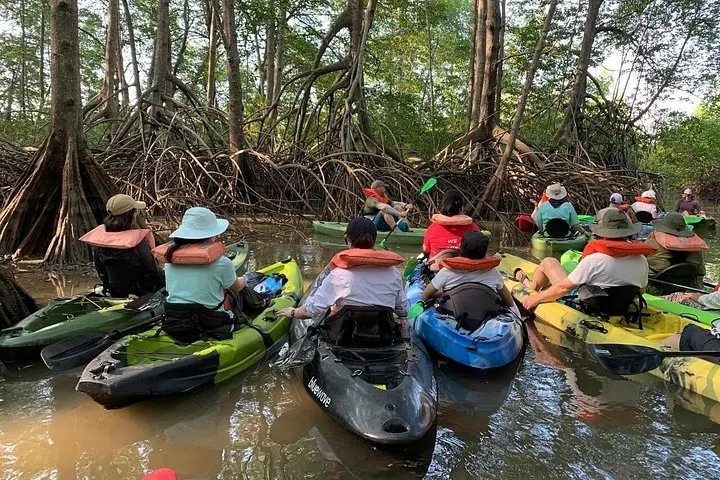
The Térraba-Sierpe Wetland is Costa Rica’s largest mangrove complex, formed where mountain-fed rivers meet the Pacific—sediment and tides built the tangle over millennia. The area has long been a resource for local communities who fish its channels and harvest coconut; conservation efforts now balance livelihoods with protection for birds, monkeys, and estuarine fish. Geologically, the maze of prop roots traps silt and creates nurseries that feed offshore reefs.
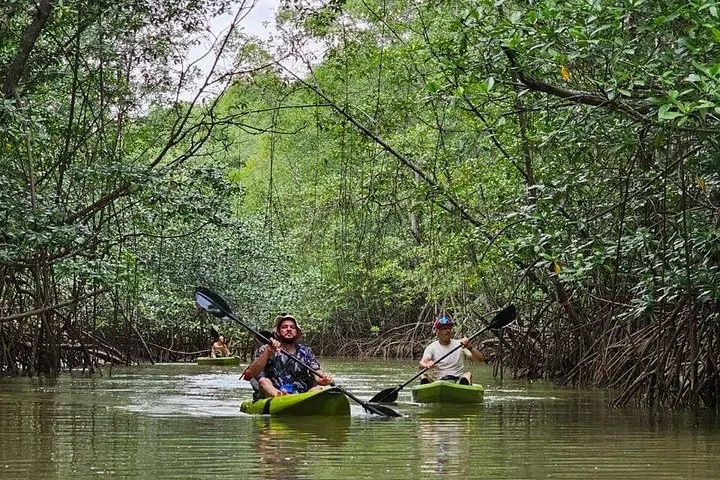
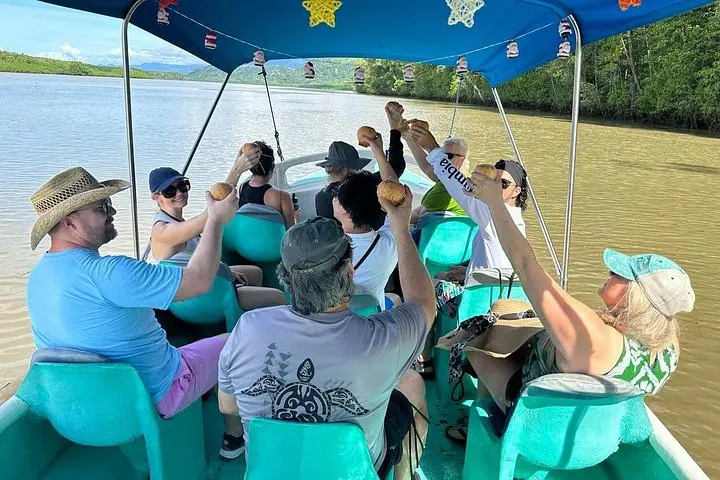
Expect a relaxed, observational outing: three hours moving slowly through shaded channels, either in a covered skiff or in single/double kayaks at no extra cost. Guides are naturalists who translate calls and currents, pointing out mollusks, howler monkeys, and territorial herons. Tides dictate exact timing; mornings often mean calmer water and cooler air.
Practical notes: bring sun protection and insect repellent, dress for humidity with quick-dry layers, and secure footwear for getting on and off the boat. Hydrate before boarding—the sun strengthens as the tour finishes.
The trip emphasizes wildlife viewing and quiet movement through a living interface of river and sea; it’s approachable for most travelers yet richly specific for photographers and nature-lovers looking to read the estuary’s subtle language.
No prior experience is required; guides provide a brief orientation and supervise groups, but basic stamina and the ability to sit and paddle for up to two hours helps.
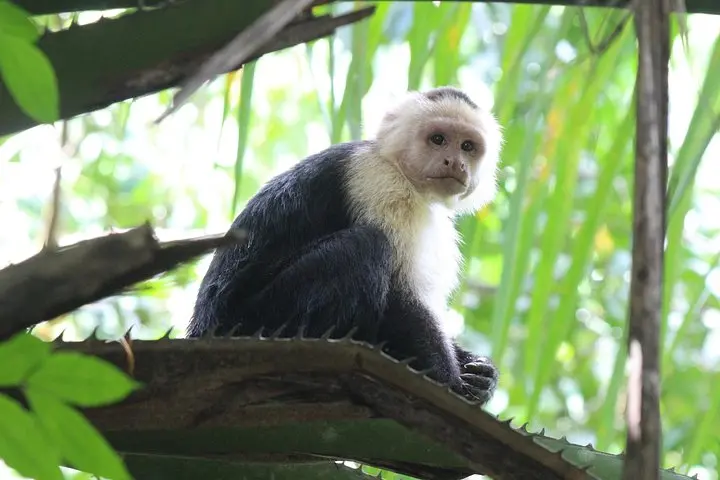
Common sightings include herons, kingfishers, howler and white-faced capuchin monkeys, crabs, and juvenile fish using the mangroves as nurseries.
Yes—tours are family-friendly but children should be comfortable in small boats and wear life jackets; check age policies with the operator before booking.
Tides and weather determine departure times and routes; operators may cancel if conditions are unsafe, and mornings in the wet season can be rainier but still navigable.
Ballena Tour Costa Rica operates guided outdoor trips and adventures with an emphasis on safety, stewardship, and memorable experiences.
Morning light slices across the black water as the boat eases out of the Térraba river mouth; mangrove roots reach down like the fingers of an old reef, holding soil and secrets. A guide points to a pause in the canopy where kingfishers perch, and the current seems to carry the rainforest’s breath toward the sea.
Morning light slices across the black water as the boat eases out of the Térraba river mouth; mangrove roots reach down like the fingers of an old reef, holding soil and secrets. A guide points to a pause in the canopy where kingfishers perch, and the current seems to carry the rainforest’s breath toward the sea.
The Térraba-Sierpe Wetland is Costa Rica’s largest mangrove complex, formed where mountain-fed rivers meet the Pacific—sediment and tides built the tangle over millennia. The area has long been a resource for local communities who fish its channels and harvest coconut; conservation efforts now balance livelihoods with protection for birds, monkeys, and estuarine fish. Geologically, the maze of prop roots traps silt and creates nurseries that feed offshore reefs.
Expect a relaxed, observational outing: three hours moving slowly through shaded channels, either in a covered skiff or in single/double kayaks at no extra cost. Guides are naturalists who translate calls and currents, pointing out mollusks, howler monkeys, and territorial herons. Tides dictate exact timing; mornings often mean calmer water and cooler air.
Practical notes: bring sun protection and insect repellent, dress for humidity with quick-dry layers, and secure footwear for getting on and off the boat. Hydrate before boarding—the sun strengthens as the tour finishes.
The trip emphasizes wildlife viewing and quiet movement through a living interface of river and sea; it’s approachable for most travelers yet richly specific for photographers and nature-lovers looking to read the estuary’s subtle language.