THE ADVENTURE COLLECTIVE® · Independent discovery and booking for outdoor travel

Dine above the sea on a one-day terraced rice field restaurant near the Kujukushima islands. Harvest vegetables, cook rice over a wood-fired kamado and eat on bamboo plates with sweeping bay views — a three-hour hands-on rural immersion.
Dine above the sea on a one-day terraced rice field restaurant near the Kujukushima islands. Harvest vegetables, cook rice over a wood-fired kamado and eat on bamboo plates with sweeping bay views — a three-hour hands-on rural immersion.
You step onto a shelf of green carved into the hillside, rice seedlings whispering under your feet and the Kujukushima islands spread like a scattered chain of pearls on the bay below. The wind off the water dares you to slow down; gulls cut across the light, and a local farmer calls out directions with practiced calm. This is a day set to the measured rhythm of satoyama — mountain, sea and field in one frame.
Verified experiences and guided adventures in the surrounding area.
Operated by 株式会社VISIT九州 · Sasebo, Nagasaki Prefecture
You step onto a shelf of green carved into the hillside, rice seedlings whispering under your feet and the Kujukushima islands spread like a scattered chain of pearls on the bay below. The wind off the water dares you to slow down; gulls cut across the light, and a local farmer calls out directions with practiced calm. This is a day set to the measured rhythm of satoyama — mountain, sea and field in one frame.
These terraced paddies reflect centuries of small-scale Japanese agriculture: hand-managed plots that follow contours to capture rain and rinse nutrients downhill. Geologically the terraces cling to volcanic-derived soils and old marine terraces; culturally they remain places where seasonal work, communal meals and craft converge. The one-day restaurant opens in cooperation with local farmers — you’ll harvest vegetables, learn to cook rice on a wood-fired kamado, and shape a bamboo bowl, then eat on handmade plates with views that sharpen every flavor.
Practical side: the experience runs about three hours with light walking across uneven, sometimes muddy terraces and short, gentle slopes. Wear sturdy, closed-toe shoes and dress for sun or sudden spray from sea breezes; a rain jacket can change a soggy day into an atmospheric one. The program welcomes families and children — tasks are simple but active — and lunch uses fresh local produce (tell organizers about allergies ahead). Bring water, a sun hat, a camera for wide seascapes, and an open appetite: the food and the landscape are both made by patient hands. This is a short, tactile immersion into rural Nagasaki life that leaves you refreshed and quietly more connected to where your food begins.
The program lasts about three hours and includes a guided walk of the terraces, hands-on farming activities, and a farmhouse lunch.
Yes — families are welcome and activities are designed to be family-friendly, though children should be supervised on sloped or wet sections of the terraces.
Terrain includes uneven terraces and short slopes; those with significant mobility issues or spinal concerns should check accessibility with the operator beforehand.
Lunch is made from local produce; inform the operator during booking so they can accommodate or advise on suitability.
株式会社VISIT九州 operates guided outdoor trips and adventures with an emphasis on safety, stewardship, and memorable experiences.
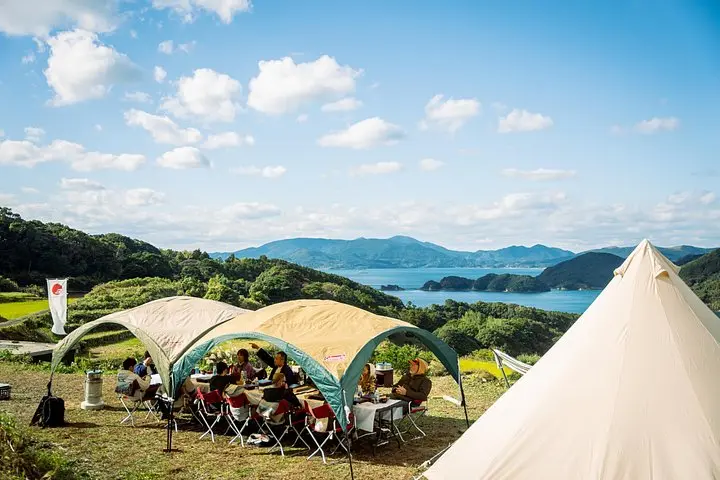
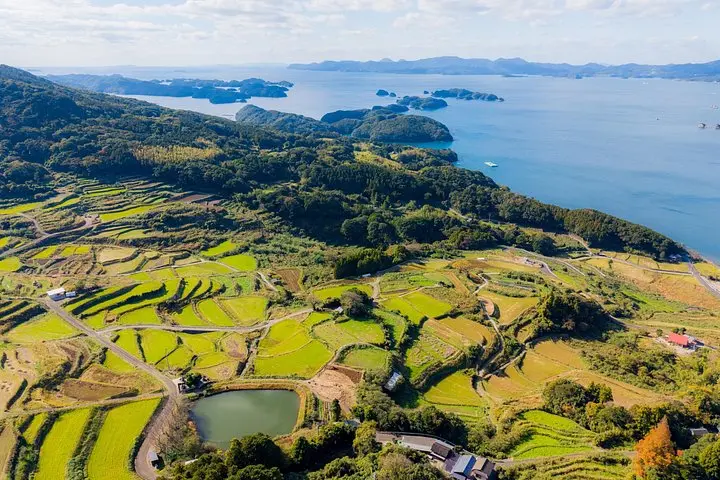
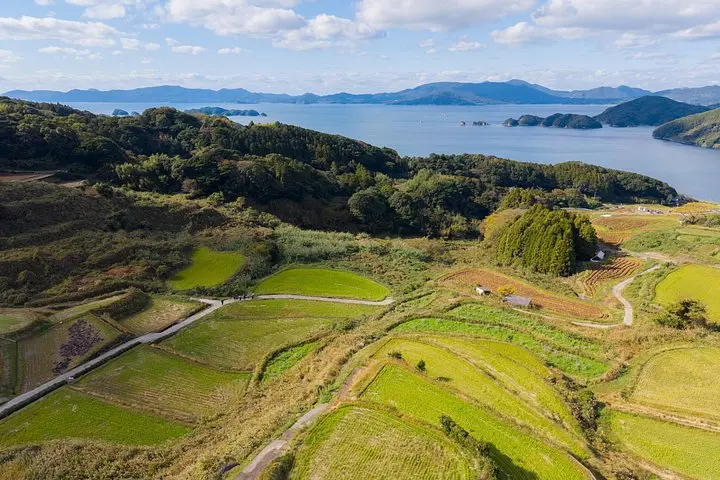
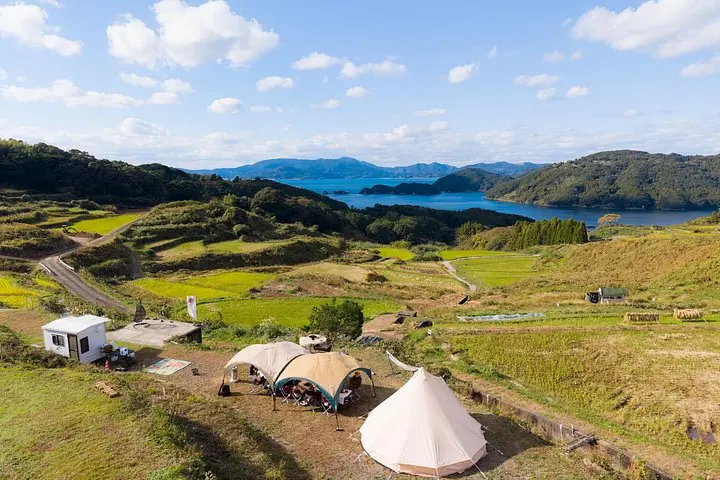
You step onto a shelf of green carved into the hillside, rice seedlings whispering under your feet and the Kujukushima islands spread like a scattered chain of pearls on the bay below. The wind off the water dares you to slow down; gulls cut across the light, and a local farmer calls out directions with practiced calm. This is a day set to the measured rhythm of satoyama — mountain, sea and field in one frame.
You step onto a shelf of green carved into the hillside, rice seedlings whispering under your feet and the Kujukushima islands spread like a scattered chain of pearls on the bay below. The wind off the water dares you to slow down; gulls cut across the light, and a local farmer calls out directions with practiced calm. This is a day set to the measured rhythm of satoyama — mountain, sea and field in one frame.
These terraced paddies reflect centuries of small-scale Japanese agriculture: hand-managed plots that follow contours to capture rain and rinse nutrients downhill. Geologically the terraces cling to volcanic-derived soils and old marine terraces; culturally they remain places where seasonal work, communal meals and craft converge. The one-day restaurant opens in cooperation with local farmers — you’ll harvest vegetables, learn to cook rice on a wood-fired kamado, and shape a bamboo bowl, then eat on handmade plates with views that sharpen every flavor.
Practical side: the experience runs about three hours with light walking across uneven, sometimes muddy terraces and short, gentle slopes. Wear sturdy, closed-toe shoes and dress for sun or sudden spray from sea breezes; a rain jacket can change a soggy day into an atmospheric one. The program welcomes families and children — tasks are simple but active — and lunch uses fresh local produce (tell organizers about allergies ahead). Bring water, a sun hat, a camera for wide seascapes, and an open appetite: the food and the landscape are both made by patient hands. This is a short, tactile immersion into rural Nagasaki life that leaves you refreshed and quietly more connected to where your food begins.