THE ADVENTURE COLLECTIVE® · Independent discovery and booking for outdoor travel

Spend a day tracing India’s woven traditions from Dilli Haat to Hauz Khas. This guided shopping tour pairs market savvy with artisan access—expect government emporia, busy bazaars, and a hands-on visit to carpet workshops.
Spend a day tracing India’s woven traditions from Dilli Haat to Hauz Khas. This guided shopping tour pairs market savvy with artisan access—expect government emporia, busy bazaars, and a hands-on visit to carpet workshops.
You step from a temperate hotel lobby into Delhi’s layered streets: a handloom stall at Dilli Haat throws color into the morning light, rickshaw horns punctuate the air, and the day stretches toward the workshops of Hauz Khas.
Verified experiences and guided adventures in the surrounding area.
Operated by Agora Voyages Pvt. Ltd. · New Delhi, Delhi
You step from a temperate hotel lobby into Delhi’s layered streets: a handloom stall at Dilli Haat throws color into the morning light, rickshaw horns punctuate the air, and the day stretches toward the workshops of Hauz Khas.
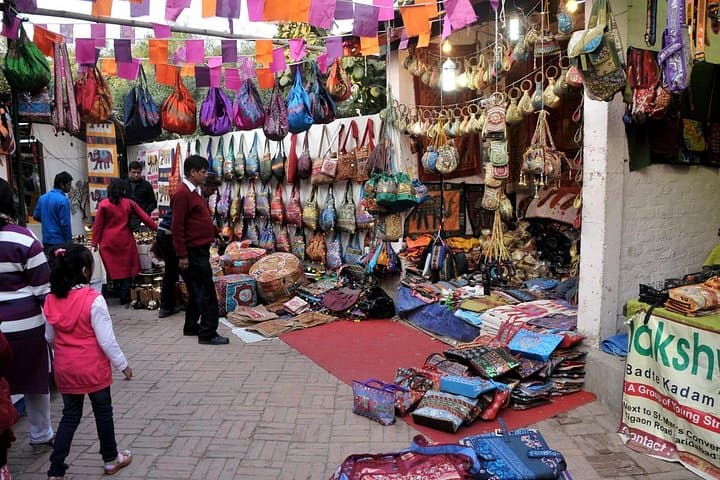
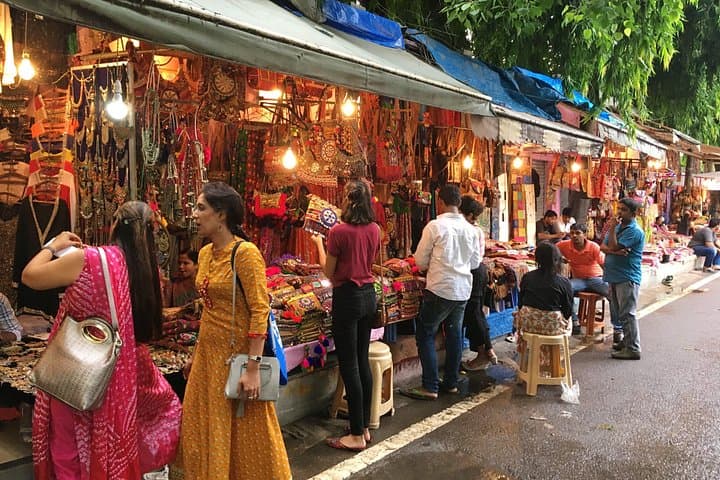
This full-day shopping route threads through markets that have driven Indian textile culture for centuries. Dilli Haat showcases regional crafts; the Central Cottage Industries Emporium preserves government-curated handlooms; Chandni Chowk and Connaught Place still move bolts of silk, cotton and chiffon like arteries of the city. Carpets here reflect Mughal and Persian influences—knot counts, natural-dye palettes and regional motifs that trace back generations.
Beyond fabrics, pickers and weavers populate small carpet workshops where looms creak and artisans correct a weft. Shahpur Jat and Hauz Khas introduce contemporary designers translating traditional textiles into modern cuts and home pieces.
Practical guidance: the tour runs about 7–8 hours with hotel pickup and drop-off; plan for steady walking and frequent stops. Carry a secure crossbody, small bills and a portable charger. Bargaining is expected in bazaars—start 20–40% below the asking price for textiles, less for fixed-price government emporia. Inspect weave density and backing on carpets; ask for provenance or maker details when you can.
Timing matters: start mornings to avoid afternoon traffic and mid-day heat. Use bottled water provided in the vehicle and pause for a proper lunch to reset—Delhi’s food scene is part of the trip.
This tour is as much about meeting makers as it is about buying: treat purchases as cultural exchange and you’ll leave with objects that carry place and craft, not just color.
Yes—bargaining is common in bazaars like Chandni Chowk; fixed-price government emporia and designer boutiques generally do not negotiate.
Carry cash for smaller stalls; many larger shops accept cards and digital wallets—confirm before purchase and keep receipts for higher-value items.
Yes, the itinerary typically includes a carpet workshop where you can observe weaving and ask artisans about techniques and materials.
The tour is rated easy with hotel pickup and drop-off, but expect walking and crowded areas; request assistance or slower pacing when booking if needed.
Agora Voyages Pvt. Ltd. operates guided outdoor trips and adventures with an emphasis on safety, stewardship, and memorable experiences.
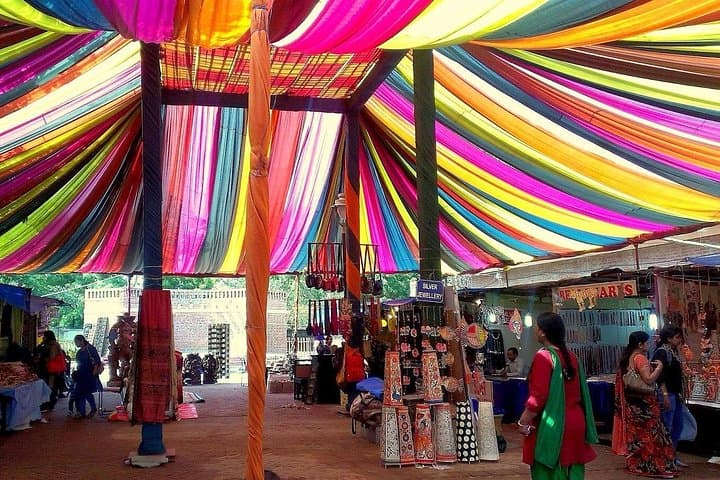
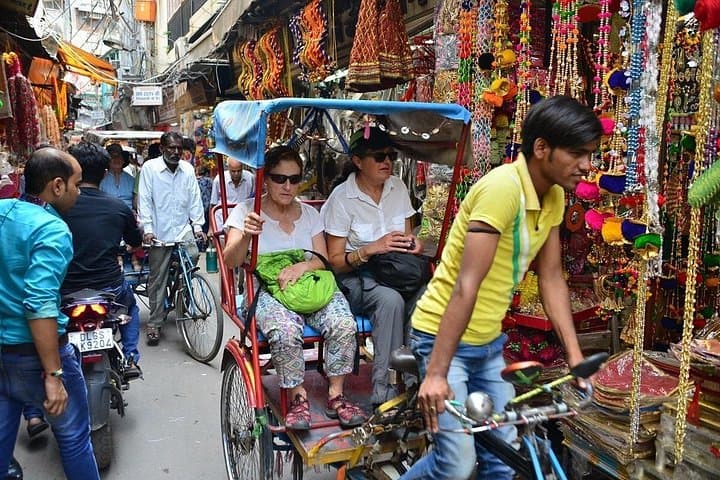
You step from a temperate hotel lobby into Delhi’s layered streets: a handloom stall at Dilli Haat throws color into the morning light, rickshaw horns punctuate the air, and the day stretches toward the workshops of Hauz Khas.
You step from a temperate hotel lobby into Delhi’s layered streets: a handloom stall at Dilli Haat throws color into the morning light, rickshaw horns punctuate the air, and the day stretches toward the workshops of Hauz Khas.
This full-day shopping route threads through markets that have driven Indian textile culture for centuries. Dilli Haat showcases regional crafts; the Central Cottage Industries Emporium preserves government-curated handlooms; Chandni Chowk and Connaught Place still move bolts of silk, cotton and chiffon like arteries of the city. Carpets here reflect Mughal and Persian influences—knot counts, natural-dye palettes and regional motifs that trace back generations.
Beyond fabrics, pickers and weavers populate small carpet workshops where looms creak and artisans correct a weft. Shahpur Jat and Hauz Khas introduce contemporary designers translating traditional textiles into modern cuts and home pieces.
Practical guidance: the tour runs about 7–8 hours with hotel pickup and drop-off; plan for steady walking and frequent stops. Carry a secure crossbody, small bills and a portable charger. Bargaining is expected in bazaars—start 20–40% below the asking price for textiles, less for fixed-price government emporia. Inspect weave density and backing on carpets; ask for provenance or maker details when you can.
Timing matters: start mornings to avoid afternoon traffic and mid-day heat. Use bottled water provided in the vehicle and pause for a proper lunch to reset—Delhi’s food scene is part of the trip.
This tour is as much about meeting makers as it is about buying: treat purchases as cultural exchange and you’ll leave with objects that carry place and craft, not just color.