THE ADVENTURE COLLECTIVE® · Independent discovery and booking for outdoor travel

Head into the quieter side of the Thar Desert for a half-day jeep-and-camel journey at sunset. Visit a working oasis and an inhabited nomad village, enjoy an open-fire meal, and end under an intense star canopy.
Head into the quieter side of the Thar Desert for a half-day jeep-and-camel journey at sunset. Visit a working oasis and an inhabited nomad village, enjoy an open-fire meal, and end under an intense star canopy.
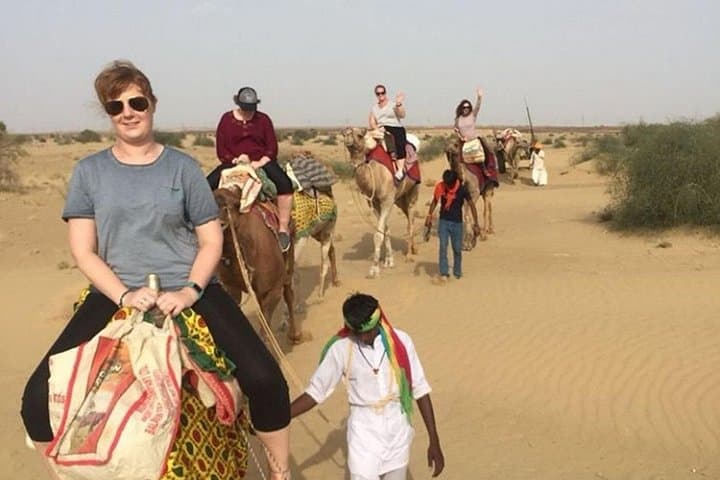
The sun slides low over a sweep of ochre dunes as a small caravan of camels moves like slow punctuation across the horizon. Sand sighs under hoof and wind; the jeep that carried you shrinks behind a ridge and the desert opens into an ancient, surprisingly green oasis where children from a nearby nomad village watch with bright curiosity.
Verified experiences and guided adventures in the surrounding area.
Operated by Rumis Desert Camp · Jaisalmer, Rajasthan
The sun slides low over a sweep of ochre dunes as a small caravan of camels moves like slow punctuation across the horizon. Sand sighs under hoof and wind; the jeep that carried you shrinks behind a ridge and the desert opens into an ancient, surprisingly green oasis where children from a nearby nomad village watch with bright curiosity.
The Thar is young by geological standards — wind-sculpted sand over a hard basin — and its human story is older than many towns here. Nomadic families, salt-trade routes and abandoned settlements from the 18th century (think Kuldhara-style ruins) speak to a landscape that alternates between scarcity and sudden community. Gently sloping dunes give way to a freshwater well or johad that still serves dozens of villages; here, traditions of tea-making, open-fire cooking and oral storytelling persist.
Practical guidance: most of the outing is by jeep, with roughly an hour on camelback into the dunes before breaking for chai and an open-fire meal. Expect sandy walking, brief rises and a horizon that can be brutally bright in daytime and astonishingly cold after sunset. Wear closed-toe shoes you don’t mind getting sand in, sun protection, and a warm layer for the return. Bring cash for small purchases or tips, and keep water close — guides often supply bottled water but extra is prudent.
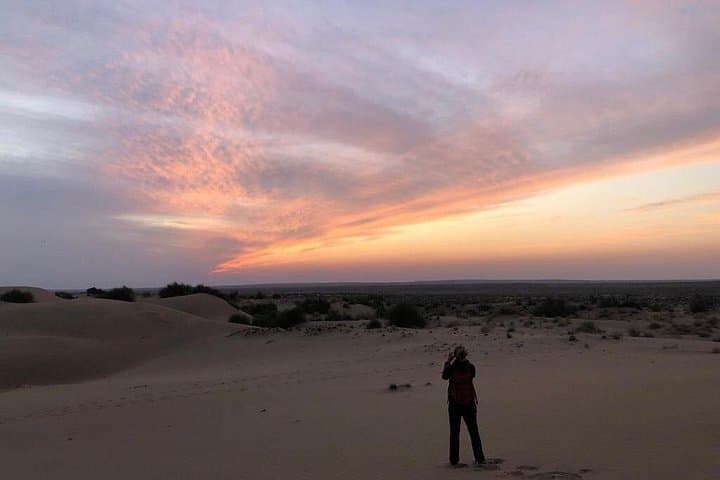
Photography thrives at golden hour; stargazing is exceptional on clear nights. Be respectful in nomad villages: ask before photographing people and accept that the visit should benefit hosts directly.
The camel segment is about one hour round-trip into the dune field, timed to reach a sunset vantage before returning to the jeep.
Yes — the tour notes children are welcome, but infants and very young kids may find camel rides uncomfortable; bring baby carriers if needed.
Yes — the experience includes snacks, chai and an open-fire dinner prepared by the camel guide; vegetarian options are available if requested.
Facilities are basic or absent in remote dune areas; use restrooms in Jaisalmer before departure and plan accordingly during the experience.
Rumis Desert Camp operates guided outdoor trips and adventures with an emphasis on safety, stewardship, and memorable experiences.


The sun slides low over a sweep of ochre dunes as a small caravan of camels moves like slow punctuation across the horizon. Sand sighs under hoof and wind; the jeep that carried you shrinks behind a ridge and the desert opens into an ancient, surprisingly green oasis where children from a nearby nomad village watch with bright curiosity.
The sun slides low over a sweep of ochre dunes as a small caravan of camels moves like slow punctuation across the horizon. Sand sighs under hoof and wind; the jeep that carried you shrinks behind a ridge and the desert opens into an ancient, surprisingly green oasis where children from a nearby nomad village watch with bright curiosity.
The Thar is young by geological standards — wind-sculpted sand over a hard basin — and its human story is older than many towns here. Nomadic families, salt-trade routes and abandoned settlements from the 18th century (think Kuldhara-style ruins) speak to a landscape that alternates between scarcity and sudden community. Gently sloping dunes give way to a freshwater well or johad that still serves dozens of villages; here, traditions of tea-making, open-fire cooking and oral storytelling persist.
Practical guidance: most of the outing is by jeep, with roughly an hour on camelback into the dunes before breaking for chai and an open-fire meal. Expect sandy walking, brief rises and a horizon that can be brutally bright in daytime and astonishingly cold after sunset. Wear closed-toe shoes you don’t mind getting sand in, sun protection, and a warm layer for the return. Bring cash for small purchases or tips, and keep water close — guides often supply bottled water but extra is prudent.
Photography thrives at golden hour; stargazing is exceptional on clear nights. Be respectful in nomad villages: ask before photographing people and accept that the visit should benefit hosts directly.