THE ADVENTURE COLLECTIVE® · Independent discovery and booking for outdoor travel

Hear two leading Hudson River School scholars unpack Thomas Cole’s legacy in the 1846 New Studio. This special opening conversation at the Thomas Cole National Historic Site pairs deep scholarship with direct access to the new Richard Sharp Gallery and same‑day discount on admission.
Hear two leading Hudson River School scholars unpack Thomas Cole’s legacy in the 1846 New Studio. This special opening conversation at the Thomas Cole National Historic Site pairs deep scholarship with direct access to the new Richard Sharp Gallery and same‑day discount on admission.
Book with Thomas Cole National Historic Site
Verified experiences and guided adventures in the surrounding area.
Operated by Thomas Cole National Historic Site · Catskill, New York
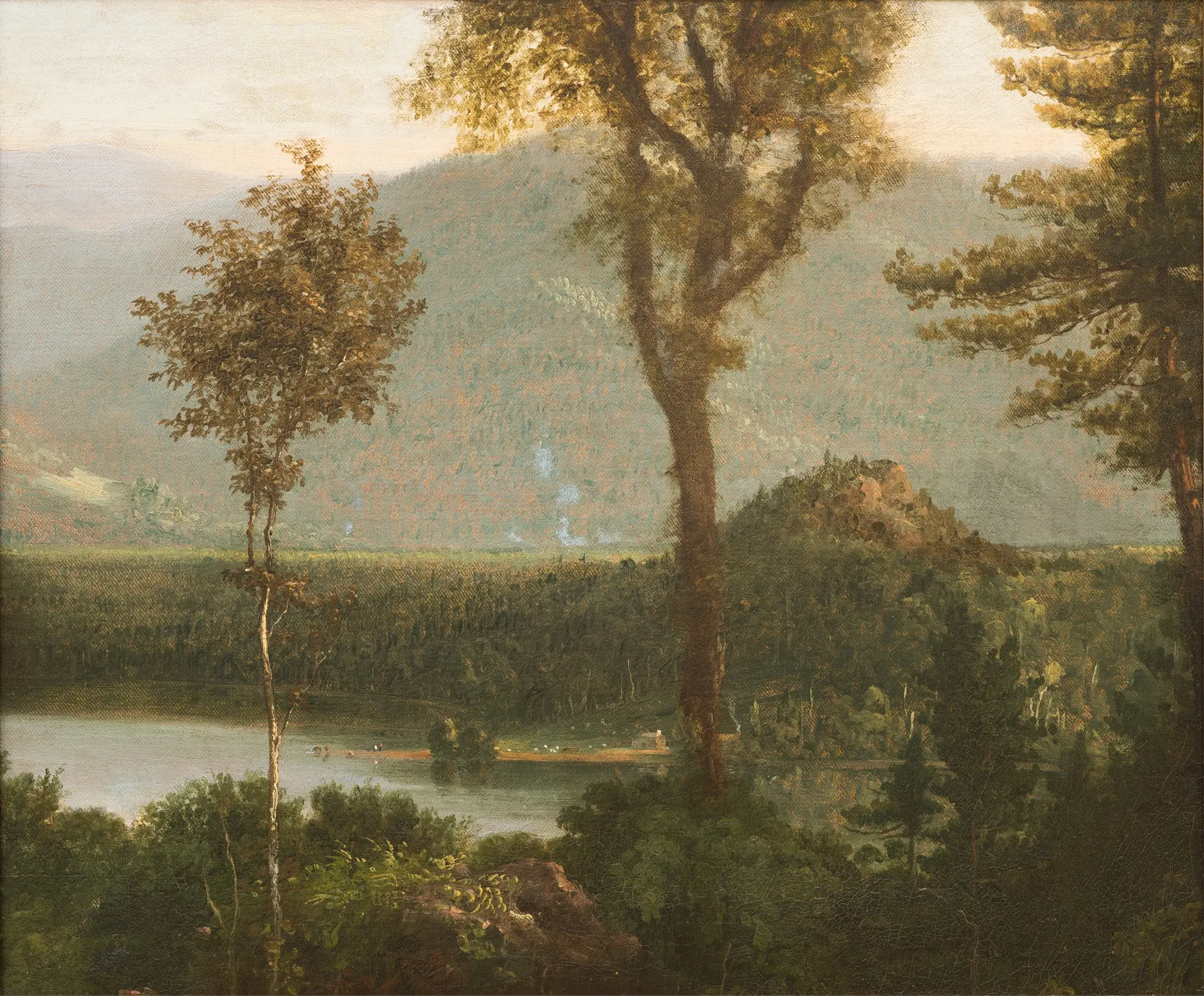
At the Thomas Cole National Historic Site in Catskill, New York, the opening conversation for the new exhibition “Thomas Cole: An American Visionary” brings together two leading scholars — Alan Wallach and Dr. Nancy Siegel — for a focused afternoon on April 25. Held in the 1846 New Studio and coinciding with the debut of the Richard Sharp Gallery, this program highlights Cole’s role as founder of the Hudson River School and the ways his landscape paintings rewired American art. The site combines a literal and cultural landscape: an 1846 studio, the Main House, and sweeping views across the Catskill foothills toward the Hudson River. Visitors can trace the contours in Cole’s canvases to the actual Devonian-era Catskill Formation ridgelines and stone outcrops that define the valley. The conversation draws on decades of scholarship—Wallach’s long work on American art history and Siegel’s research into landscape and underrepresented nineteenth-century women artists—making complex ideas accessible for general audiences. Admission includes access to the New Studio for the talk, plus a 50% discount on same‑day General Admission to tour the historic buildings open 11 am–4 pm. Practical details matter: check in at the Cole Center via the Spring Street entrance; parking is free in the shared lot with Temple Israel; pathways are loose gravel and most public buildings are wheelchair accessible. Pets on leash are welcome on the grounds but not inside the buildings. Why come for an opening conversation? The voice of a scholar in the room animates brushstrokes on the wall: you’ll hear how Cole used light, color, and compositional drama to argue for a distinct American art, and how the landscape around Catskill fed that argument. The 1846 New Studio gives a rare, intimate view of an artist’s working environment—plaster patches, skylights, and sightlines that still match scenes in the collection. Bring a notebook and a camera, then stay afterwards to wander the property and the nearby Catskill town for coffee and galleries. This program suits history buffs, painters, hikers who love art, and families looking for an accessible cultural outing. Tickets are non-refundable; questions can be sent to [email protected] or by phone at 518-943-7465 ext. 122. Arrive early to secure seating—late entry may not be accommodated. In Catskill, art history feels immediate: you can stand where Cole stood and see the same hill he painted, a reminder of why this place changed how America saw its land. Alan Wallach brings more than fifty years of teaching and writing on American art, while Dr. Nancy Siegel connects landscape studies to culinary and print history and her work on underrecognized women artists; together their exchange will illuminate Cole’s technique, the social contexts of his subjects, and the exhibition’s curatorial choices today.
Check in at the Cole Center using the Spring Street entrance; staff will direct you to the 1846 New Studio.
The Cole Center, Storehouse, and 1846 New Studio are wheelchair accessible; the Main House first floor is accessible via an elevator lift but the second floor requires stairs.
Tickets are non-refundable—please arrive on time as late entry may not be guaranteed.
Pets are allowed on the grounds if leashed but may not enter buildings or the Main House porch; service animals are welcome.
Free parking is available in the lot shared with Temple Israel; follow signage for visitor parking and the Spring Street entrance.
Email [email protected] (preferred) or call 518-943-7465 ext. 122 for ticketing and accessibility questions.
Thomas Cole National Historic Site in Catskill, New York preserves the home, studio, and landscape associated with Thomas Cole, founder of the Hudson River School. The site presents guided and self-guided visits, rotating exhibitions, hands-on workshops, seasonal festivals, and group tour packages for diverse audiences. Programs include curator-led tours, Sunday Salon talks, artist and curator roundtables, craft workshops such as needle-felting and pressed-flower making, plant-dyeing classes, educational teacher workshops, and family events tied to harvest celebrations. The site also interprets Emily Cole’s legacy through exhibitions that feature painted porcelain, works on paper, and contemporary responses to her art. Museum educators and trained Museum Guides lead visits and workshops, and collaborating historians, curators, and artists contribute expertise to public programs. Group visits accommodate 12 to 40 participants with guided experiences up to seventy-five minutes, followed by access to the on-site gift shop. Special events have included partnerships with local organizations such as Wild Hudson Valley and Arm-of-the-Sea Theater, highlighting regional ecology, agricultural history, and community creativity. The Thomas Cole National Historic Site operates as a steward of historic architecture, landscape, and artistic legacy, offering accessible educational programming for families, students, art lovers, and historians. Visitors to the site encounter curated exhibitions, interactive activities, and opportunities to learn about early nineteenth-century American art and environmental ideas that informed Thomas Cole’s work. Trained Museum Guides answer questions and enhance interpretation for visitors; special exhibitions, rotating programs, and partnerships connect Cole’s art to landscape, regional history, ecological themes, and contemporary artistic practice and education.
Book with Thomas Cole National Historic Site