THE ADVENTURE COLLECTIVE® · Independent discovery and booking for outdoor travel

Spend a half-day from Taipei exploring Feitsui Reservoir’s ‘thousand island’ inlets and Pinglin’s tea terraces. Visit the Pinglin Tea Museum, taste Wenshan Baozhong, and take in hilltop tea-plantation views.
Spend a half-day from Taipei exploring Feitsui Reservoir’s ‘thousand island’ inlets and Pinglin’s tea terraces. Visit the Pinglin Tea Museum, taste Wenshan Baozhong, and take in hilltop tea-plantation views.
A low-slung bus eases out of Taipei and, within an hour, the city’s concrete chatter softens into a green hush. Hills fold into one another; the Feitsui Reservoir appears like a fractured mirror—shallows and inlets carving a ‘thousand-island’ pattern that dares you to look closer.
Verified experiences and guided adventures in the surrounding area.
Operated by Edison Travel Service · Pinglin District, New Taipei City
A low-slung bus eases out of Taipei and, within an hour, the city’s concrete chatter softens into a green hush. Hills fold into one another; the Feitsui Reservoir appears like a fractured mirror—shallows and inlets carving a ‘thousand-island’ pattern that dares you to look closer.
This half-day tour pairs that water-carved landscape with Pinglin’s tea culture, birthplace of Wenshan Baozhong. The Pinglin Tea Museum occupies a Hokkien-style courtyard and holds tools, brewing sets and AR exhibits that trace Taiwan’s tea trade from smallholder farms to global shelves. Around you, Bagua Tea Plantation’s rows climb the hillside in geometric harmony—locals once shaped these terraces for both drainage and flavor.
Geologically, the area is carved by Taiwan’s rugged uplift and abundant rainfall; soils are deep and well-drained, ideal for oolong varieties. Culturally, tea here is practical ritual—measured pours, aromatic steam, and conversations that slow to the pace of a proper brew.
Practical guidance: expect light walking on paved and farm roads, gentle uphill viewpoints and roughly a five-hour itinerary including museum time and tastings. Bring cash for small purchases—many rural shops prefer it—and a light layer for breezy reservoir outlooks.
On balance this outing is scenic, sensory and easy-paced: a compact introduction to Taiwan’s tea landscape and the reservoir that frames it. It’s suited to travelers who want nature, culture and a guided tasting without a full-day commitment.
The tour is approximately 5 hours from pickup to drop-off, including stops at the reservoir, Bagua Tea Plantation, Pinglin Tea Museum and a local tea shop.
Yes—the tour uses an air-conditioned vehicle with hotel pickup and drop-off if the private option is selected; shared tours follow a fixed meeting point or scheduled pickup.
Yes—stops include a local tea shop where you can taste and purchase tea; bring cash as many small vendors prefer it.
The activity is rated easy with only light walking, but it’s not recommended for travelers with significant mobility limitations; infants must sit on an adult’s lap.
Edison Travel Service operates guided outdoor trips and adventures with an emphasis on safety, stewardship, and memorable experiences.
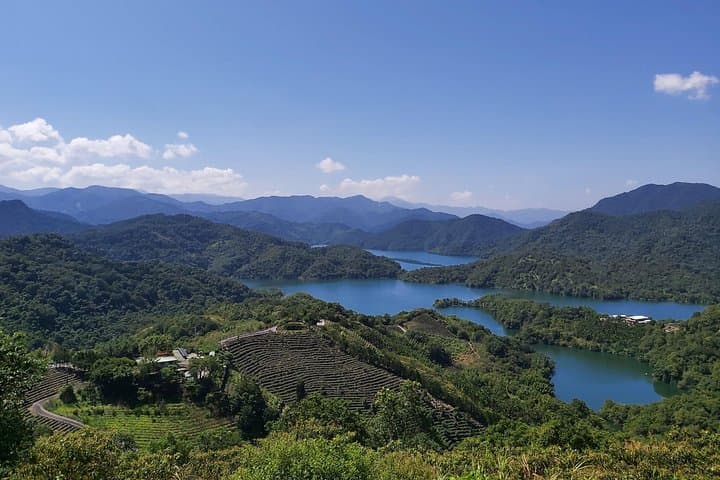


A low-slung bus eases out of Taipei and, within an hour, the city’s concrete chatter softens into a green hush. Hills fold into one another; the Feitsui Reservoir appears like a fractured mirror—shallows and inlets carving a ‘thousand-island’ pattern that dares you to look closer.
A low-slung bus eases out of Taipei and, within an hour, the city’s concrete chatter softens into a green hush. Hills fold into one another; the Feitsui Reservoir appears like a fractured mirror—shallows and inlets carving a ‘thousand-island’ pattern that dares you to look closer.
This half-day tour pairs that water-carved landscape with Pinglin’s tea culture, birthplace of Wenshan Baozhong. The Pinglin Tea Museum occupies a Hokkien-style courtyard and holds tools, brewing sets and AR exhibits that trace Taiwan’s tea trade from smallholder farms to global shelves. Around you, Bagua Tea Plantation’s rows climb the hillside in geometric harmony—locals once shaped these terraces for both drainage and flavor.
Geologically, the area is carved by Taiwan’s rugged uplift and abundant rainfall; soils are deep and well-drained, ideal for oolong varieties. Culturally, tea here is practical ritual—measured pours, aromatic steam, and conversations that slow to the pace of a proper brew.
Practical guidance: expect light walking on paved and farm roads, gentle uphill viewpoints and roughly a five-hour itinerary including museum time and tastings. Bring cash for small purchases—many rural shops prefer it—and a light layer for breezy reservoir outlooks.
On balance this outing is scenic, sensory and easy-paced: a compact introduction to Taiwan’s tea landscape and the reservoir that frames it. It’s suited to travelers who want nature, culture and a guided tasting without a full-day commitment.