THE ADVENTURE COLLECTIVE® · Independent discovery and booking for outdoor travel

A fast-paced three-day loop from Marrakech to Erg Chebbi that pairs Atlas mountain passes, Dades and Todra gorges, and an overnight in a Merzouga bivouac reached by sunset camel ride. Expect long drives, memorable dunes, and immersive local culture.
A fast-paced three-day loop from Marrakech to Erg Chebbi that pairs Atlas mountain passes, Dades and Todra gorges, and an overnight in a Merzouga bivouac reached by sunset camel ride. Expect long drives, memorable dunes, and immersive local culture.
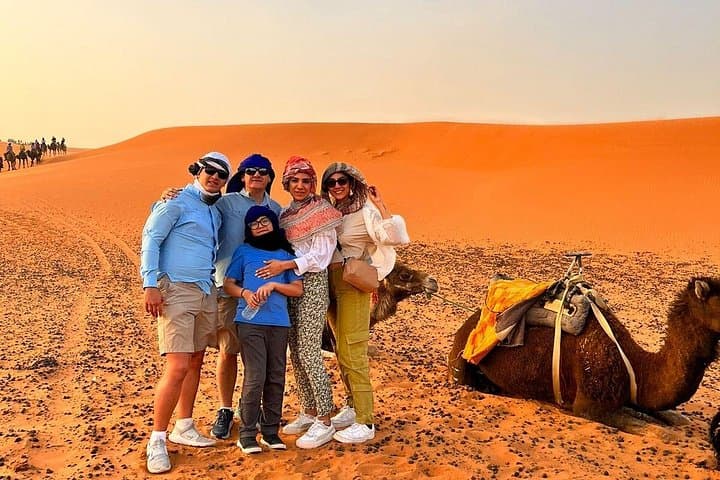
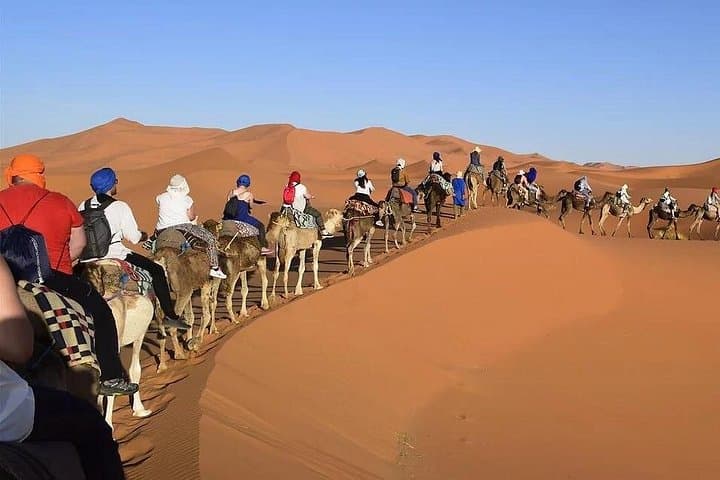
The drive peels away the city: Marrakech’s ochre walls shrink as the road climbs the Tizi n’Tichka (2,260 m), and Atlas peaks open into a corridor of red earth, palm oases and kasbahs. By dusk on day two, the Erg Chebbi dunes loom—gold ridgelines that shift with the wind—and camel silhouettes stride across a horizon that seems invented for silence.
Verified experiences and guided adventures in the surrounding area.
Operated by Tilila Travel · Merzouga, Drâa-Tafilalet
The drive peels away the city: Marrakech’s ochre walls shrink as the road climbs the Tizi n’Tichka (2,260 m), and Atlas peaks open into a corridor of red earth, palm oases and kasbahs. By dusk on day two, the Erg Chebbi dunes loom—gold ridgelines that shift with the wind—and camel silhouettes stride across a horizon that seems invented for silence.
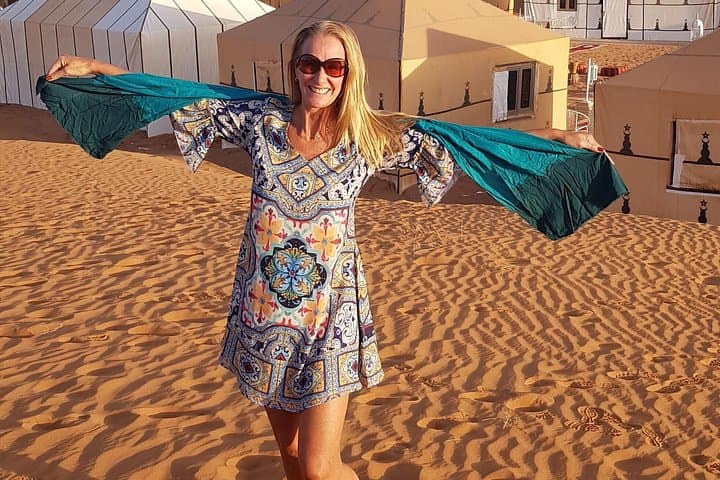
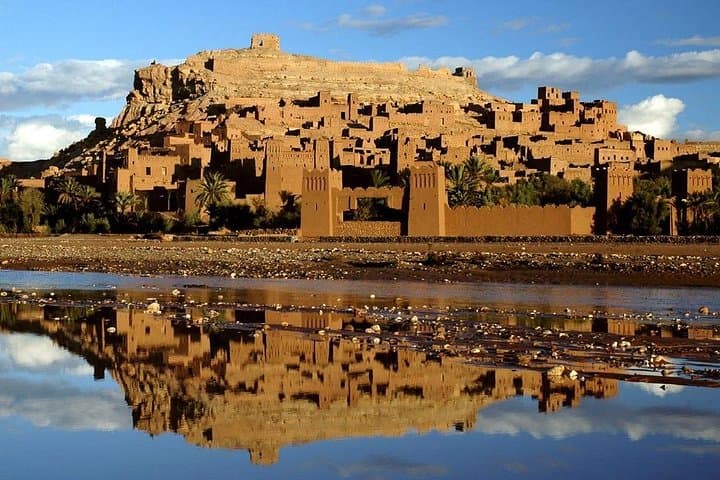
This three-day itinerary threads Morocco’s southern spine: mountain passes carved by trade routes, the fortified ksar of Ait Ben Haddou (UNESCO) where earthen towers tell of caravan wealth, the sculpted Dades and Todra gorges cut from limestone, and finally Merzouga’s Erg Chebbi, a sea of sand shaped by Saharan winds. The route crosses cultural zones—Berber villages, date palm groves of Skoura, the market town of Rissani—and offers encounters with local music and desert hospitality in nomadic-style bivouacs.
Practically: expect long driving days between stops (the full loop returns to Marrakech on day three), short walks in gorges and a guided 1.5-hour camel ride at sunset to reach the camp. Nights in the desert are cold and luminous; bring insulation. Photographers should plan sunrise and sunset on the dunes for the best light. Hydrate frequently on the road, keep sunscreen and layered clothing handy, and allow extra time if traveling with children—the operator recommends a four-day version for a gentler pace. The experience balances scenic overland travel with hands-on desert time—ideal for travelers who want dramatic landscapes without technical trekking.
Expect multiple 3–6 hour driving segments each day; the full loop covers several hundred kilometers with stops for sights and meals.
Camel rides are generally safe but bumpy; operators recommend the extended 4-day option for families with young children and can provide infant seats for vehicles.
This tour includes transport in an air-conditioned vehicle, two breakfasts, two dinners, a 1.5-hour camel ride, one night in a 3-star hotel, and one night in a Berber bivouac—confirm exact inclusions before booking.
Spring and fall offer the most comfortable daytime temperatures; winter provides crisp nights and clear skies for stargazing while summer can be very hot during midday.
Tilila Travel operates guided outdoor trips and adventures with an emphasis on safety, stewardship, and memorable experiences.
The drive peels away the city: Marrakech’s ochre walls shrink as the road climbs the Tizi n’Tichka (2,260 m), and Atlas peaks open into a corridor of red earth, palm oases and kasbahs. By dusk on day two, the Erg Chebbi dunes loom—gold ridgelines that shift with the wind—and camel silhouettes stride across a horizon that seems invented for silence.
The drive peels away the city: Marrakech’s ochre walls shrink as the road climbs the Tizi n’Tichka (2,260 m), and Atlas peaks open into a corridor of red earth, palm oases and kasbahs. By dusk on day two, the Erg Chebbi dunes loom—gold ridgelines that shift with the wind—and camel silhouettes stride across a horizon that seems invented for silence.
This three-day itinerary threads Morocco’s southern spine: mountain passes carved by trade routes, the fortified ksar of Ait Ben Haddou (UNESCO) where earthen towers tell of caravan wealth, the sculpted Dades and Todra gorges cut from limestone, and finally Merzouga’s Erg Chebbi, a sea of sand shaped by Saharan winds. The route crosses cultural zones—Berber villages, date palm groves of Skoura, the market town of Rissani—and offers encounters with local music and desert hospitality in nomadic-style bivouacs.
Practically: expect long driving days between stops (the full loop returns to Marrakech on day three), short walks in gorges and a guided 1.5-hour camel ride at sunset to reach the camp. Nights in the desert are cold and luminous; bring insulation. Photographers should plan sunrise and sunset on the dunes for the best light. Hydrate frequently on the road, keep sunscreen and layered clothing handy, and allow extra time if traveling with children—the operator recommends a four-day version for a gentler pace. The experience balances scenic overland travel with hands-on desert time—ideal for travelers who want dramatic landscapes without technical trekking.