THE ADVENTURE COLLECTIVE® · Independent discovery and booking for outdoor travel

Cross the High Atlas, walk the Todra and Dades gorges, and sleep under the stars at Erg Chebbi on a three-day private transfer from Marrakech. This trip pairs cultural sites like Ait Ben Haddou with an overnight in a Berber haima and a sunset camel trek into the dunes.
Cross the High Atlas, walk the Todra and Dades gorges, and sleep under the stars at Erg Chebbi on a three-day private transfer from Marrakech. This trip pairs cultural sites like Ait Ben Haddou with an overnight in a Berber haima and a sunset camel trek into the dunes.
The road out of Marrakech climbs the High Atlas and opens into a changing world: red earth, roadside kasbahs, and finally the long, rippled silhouette of Erg Chebbi. On this three-day route you move from mountain passes at 2,260 meters to dunes that breathe and shift with the wind, trading cedar-scented air for the dry hush of Sahara sand.
Verified experiences and guided adventures in the surrounding area.
Operated by Merzouga Safari · Merzouga, Drâa-Tafilalet
The road out of Marrakech climbs the High Atlas and opens into a changing world: red earth, roadside kasbahs, and finally the long, rippled silhouette of Erg Chebbi. On this three-day route you move from mountain passes at 2,260 meters to dunes that breathe and shift with the wind, trading cedar-scented air for the dry hush of Sahara sand.
History and culture arrive in the form of Ait Ben Haddou’s earthen citadel and the fortified kasbahs that marked caravan routes. Geologically the trip traces Morocco’s contrasts: the folded granites of the High Atlas, river-cut gorges like Todra with vertical limestone walls, and wind-sculpted barchan dunes at Merzouga where sand migrates with each season.
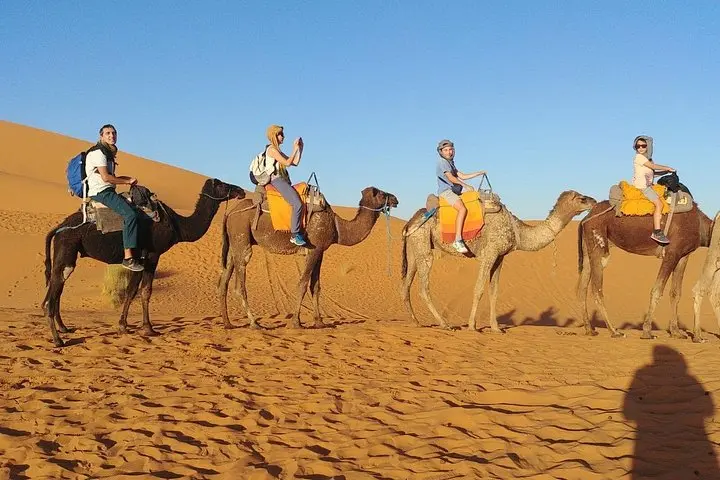
Local life centers around date palms, argan cooperatives, and Berber hospitality — sweet mint tea, simple tagines, and nights in a haima beneath an expansive sky. Camels carry you to the camp as the dunes throw long, soft shadows; dawn and dusk are the clearest ways to read the landscape.
Practical guidance: expect long driving days broken by short hikes and photo stops; the camel transfer to camp is about an hour and involves walking on sand. Bring layered clothing (nights are cold), sun protection, refillable water, and comfortable shoes for walking on uneven surfaces and dune slopes. If you have limited mobility or cardiovascular concerns, discuss arrangements with your operator: much of the trip is accessible but some dune and gorge walking is involved.
Timing your trip for shoulder seasons reduces extreme heat and improves comfort during daytime crossings.
The camel caravan to the haima typically takes about 45–60 minutes from the lodge to a camp near the dunes, with a sunset stop en route.
The itinerary is family-friendly and described as physically easy, but long drives and camel rides may be uncomfortable for very young children or people with severe mobility or heart issues.
Desert haimas often provide basic amenities: lighting, shared simple wash facilities, and meals; facilities vary by operator so confirm level of comfort in advance.
Expect a multi-hour drive across the High Atlas with stops; the total round trip covers several hundred kilometers and is split across the three days for sightseeing.
Merzouga Safari operates guided outdoor trips and adventures with an emphasis on safety, stewardship, and memorable experiences.
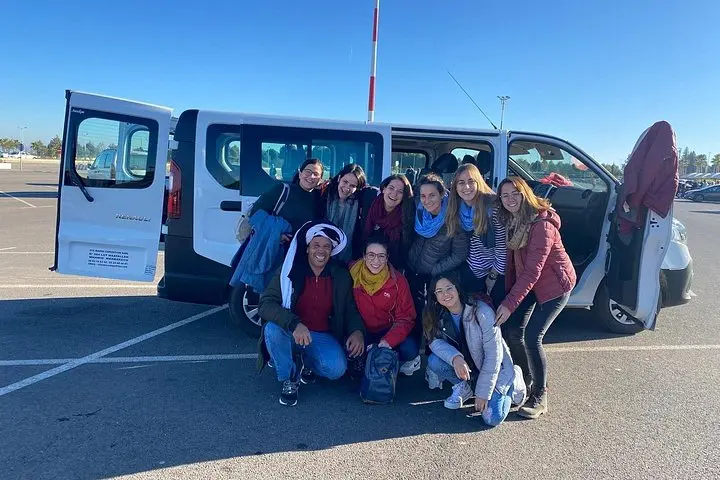
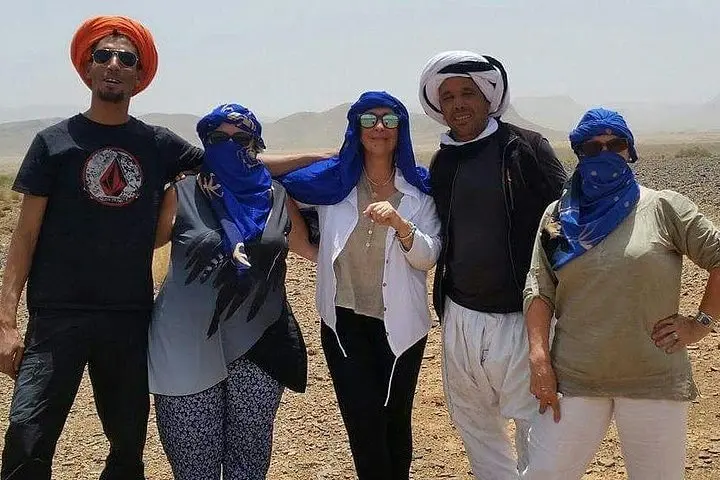
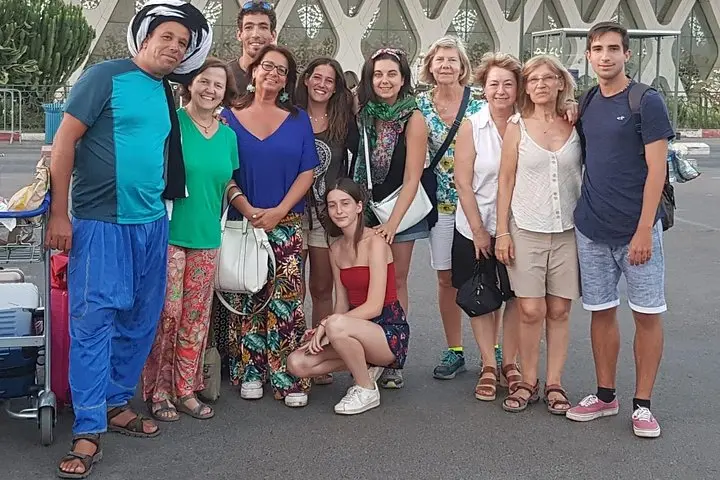
The road out of Marrakech climbs the High Atlas and opens into a changing world: red earth, roadside kasbahs, and finally the long, rippled silhouette of Erg Chebbi. On this three-day route you move from mountain passes at 2,260 meters to dunes that breathe and shift with the wind, trading cedar-scented air for the dry hush of Sahara sand.
The road out of Marrakech climbs the High Atlas and opens into a changing world: red earth, roadside kasbahs, and finally the long, rippled silhouette of Erg Chebbi. On this three-day route you move from mountain passes at 2,260 meters to dunes that breathe and shift with the wind, trading cedar-scented air for the dry hush of Sahara sand.
History and culture arrive in the form of Ait Ben Haddou’s earthen citadel and the fortified kasbahs that marked caravan routes. Geologically the trip traces Morocco’s contrasts: the folded granites of the High Atlas, river-cut gorges like Todra with vertical limestone walls, and wind-sculpted barchan dunes at Merzouga where sand migrates with each season.
Local life centers around date palms, argan cooperatives, and Berber hospitality — sweet mint tea, simple tagines, and nights in a haima beneath an expansive sky. Camels carry you to the camp as the dunes throw long, soft shadows; dawn and dusk are the clearest ways to read the landscape.
Practical guidance: expect long driving days broken by short hikes and photo stops; the camel transfer to camp is about an hour and involves walking on sand. Bring layered clothing (nights are cold), sun protection, refillable water, and comfortable shoes for walking on uneven surfaces and dune slopes. If you have limited mobility or cardiovascular concerns, discuss arrangements with your operator: much of the trip is accessible but some dune and gorge walking is involved.
Timing your trip for shoulder seasons reduces extreme heat and improves comfort during daytime crossings.