THE ADVENTURE COLLECTIVE® · Independent discovery and booking for outdoor travel

Cross the High Atlas to Aït Ben Haddou, walk Todra Gorge, then ride a camel into Erg Chebbi for a night under the desert sky. This 3‑day loop blends geology, Berber culture and a classic Sahara camp experience.
Cross the High Atlas to Aït Ben Haddou, walk Todra Gorge, then ride a camel into Erg Chebbi for a night under the desert sky. This 3‑day loop blends geology, Berber culture and a classic Sahara camp experience.
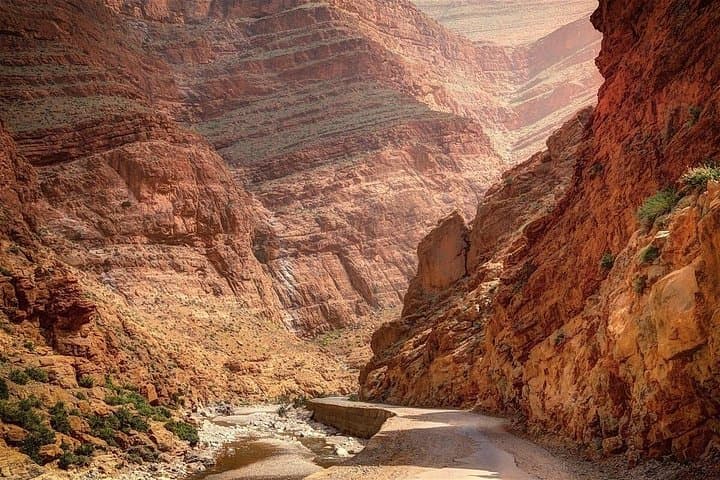
You crest the High Atlas at dawn, the road dropping away toward ochre valleys as the driver steers toward Aït Ben Haddou. By the time the bus reaches Tinghir and the narrow walls of Todra Gorge, the air has gone dry and spare; the desert is close enough to feel like a different country.
Verified experiences and guided adventures in the surrounding area.
Operated by Morocco Destination Experts · Merzouga, Drâa-Tafilalet
You crest the High Atlas at dawn, the road dropping away toward ochre valleys as the driver steers toward Aït Ben Haddou. By the time the bus reaches Tinghir and the narrow walls of Todra Gorge, the air has gone dry and spare; the desert is close enough to feel like a different country.
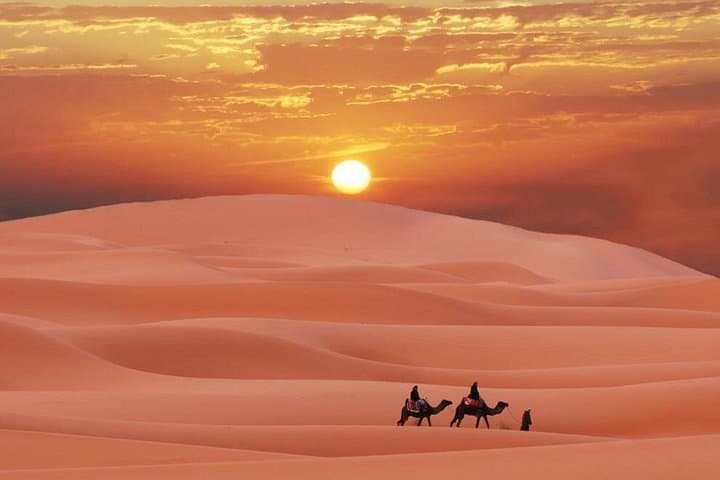
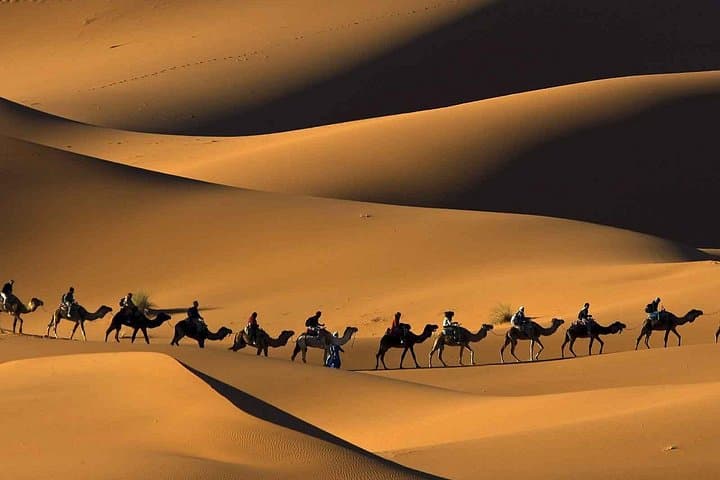
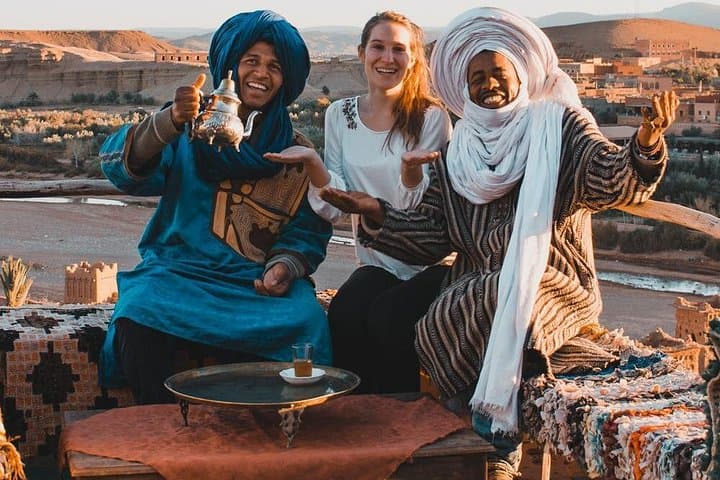
This three-day Merzouga tour links mountain kasbahs, carved gorges and the Erg Chebbi dunes east of Erfoud. Geologically, Erg Chebbi is a sweeping sea of aeolian sand formed by millennia of wind transport from the Atlas; dunes here can top 150 meters and shift with every season. Culturally, the route threads Berber villages and kasbahs—Aït Ben Haddou is a UNESCO-listed ksar with centuries of mud-brick architecture—and nights in a nomad-run camp offer music, mint tea and stories around a campfire.
Expect long driving sections broken by guided stops: a walking tour in a canyon, a short hike among oasis farms, then a late-afternoon camel trek up to the golden crests for sunset. Accommodation is one night in a local guesthouse and one night in a desert camp with basic mattresses and shared facilities.
Practical tips: travel light, carry sun protection and a warm layer for cold desert nights; hydration matters on the camel ride. Plan pickups from Marrakech early in the morning; the itinerary is suitable for most fitness levels but includes uneven sand and short walks. If you want fewer transfers, consider arranging private transfer options or an extended stay in Merzouga to explore on foot or with a 4x4.
Typical camel treks to the camp last 45–90 minutes each way depending on the sand route and sunset timing.
Camps usually offer basic private or shared tents with mattresses and shared toilets; expect simple amenities and local-style meals.
Yes—operators often accept families, but consider camel comfort and long vehicle transfers; check age policies before booking.
Visa and vaccination requirements depend on your nationality—check Moroccan entry rules and recommended vaccinations before travel.
Morocco Destination Experts operates guided outdoor trips and adventures with an emphasis on safety, stewardship, and memorable experiences.
You crest the High Atlas at dawn, the road dropping away toward ochre valleys as the driver steers toward Aït Ben Haddou. By the time the bus reaches Tinghir and the narrow walls of Todra Gorge, the air has gone dry and spare; the desert is close enough to feel like a different country.
You crest the High Atlas at dawn, the road dropping away toward ochre valleys as the driver steers toward Aït Ben Haddou. By the time the bus reaches Tinghir and the narrow walls of Todra Gorge, the air has gone dry and spare; the desert is close enough to feel like a different country.
This three-day Merzouga tour links mountain kasbahs, carved gorges and the Erg Chebbi dunes east of Erfoud. Geologically, Erg Chebbi is a sweeping sea of aeolian sand formed by millennia of wind transport from the Atlas; dunes here can top 150 meters and shift with every season. Culturally, the route threads Berber villages and kasbahs—Aït Ben Haddou is a UNESCO-listed ksar with centuries of mud-brick architecture—and nights in a nomad-run camp offer music, mint tea and stories around a campfire.
Expect long driving sections broken by guided stops: a walking tour in a canyon, a short hike among oasis farms, then a late-afternoon camel trek up to the golden crests for sunset. Accommodation is one night in a local guesthouse and one night in a desert camp with basic mattresses and shared facilities.
Practical tips: travel light, carry sun protection and a warm layer for cold desert nights; hydration matters on the camel ride. Plan pickups from Marrakech early in the morning; the itinerary is suitable for most fitness levels but includes uneven sand and short walks. If you want fewer transfers, consider arranging private transfer options or an extended stay in Merzouga to explore on foot or with a 4x4.