THE ADVENTURE COLLECTIVE® · Independent discovery and booking for outdoor travel

Cross the High Atlas, walk the cliffs of Todra and Dades, then let Erg Chebbi’s dunes dominate your horizon. This private 3-day loop from Marrakech mixes kasbahs, gorges, and an overnight Sahara camp with sunrise camel trekking.
Cross the High Atlas, walk the cliffs of Todra and Dades, then let Erg Chebbi’s dunes dominate your horizon. This private 3-day loop from Marrakech mixes kasbahs, gorges, and an overnight Sahara camp with sunrise camel trekking.
The dawn light peels back the Atlas ridgeline as the minibus drops you onto the red ribbon of the desert road — the air already dry and the skyline promising sand. By mid-afternoon the road falls away and Erg Chebbi rises: a sea of wind-sculpted dunes that dare you to climb their faces. Camels pad steadily as you approach the camp, and at sunset the dunes throw long, cool shadows while the night sky fills with unfamiliar stars.
Verified experiences and guided adventures in the surrounding area.
Operated by Sunny Excursion · Merzouga, Drâa-Tafilalet
The dawn light peels back the Atlas ridgeline as the minibus drops you onto the red ribbon of the desert road — the air already dry and the skyline promising sand. By mid-afternoon the road falls away and Erg Chebbi rises: a sea of wind-sculpted dunes that dare you to climb their faces. Camels pad steadily as you approach the camp, and at sunset the dunes throw long, cool shadows while the night sky fills with unfamiliar stars.
This route threads classic southern Morocco: the Tizi n’Tichka pass (about 2,260 m) over the High Atlas, the fortified clay kasbahs at Ait Ben Haddou (a UNESCO site), the sculpted walls of Dades and Todra gorges, and the caravan towns around Rissani. Geologically, Erg Chebbi is a large Saharan erg whose dunes can reach roughly 100–150 meters high; wind and rare rains continue to reshape them. Culturally, this area sits along historic trade corridors where Berber kasbahs and palm-filled oases still mark water and shelter.
Practically, expect roughly 9–10 hours of driving spread over three days (totaling roughly 500–600 km), short hikes in the gorges, and a camel trek timed for sunset and sunrise. Nights in the desert can drop sharply—layers matter—and camps provide basic bedding and communal meals. Bring sun protection, sturdy shoes for sand and rocky gorges, and a sense of flexibility for changing winds and road timings. This itinerary suits travelers in moderate fitness who want an immersive, private introduction to Morocco’s Sahara without technical climbing or long backpacking sections.
The camel trek is gentle and typically 1–2 hours; it’s more about balancing and short walks on sand than endurance, suitable for most travelers with moderate fitness.
Most traditional desert camps offer shared or private tented sleeping with basic toilets and often limited electricity (solar or generator) — facilities vary by camp standard.
Children travel often but infants must sit on laps; this tour is not recommended for pregnant travelers or those with serious spinal/heart conditions due to long drives and camel rides.
Yes — the operator provides meals; indicate dietary needs at booking and they will generally accommodate common requirements like vegetarian or halal options.
Sunny Excursion operates guided outdoor trips and adventures with an emphasis on safety, stewardship, and memorable experiences.
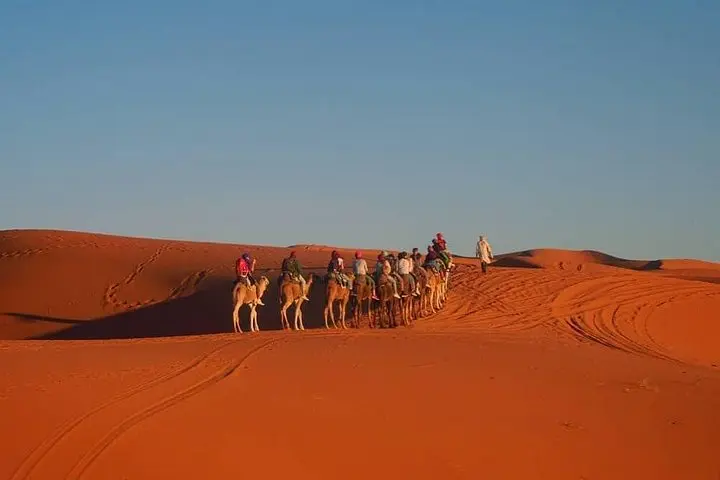
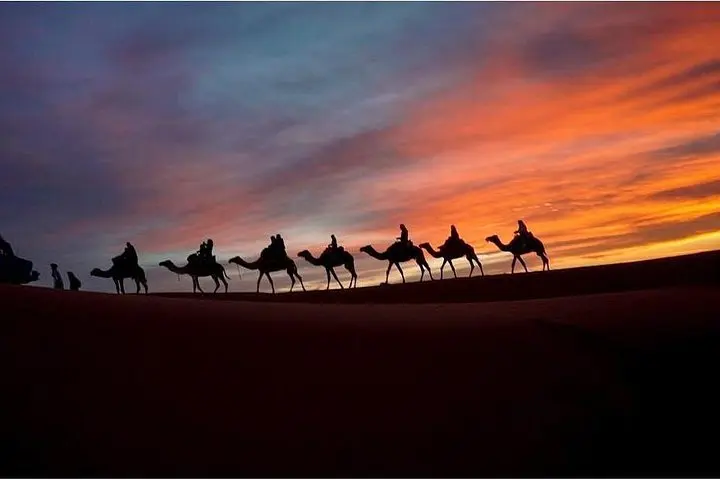
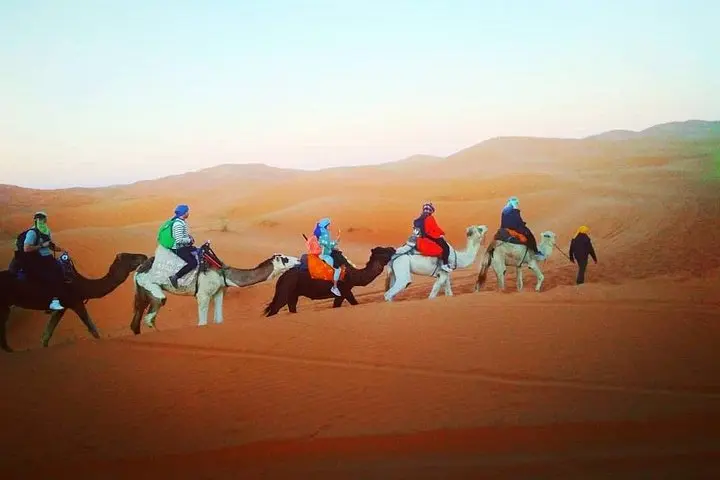
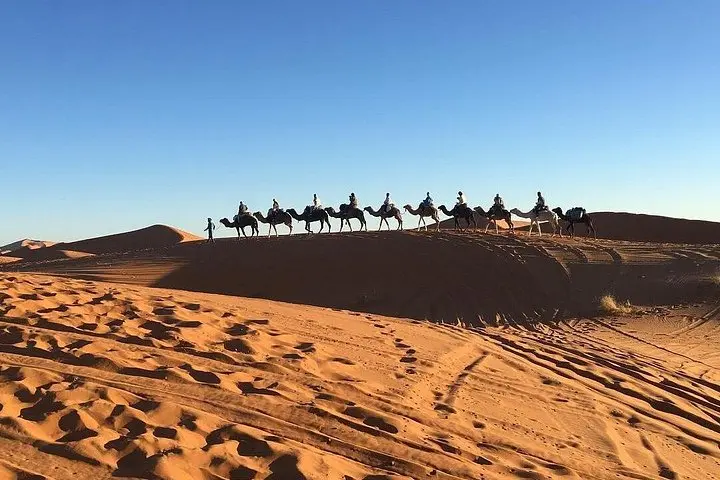
The dawn light peels back the Atlas ridgeline as the minibus drops you onto the red ribbon of the desert road — the air already dry and the skyline promising sand. By mid-afternoon the road falls away and Erg Chebbi rises: a sea of wind-sculpted dunes that dare you to climb their faces. Camels pad steadily as you approach the camp, and at sunset the dunes throw long, cool shadows while the night sky fills with unfamiliar stars.
The dawn light peels back the Atlas ridgeline as the minibus drops you onto the red ribbon of the desert road — the air already dry and the skyline promising sand. By mid-afternoon the road falls away and Erg Chebbi rises: a sea of wind-sculpted dunes that dare you to climb their faces. Camels pad steadily as you approach the camp, and at sunset the dunes throw long, cool shadows while the night sky fills with unfamiliar stars.
This route threads classic southern Morocco: the Tizi n’Tichka pass (about 2,260 m) over the High Atlas, the fortified clay kasbahs at Ait Ben Haddou (a UNESCO site), the sculpted walls of Dades and Todra gorges, and the caravan towns around Rissani. Geologically, Erg Chebbi is a large Saharan erg whose dunes can reach roughly 100–150 meters high; wind and rare rains continue to reshape them. Culturally, this area sits along historic trade corridors where Berber kasbahs and palm-filled oases still mark water and shelter.
Practically, expect roughly 9–10 hours of driving spread over three days (totaling roughly 500–600 km), short hikes in the gorges, and a camel trek timed for sunset and sunrise. Nights in the desert can drop sharply—layers matter—and camps provide basic bedding and communal meals. Bring sun protection, sturdy shoes for sand and rocky gorges, and a sense of flexibility for changing winds and road timings. This itinerary suits travelers in moderate fitness who want an immersive, private introduction to Morocco’s Sahara without technical climbing or long backpacking sections.