THE ADVENTURE COLLECTIVE® · Independent discovery and booking for outdoor travel

A focused three-day itinerary that places sunrise at Angkor Wat, the carved faces of Bayon and the root-choked corridors of Ta Prohm at the center of your Siem Reap visit. Practical advice on timing, dress code and what to expect from walking temple grounds.
A focused three-day itinerary that places sunrise at Angkor Wat, the carved faces of Bayon and the root-choked corridors of Ta Prohm at the center of your Siem Reap visit. Practical advice on timing, dress code and what to expect from walking temple grounds.
You step off an air-conditioned minibus before dawn and the silhouette of Angkor Wat rises oversized against a cooling sky — lotus ponds mirror the temple’s towers while the first light edges the stone.
Verified experiences and guided adventures in the surrounding area.
Operated by Indochina Tour · Siem Reap, Siem Reap Province
You step off an air-conditioned minibus before dawn and the silhouette of Angkor Wat rises oversized against a cooling sky — lotus ponds mirror the temple’s towers while the first light edges the stone.
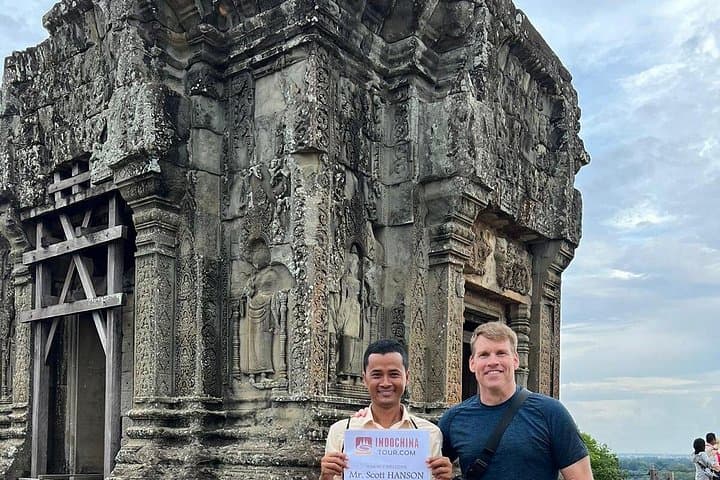
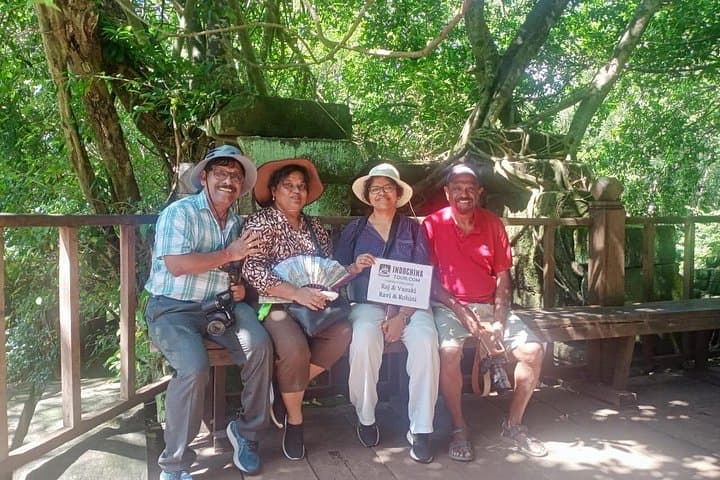
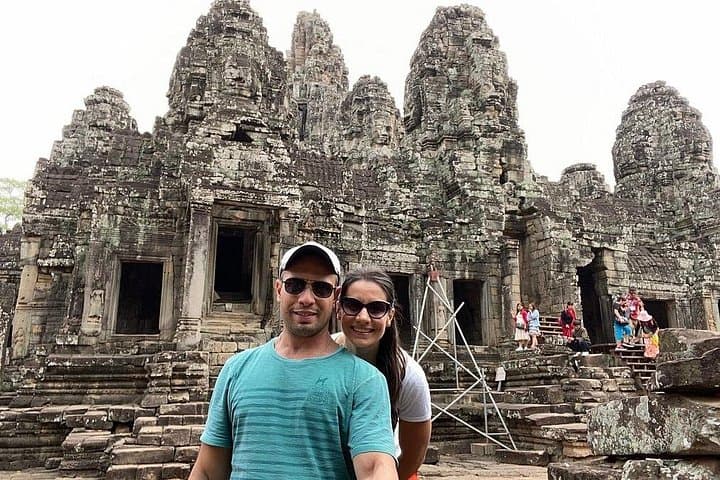
Over three days the tour moves like a careful map: a sunrise at Angkor Wat, a morning spent threading through the smiling faces of Bayon in Angkor Thom, a slow walk under banyan roots at Ta Prohm, and quieter temple groups at mid-day when buses thin out. These monuments sit on the flat Tonlé Sap plain, carved from laterite and sandstone by the Khmer between the 9th and 13th centuries; their bas-reliefs narrate a former empire’s ceremonies, wars and water-management feats.
Local culture arrives in small ways — market stalls in Siem Reap selling banana pancakes, Apsara dancers performing classical stories at night, and tuk-tuk drivers who know the best vantage for light. Guides typically handle Angkor passes and logistics, and hotels provided are mid- to upper-range in the city.
Practical guidance: expect long, dusty walks on compacted earth and temple stone with minimal elevation gain; bring sun protection, respectful clothing that covers shoulders and knees, and a reusable bottle — tap water isn’t potable. Start early to avoid heat and crowds, wear sturdy shoes for uneven steps, and budget time for photography and quiet reflection. The trip is low-impact physically but high on cultural and photographic payoff — travel with curiosity and respect for a living heritage site.
Scheduled temple admissions shown in the itinerary are included; your guide or voucher typically handles Angkor pass processing.
A guide is included with this type of tour and provides historical context, navigation through the complex and efficient routing between sites.
Yes — most 3-day itineraries include an early start for sunrise; expect a pre-dawn pickup and crowds at the reflecting ponds.
No — the tour is rated easy physically, but involves repeated short walks and some stone steps; wear comfortable footwear and take breaks.
Indochina Tour operates guided outdoor trips and adventures with an emphasis on safety, stewardship, and memorable experiences.
You step off an air-conditioned minibus before dawn and the silhouette of Angkor Wat rises oversized against a cooling sky — lotus ponds mirror the temple’s towers while the first light edges the stone.
You step off an air-conditioned minibus before dawn and the silhouette of Angkor Wat rises oversized against a cooling sky — lotus ponds mirror the temple’s towers while the first light edges the stone.
Over three days the tour moves like a careful map: a sunrise at Angkor Wat, a morning spent threading through the smiling faces of Bayon in Angkor Thom, a slow walk under banyan roots at Ta Prohm, and quieter temple groups at mid-day when buses thin out. These monuments sit on the flat Tonlé Sap plain, carved from laterite and sandstone by the Khmer between the 9th and 13th centuries; their bas-reliefs narrate a former empire’s ceremonies, wars and water-management feats.
Local culture arrives in small ways — market stalls in Siem Reap selling banana pancakes, Apsara dancers performing classical stories at night, and tuk-tuk drivers who know the best vantage for light. Guides typically handle Angkor passes and logistics, and hotels provided are mid- to upper-range in the city.
Practical guidance: expect long, dusty walks on compacted earth and temple stone with minimal elevation gain; bring sun protection, respectful clothing that covers shoulders and knees, and a reusable bottle — tap water isn’t potable. Start early to avoid heat and crowds, wear sturdy shoes for uneven steps, and budget time for photography and quiet reflection. The trip is low-impact physically but high on cultural and photographic payoff — travel with curiosity and respect for a living heritage site.