THE ADVENTURE COLLECTIVE® · Independent discovery and booking for outdoor travel

Float between two ancient cities on a three-night Nile cruise that stitches Aswan and Luxor together with island temples, twin shrines at Kom Ombo, and the ceremonial heart of Thebes. Practical, guided stops mean you’ll see Karnak, the Valley of the Kings and Philae with minimal fuss.
Float between two ancient cities on a three-night Nile cruise that stitches Aswan and Luxor together with island temples, twin shrines at Kom Ombo, and the ceremonial heart of Thebes. Practical, guided stops mean you’ll see Karnak, the Valley of the Kings and Philae with minimal fuss.
The Nile carries you like a slow-moving line through history—cotton fields slip past, fishermen cast nets where pharaonic boats once floated, and every bend reveals a temple facade lifting out of the river haze.
Verified experiences and guided adventures in the surrounding area.
Operated by Khaled Abbass Tour Guide · Aswan, Aswan Governorate
The Nile carries you like a slow-moving line through history—cotton fields slip past, fishermen cast nets where pharaonic boats once floated, and every bend reveals a temple facade lifting out of the river haze.
This three-night cruise from Aswan to Luxor is a practical immersion in ancient Egypt: morning rides to Philae’s island temples, a stop at the High Dam and the Unfinished Obelisk in Aswan, a riverside visit to Kom Ombo’s twin sanctuaries, and guided tours of Karnak, Luxor Temple, the Valley of the Kings and Hatshepsut’s mortuary complex on the west bank.
Geology shows in the red Aswan granite that built obelisks and statues; culture is audible in the cadence of the Egyptologist’s narration and visible in Nubian villages clinging to the water’s edge. The High Dam altered the Nile’s flow and created Lake Nasser, changing agriculture and archaeology alike—sites were moved, others preserved.
Practically, expect full-board accommodation on a five-star motor ship with cabin transfers, morning and afternoon walk-throughs, and short water-taxi trips to island sites. Days are warm and dry; mornings and nights can be cool on deck. Bring a refillable water bottle, sun protection, and comfortable shoes for uneven temple steps. Guided visits include entrance fees and private Egyptologist guides; plan for modest tipping, early starts to avoid heat, and spare time in Luxor or Aswan to explore local markets.
This cruise is low-impact physically but rich in cultural context—ideal for travelers who prefer relaxed travel that puts monuments front and center without long overland transfers.
Yes—this package includes full board on the five-star cruise ship; some specialty drinks and off-ship meals may be extra.
Many areas and transfers are wheelchair accessible, but some temple sites have steps or uneven surfaces—check specifics with the operator before booking.
Private English-speaking Egyptologist guides are included; other languages may be available on request for an additional fee.
Expect moderate walking on paved and unpaved temple grounds and steps—sightseeing segments typically last 1–3 hours each with breaks.
Khaled Abbass Tour Guide operates guided outdoor trips and adventures with an emphasis on safety, stewardship, and memorable experiences.


The Nile carries you like a slow-moving line through history—cotton fields slip past, fishermen cast nets where pharaonic boats once floated, and every bend reveals a temple facade lifting out of the river haze.
The Nile carries you like a slow-moving line through history—cotton fields slip past, fishermen cast nets where pharaonic boats once floated, and every bend reveals a temple facade lifting out of the river haze.
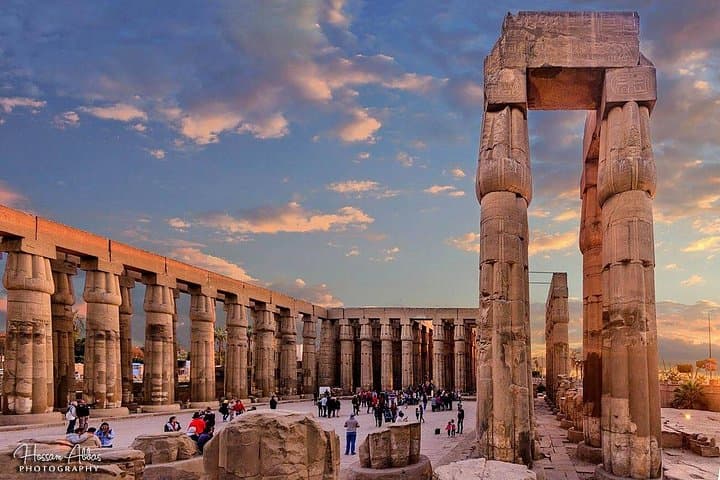
This three-night cruise from Aswan to Luxor is a practical immersion in ancient Egypt: morning rides to Philae’s island temples, a stop at the High Dam and the Unfinished Obelisk in Aswan, a riverside visit to Kom Ombo’s twin sanctuaries, and guided tours of Karnak, Luxor Temple, the Valley of the Kings and Hatshepsut’s mortuary complex on the west bank.
Geology shows in the red Aswan granite that built obelisks and statues; culture is audible in the cadence of the Egyptologist’s narration and visible in Nubian villages clinging to the water’s edge. The High Dam altered the Nile’s flow and created Lake Nasser, changing agriculture and archaeology alike—sites were moved, others preserved.
Practically, expect full-board accommodation on a five-star motor ship with cabin transfers, morning and afternoon walk-throughs, and short water-taxi trips to island sites. Days are warm and dry; mornings and nights can be cool on deck. Bring a refillable water bottle, sun protection, and comfortable shoes for uneven temple steps. Guided visits include entrance fees and private Egyptologist guides; plan for modest tipping, early starts to avoid heat, and spare time in Luxor or Aswan to explore local markets.
This cruise is low-impact physically but rich in cultural context—ideal for travelers who prefer relaxed travel that puts monuments front and center without long overland transfers.