THE ADVENTURE COLLECTIVE® · Independent discovery and booking for outdoor travel

Travel from Xiamen to the UNESCO-listed Tianluokeng Tulou, a cluster of defensive earthen buildings that reveal Hakka life and ancient Fengshui logic. This private day tour pairs a local guide with a comfortable vehicle for focused exploration of Yuchang Tulou, Taxia Village and hilltop views.
Travel from Xiamen to the UNESCO-listed Tianluokeng Tulou, a cluster of defensive earthen buildings that reveal Hakka life and ancient Fengshui logic. This private day tour pairs a local guide with a comfortable vehicle for focused exploration of Yuchang Tulou, Taxia Village and hilltop views.
Morning light slants across terraced hills as your private car hums toward Nanjing County, the air sharpening with the scent of wet earth and tea. By the time you crest the final ridge the Tianluokeng cluster opens below — five earthen rings arranged in the famous “four dishes and one soup” formation — walls rising like living history out of green slopes.
Verified experiences and guided adventures in the surrounding area.
Operated by Unique Beijing Tours · Nanjing County, Fujian
Morning light slants across terraced hills as your private car hums toward Nanjing County, the air sharpening with the scent of wet earth and tea. By the time you crest the final ridge the Tianluokeng cluster opens below — five earthen rings arranged in the famous “four dishes and one soup” formation — walls rising like living history out of green slopes.
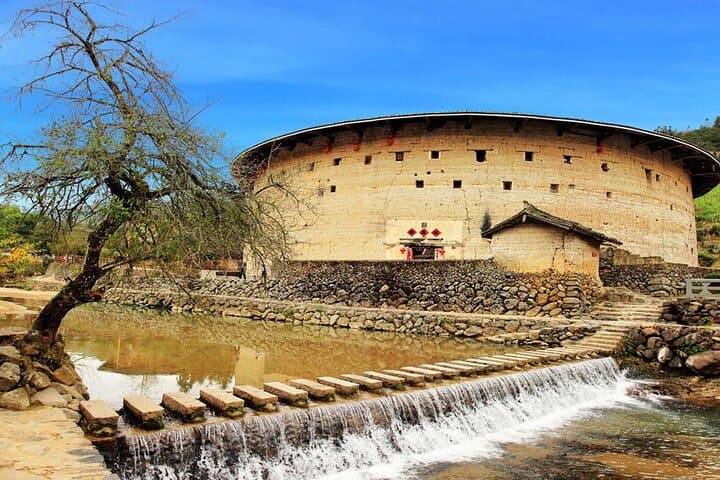
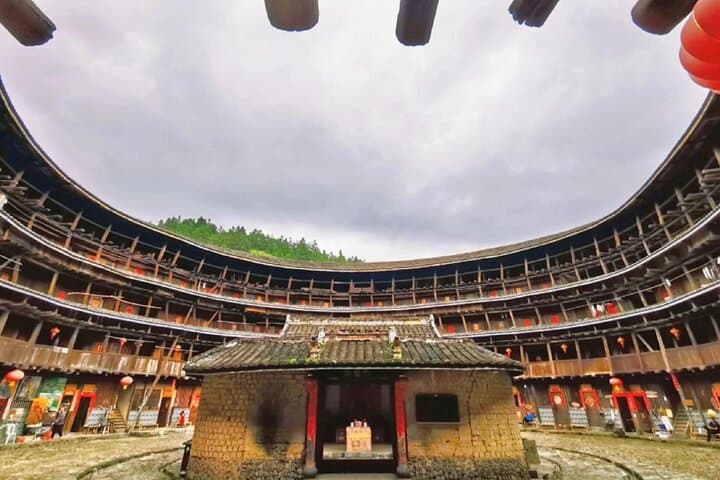
These tulou are communal fortresses built by Hakka clans from the 12th century onward, their rammed-earth walls and inward-facing courtyards engineered for defense, social cohesion and passive climate control. The Yuchang Tulou’s 15-degree tilt tells a story of longevity and measured settlement, while Taxia Village’s stone bridges and narrow alleys reveal everyday rhythms: children, laundry, small tea houses and weathered wooden beams.
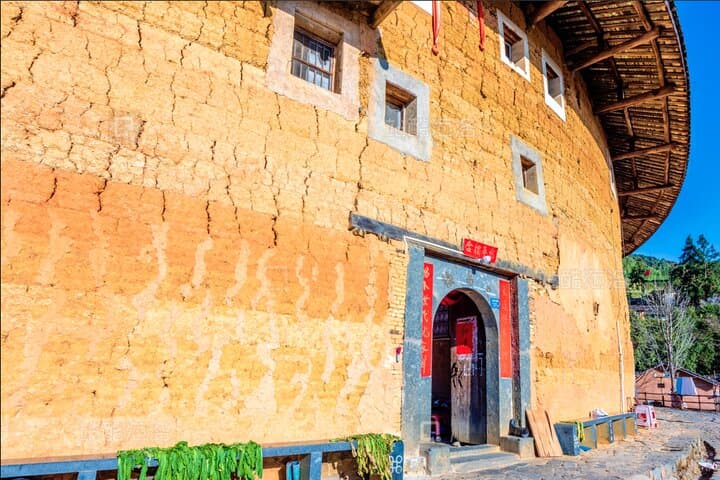
Geology here is simple but decisive — abundant red clay and laterite allowed massive rammed-earth construction. Cultural threads tie architecture to Fengshui and clan lineage; your guide will unpack how orientation, drainage and family governance shaped each building.
Practically: expect 7–8 hours with light-to-moderate walking, uneven cobbles and short stair sections. Bring cash for small entrance fees and roadside snacks, and plan for changing weather — the valley traps humidity. Aim to start early to avoid midday buses and to photograph the cluster from the upper viewpoint when shadows sculpt the circular forms. Respect private courtyards, ask before photographing residents, and carry out trash; these living villages depend on low-impact visitors. The day blends architecture, human stories and quietly dramatic rural landscapes — an accessible, tactile window into Hakka life that rewards curiosity and sensible preparation.
Expect about a 2‑hour scenic drive each way, depending on traffic and road conditions.
Many tulou have uneven surfaces and internal stairs; access can be limited—contact the operator to arrange alternatives or shorter visits.
Yes — a local lunch is typically included, often featuring regional Hakka dishes; inform the operator of dietary restrictions in advance.
Public visitors do not need a special permit, but there are entrance fees at UNESCO sites and some tulou which are collected locally.
Unique Beijing Tours operates guided outdoor trips and adventures with an emphasis on safety, stewardship, and memorable experiences.
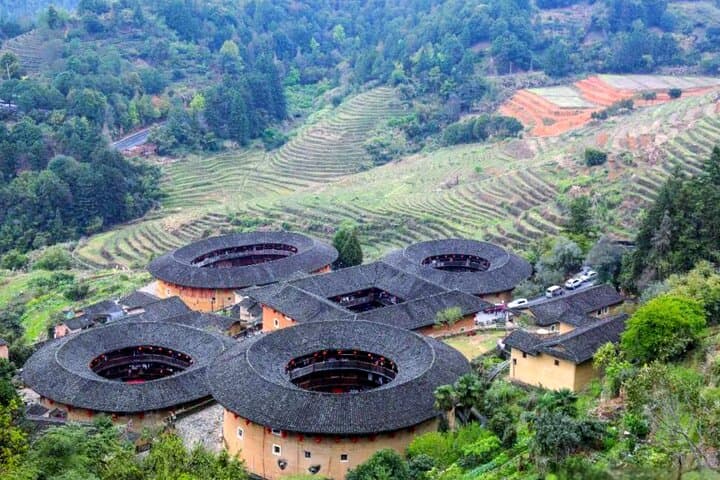
Morning light slants across terraced hills as your private car hums toward Nanjing County, the air sharpening with the scent of wet earth and tea. By the time you crest the final ridge the Tianluokeng cluster opens below — five earthen rings arranged in the famous “four dishes and one soup” formation — walls rising like living history out of green slopes.
Morning light slants across terraced hills as your private car hums toward Nanjing County, the air sharpening with the scent of wet earth and tea. By the time you crest the final ridge the Tianluokeng cluster opens below — five earthen rings arranged in the famous “four dishes and one soup” formation — walls rising like living history out of green slopes.
These tulou are communal fortresses built by Hakka clans from the 12th century onward, their rammed-earth walls and inward-facing courtyards engineered for defense, social cohesion and passive climate control. The Yuchang Tulou’s 15-degree tilt tells a story of longevity and measured settlement, while Taxia Village’s stone bridges and narrow alleys reveal everyday rhythms: children, laundry, small tea houses and weathered wooden beams.
Geology here is simple but decisive — abundant red clay and laterite allowed massive rammed-earth construction. Cultural threads tie architecture to Fengshui and clan lineage; your guide will unpack how orientation, drainage and family governance shaped each building.
Practically: expect 7–8 hours with light-to-moderate walking, uneven cobbles and short stair sections. Bring cash for small entrance fees and roadside snacks, and plan for changing weather — the valley traps humidity. Aim to start early to avoid midday buses and to photograph the cluster from the upper viewpoint when shadows sculpt the circular forms. Respect private courtyards, ask before photographing residents, and carry out trash; these living villages depend on low-impact visitors. The day blends architecture, human stories and quietly dramatic rural landscapes — an accessible, tactile window into Hakka life that rewards curiosity and sensible preparation.