THE ADVENTURE COLLECTIVE® · Independent discovery and booking for outdoor travel

Ride the world’s longest cable car to Tianmen Mountain, peer through the natural arch of Tianmen Cave, then brave the Zhangjiajie Grand Canyon Glass Bridge in a single full-day tour. This trip combines panoramic lift rides, geological spectacle, and Xiangxi cuisine in one action-packed day.
Ride the world’s longest cable car to Tianmen Mountain, peer through the natural arch of Tianmen Cave, then brave the Zhangjiajie Grand Canyon Glass Bridge in a single full-day tour. This trip combines panoramic lift rides, geological spectacle, and Xiangxi cuisine in one action-packed day.
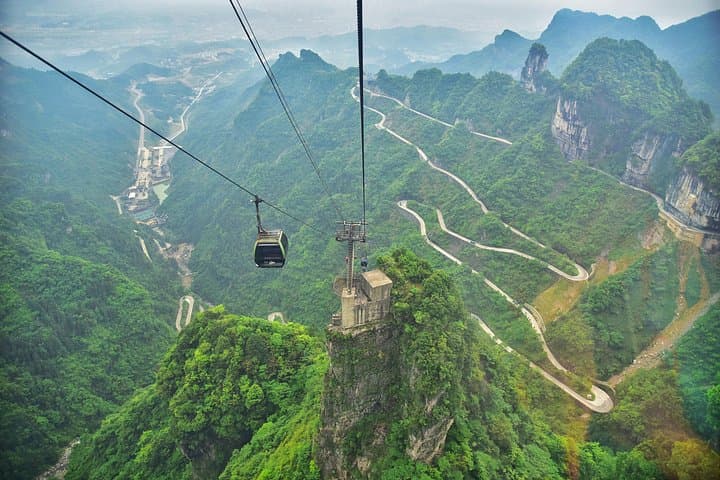
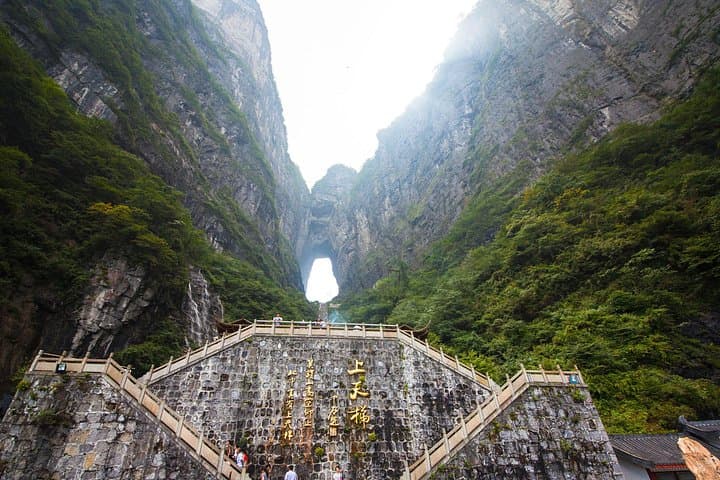
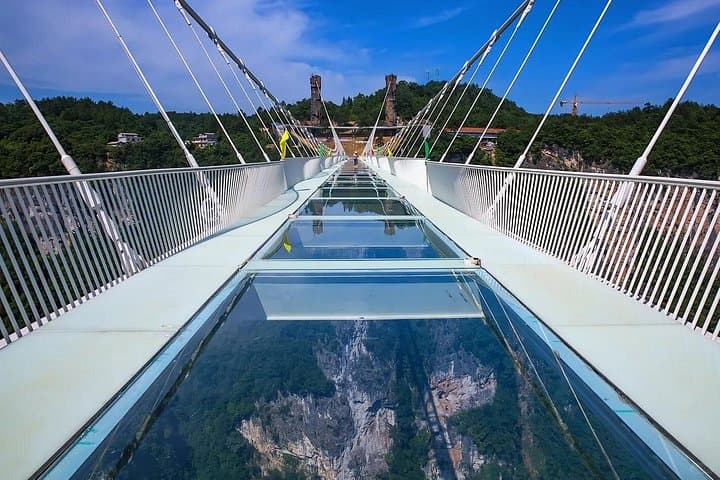
You step into a queue below a ribbon of steel and glass while mist threads the pines: the cable car hums and begins its long climb—about 7.5 km and more than 1,200 m of vertical gain—from Zhangjiajie up to Tianmen Mountain. Clouds part to reveal a natural arch punched through the limestone—the dramatic Tianmen Cave—and later you will test your nerves on the transparent panels of Zhangjiajie Grand Canyon’s Glass Bridge, suspended roughly 300 m above the canyon floor.
Verified experiences and guided adventures in the surrounding area.
Operated by ChinaTravelVip · Zhangjiajie, Hunan
You step into a queue below a ribbon of steel and glass while mist threads the pines: the cable car hums and begins its long climb—about 7.5 km and more than 1,200 m of vertical gain—from Zhangjiajie up to Tianmen Mountain. Clouds part to reveal a natural arch punched through the limestone—the dramatic Tianmen Cave—and later you will test your nerves on the transparent panels of Zhangjiajie Grand Canyon’s Glass Bridge, suspended roughly 300 m above the canyon floor.
This landscape is the work of time and water: quartz-sandstone pillars carved by erosion and frost, and cave openings cut by millennia of pressure. Tianmen’s slopes have hosted temples and local Daoist practices for centuries; the 99-bend road that threads upward is a modern counterpoint, engineered for spectacle.
Culturally, the experience mixes modern thrills with provincial Xiangxi flavors—expect spicy, herb-forward dishes at lunch and vendors selling tea and local snacks near park entrances. Ecologically, the park protects rare subtropical forest and birdlife; visitors should stay on boardwalks and not feed wildlife.
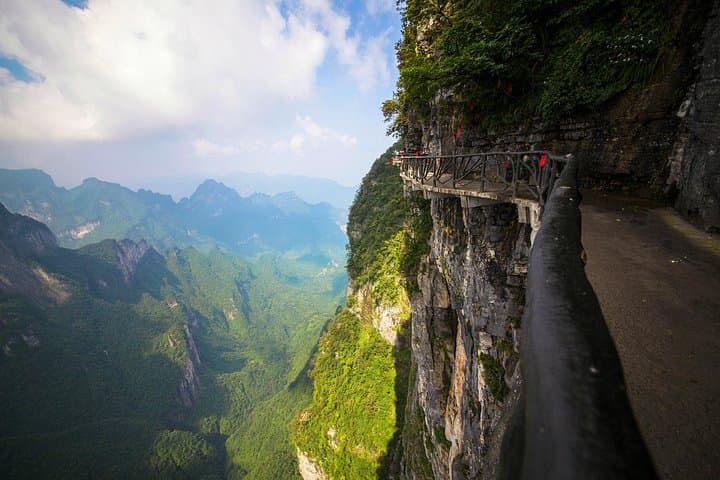
Practically, the day is organized and paced: an air-conditioned transfer, the long cable-car ascent, time at the summit to walk to the cave and cliff paths, then a drive to the Grand Canyon for the bridge walk. Bring your passport (required for some entrances), comfortable, grippy shoes for stone steps and slick boardwalks, and a light jacket—the summit can be several degrees cooler. If you’re prone to vertigo, expect sustained exposure to ledges, glass floors and high wind; guides and staff enforce safety limits. The itinerary suits travelers ready for full-day sightseeing with moderate walking and a taste for heights.
This full-day itinerary typically includes entrance fees and cable car tickets as advertised; confirm details at booking and carry your voucher and ID.
The bridge is engineered to strict safety standards but may close in high winds or heavy rain—staff will restrict access when conditions are unsafe.
Many park facilities and transportation options are wheelchair accessible, but some cliff paths and sections have steps; check specific accessibility needs with the operator before booking.
Expect several short to moderate walks—boardwalks, stair sections, and viewpoint paths—total walking of a few kilometers with elevation change at the summit.
ChinaTravelVip operates guided outdoor trips and adventures with an emphasis on safety, stewardship, and memorable experiences.
You step into a queue below a ribbon of steel and glass while mist threads the pines: the cable car hums and begins its long climb—about 7.5 km and more than 1,200 m of vertical gain—from Zhangjiajie up to Tianmen Mountain. Clouds part to reveal a natural arch punched through the limestone—the dramatic Tianmen Cave—and later you will test your nerves on the transparent panels of Zhangjiajie Grand Canyon’s Glass Bridge, suspended roughly 300 m above the canyon floor.
You step into a queue below a ribbon of steel and glass while mist threads the pines: the cable car hums and begins its long climb—about 7.5 km and more than 1,200 m of vertical gain—from Zhangjiajie up to Tianmen Mountain. Clouds part to reveal a natural arch punched through the limestone—the dramatic Tianmen Cave—and later you will test your nerves on the transparent panels of Zhangjiajie Grand Canyon’s Glass Bridge, suspended roughly 300 m above the canyon floor.
This landscape is the work of time and water: quartz-sandstone pillars carved by erosion and frost, and cave openings cut by millennia of pressure. Tianmen’s slopes have hosted temples and local Daoist practices for centuries; the 99-bend road that threads upward is a modern counterpoint, engineered for spectacle.
Culturally, the experience mixes modern thrills with provincial Xiangxi flavors—expect spicy, herb-forward dishes at lunch and vendors selling tea and local snacks near park entrances. Ecologically, the park protects rare subtropical forest and birdlife; visitors should stay on boardwalks and not feed wildlife.
Practically, the day is organized and paced: an air-conditioned transfer, the long cable-car ascent, time at the summit to walk to the cave and cliff paths, then a drive to the Grand Canyon for the bridge walk. Bring your passport (required for some entrances), comfortable, grippy shoes for stone steps and slick boardwalks, and a light jacket—the summit can be several degrees cooler. If you’re prone to vertigo, expect sustained exposure to ledges, glass floors and high wind; guides and staff enforce safety limits. The itinerary suits travelers ready for full-day sightseeing with moderate walking and a taste for heights.