THE ADVENTURE COLLECTIVE® · Independent discovery and booking for outdoor travel

A remote, multi-week crossing of Chad’s Tibesti massif that pairs volcanic high-country—Emi Koussi and the Trou au Natron—with the unexpected wetlands of Ounianga. Prepare for hard tracks, long days, and authentic contact with the Tubu people.
A remote, multi-week crossing of Chad’s Tibesti massif that pairs volcanic high-country—Emi Koussi and the Trou au Natron—with the unexpected wetlands of Ounianga. Prepare for hard tracks, long days, and authentic contact with the Tubu people.
Sand and stone rearrange the horizon into a hard, patient geometry as the convoy pulls away from N’Djamena. Within days the paved road dissolves into track and the air thins above black pumice slopes that once erupted in the region’s fossil volcanoes. You move from flat Sahelian scrub into cliffs, gorges and finally the volcanic amphitheaters of the Tibesti massif—where Emi Koussi towers above the Sahara and the Trou au Natron yawns below.
Verified experiences and guided adventures in the surrounding area.
Operated by Eyte Voyages Tchad · Bardai, Tibesti Region
Sand and stone rearrange the horizon into a hard, patient geometry as the convoy pulls away from N’Djamena. Within days the paved road dissolves into track and the air thins above black pumice slopes that once erupted in the region’s fossil volcanoes. You move from flat Sahelian scrub into cliffs, gorges and finally the volcanic amphitheaters of the Tibesti massif—where Emi Koussi towers above the Sahara and the Trou au Natron yawns below.
The Tibesti have long been a crossroads for caravans and the homeland of the Tubu people, whose mud-brick villages and oasis cultivations punctuate otherwise harsh expanses. Geologically the range is an ancient volcanic complex: lava flows, pumice plateaus and calderas carved by wind and time. The tour links culture and geology—visits to Bardai and Zouar, an optional 6 km descent into the Trou au Natron caldera with ~700 m of elevation change, and a pause at the Ounianga lakes, a UNESCO site where emerald water meets orange dunes.
Practical guidance: this is a multi-week, remote route (about 18–19 days) of rough tracks and long drives between bivouacs. Guides and visitation rights are required and included; travel requires strong cardiovascular fitness, desert camping skills and basic altitude acclimatization for Emi Koussi (3,415 m). Pack sun protection, layered insulation for cold desert nights, reliable water-carrying capacity and spare vehicle parts. Travel windows outside the hottest months (roughly October–April) minimize heat risk. Expect limited medical support, variable mobile coverage and a true expedition pace—slow, deliberate, and completely off the beaten tourist map.
Yes—access is regulated and visitation rights are arranged through local operators and guides; the tour notes visitation rights are included.
Emi Koussi is a high, non-technical volcanic summit (about 3,415 m) but demands acclimatization, endurance and desert-navigation experience; expect long days at altitude.
The descent is steep—roughly 6 km with ~700 m of elevation change—and requires good fitness and steady footing; guides manage the route and pace.
Cooler months (roughly October–April) are preferred to avoid extreme heat; summer brings higher temperatures and more challenging conditions.
Eyte Voyages Tchad operates guided outdoor trips and adventures with an emphasis on safety, stewardship, and memorable experiences.
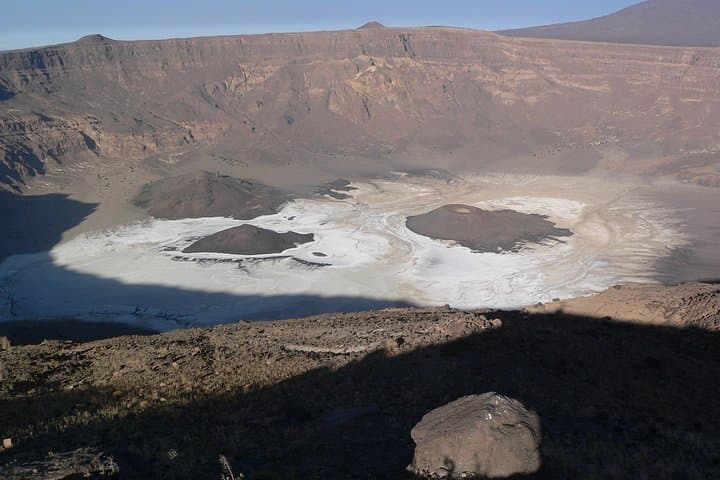
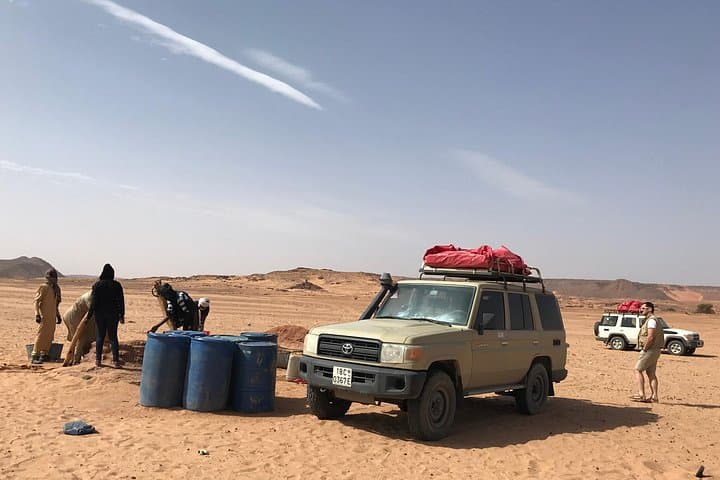
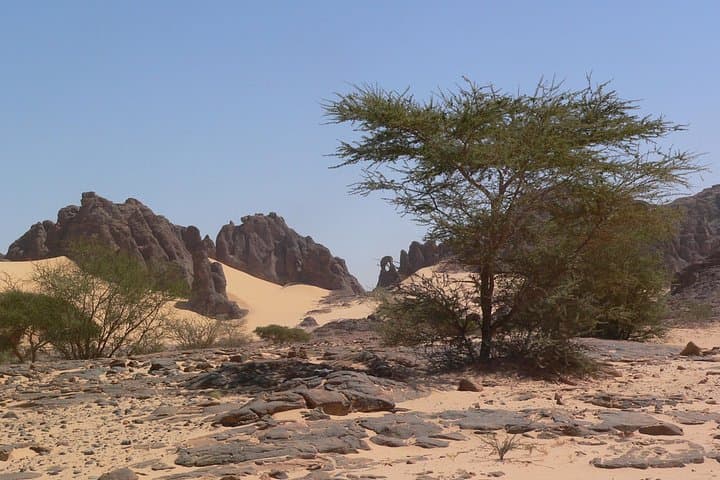
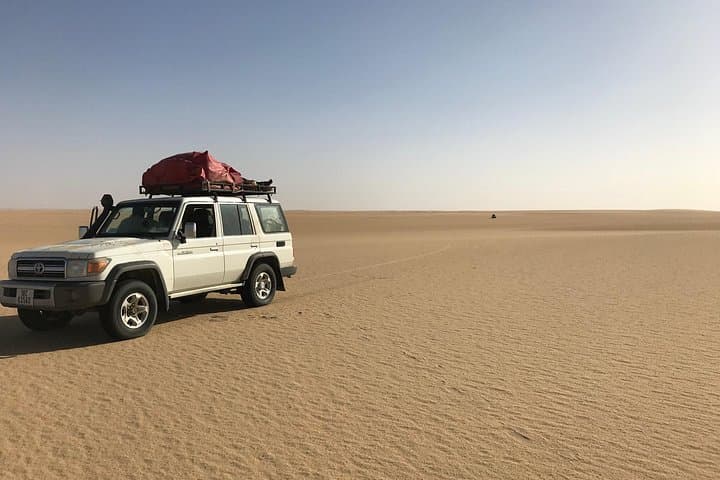
Sand and stone rearrange the horizon into a hard, patient geometry as the convoy pulls away from N’Djamena. Within days the paved road dissolves into track and the air thins above black pumice slopes that once erupted in the region’s fossil volcanoes. You move from flat Sahelian scrub into cliffs, gorges and finally the volcanic amphitheaters of the Tibesti massif—where Emi Koussi towers above the Sahara and the Trou au Natron yawns below.
Sand and stone rearrange the horizon into a hard, patient geometry as the convoy pulls away from N’Djamena. Within days the paved road dissolves into track and the air thins above black pumice slopes that once erupted in the region’s fossil volcanoes. You move from flat Sahelian scrub into cliffs, gorges and finally the volcanic amphitheaters of the Tibesti massif—where Emi Koussi towers above the Sahara and the Trou au Natron yawns below.
The Tibesti have long been a crossroads for caravans and the homeland of the Tubu people, whose mud-brick villages and oasis cultivations punctuate otherwise harsh expanses. Geologically the range is an ancient volcanic complex: lava flows, pumice plateaus and calderas carved by wind and time. The tour links culture and geology—visits to Bardai and Zouar, an optional 6 km descent into the Trou au Natron caldera with ~700 m of elevation change, and a pause at the Ounianga lakes, a UNESCO site where emerald water meets orange dunes.
Practical guidance: this is a multi-week, remote route (about 18–19 days) of rough tracks and long drives between bivouacs. Guides and visitation rights are required and included; travel requires strong cardiovascular fitness, desert camping skills and basic altitude acclimatization for Emi Koussi (3,415 m). Pack sun protection, layered insulation for cold desert nights, reliable water-carrying capacity and spare vehicle parts. Travel windows outside the hottest months (roughly October–April) minimize heat risk. Expect limited medical support, variable mobile coverage and a true expedition pace—slow, deliberate, and completely off the beaten tourist map.