THE ADVENTURE COLLECTIVE® · Independent discovery and booking for outdoor travel

Drive deep into the Tibesti Mountains of northern Chad in a paired 4x4 expedition that combines volcanic highlands, desert dunes and remote cultural sites. This multi-day self-drive requires sand-driving skill, a support vehicle, and careful planning for water, permits and mechanics.
Drive deep into the Tibesti Mountains of northern Chad in a paired 4x4 expedition that combines volcanic highlands, desert dunes and remote cultural sites. This multi-day self-drive requires sand-driving skill, a support vehicle, and careful planning for water, permits and mechanics.
A low sun throws long shadows across black volcanic shoulders as a pair of Toyota 76s crest a wind-polished dune — the kind of horizon that makes maps feel like promises. This is the Tibesti: an archipelago of volcanic peaks and rugged plateaus in northern Chad where roads are suggested lines and the landscape tests both machine and mettle.
Verified experiences and guided adventures in the surrounding area.
Operated by Eyte Voyages Tchad · Bardaï, Tibesti Region
A low sun throws long shadows across black volcanic shoulders as a pair of Toyota 76s crest a wind-polished dune — the kind of horizon that makes maps feel like promises. This is the Tibesti: an archipelago of volcanic peaks and rugged plateaus in northern Chad where roads are suggested lines and the landscape tests both machine and mettle.
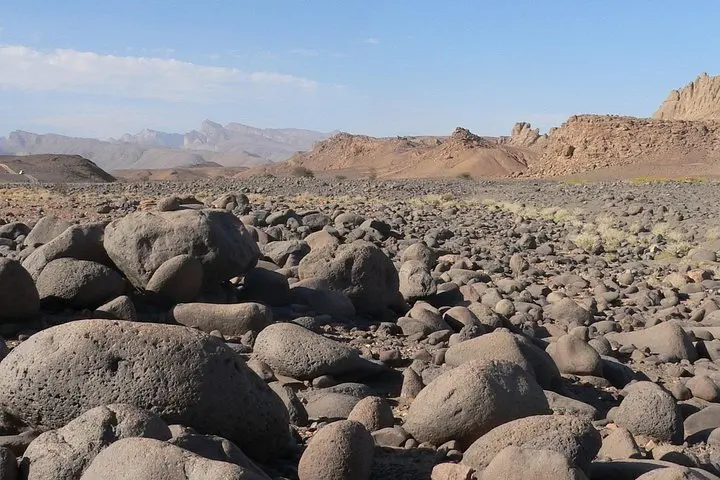
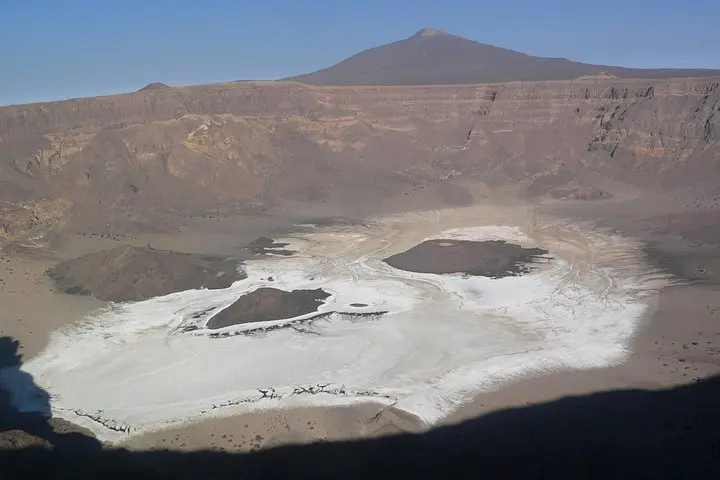
Geology here is immediate: ancient lava flows, crater rims and Emi Koussi — Saharan high ground that records millions of years of tectonic restlessness. Human history is intimate too; caravan routes once threaded these ranges, and remnants of rock art and tuareg and toubou culture speak to long desert stewardship. The tour operates with a support vehicle for safety and includes permits and local access rights, a reminder that this is regulated, remote country.
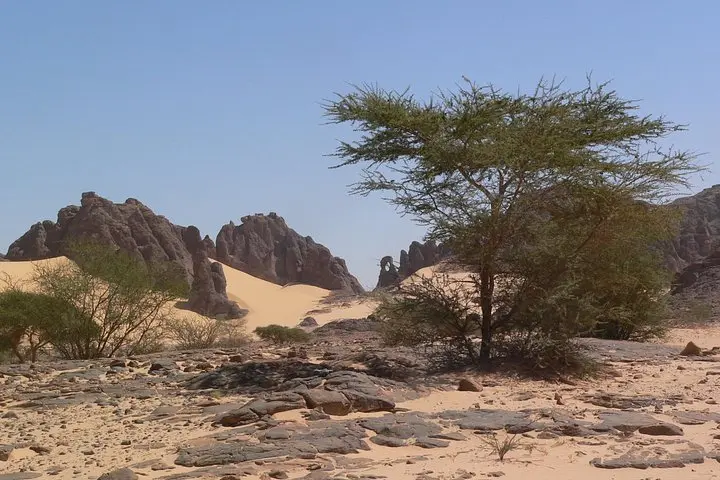
Expect long days behind the wheel on sand, gravel and rocky ledges, punctuated by hikes to viewpoints and nights under an enormous southern sky. Navigation skills and desert driving experience are mandatory: dunes will demand techniques, the wind will rearrange tracks, and vehicles require basic recovery gear.
Practically, travel with layered sun protection, at least 4–5 liters water per person per day, satellite communication, and contingency plans for mechanical issues. Timing matters — cooler months reduce heat stress, while the wet season can be impassable. Guides and local support are included, but the trip remains physically and technically demanding: arrive prepared, experienced, and respectful of fragile desert soils and local communities.
Yes. The operator requires proven experience driving on sand and dunes; drivers should be comfortable with tire deflation, momentum techniques and recovery.
Permits and access rights are included in the tour price; travelers must carry identification and follow local guide instructions at checkpoints.
This unstructured expedition typically uses mobile desert camps and simple field shelters; expect basic camping with nights under the stars and occasional local guesthouse stays.
No; the trip is not recommended for pregnant travelers, those with spinal or serious cardiovascular conditions, and requires high fitness.
Eyte Voyages Tchad operates guided outdoor trips and adventures with an emphasis on safety, stewardship, and memorable experiences.
A low sun throws long shadows across black volcanic shoulders as a pair of Toyota 76s crest a wind-polished dune — the kind of horizon that makes maps feel like promises. This is the Tibesti: an archipelago of volcanic peaks and rugged plateaus in northern Chad where roads are suggested lines and the landscape tests both machine and mettle.
A low sun throws long shadows across black volcanic shoulders as a pair of Toyota 76s crest a wind-polished dune — the kind of horizon that makes maps feel like promises. This is the Tibesti: an archipelago of volcanic peaks and rugged plateaus in northern Chad where roads are suggested lines and the landscape tests both machine and mettle.
Geology here is immediate: ancient lava flows, crater rims and Emi Koussi — Saharan high ground that records millions of years of tectonic restlessness. Human history is intimate too; caravan routes once threaded these ranges, and remnants of rock art and tuareg and toubou culture speak to long desert stewardship. The tour operates with a support vehicle for safety and includes permits and local access rights, a reminder that this is regulated, remote country.
Expect long days behind the wheel on sand, gravel and rocky ledges, punctuated by hikes to viewpoints and nights under an enormous southern sky. Navigation skills and desert driving experience are mandatory: dunes will demand techniques, the wind will rearrange tracks, and vehicles require basic recovery gear.
Practically, travel with layered sun protection, at least 4–5 liters water per person per day, satellite communication, and contingency plans for mechanical issues. Timing matters — cooler months reduce heat stress, while the wet season can be impassable. Guides and local support are included, but the trip remains physically and technically demanding: arrive prepared, experienced, and respectful of fragile desert soils and local communities.