THE ADVENTURE COLLECTIVE® · Independent discovery and booking for outdoor travel
A short, steep hike through Collserola Natural Park that tops out at Tibidabo for sweeping views of Barcelona, the Mediterranean and the Catalan hills. Expect 4–5 km of forested trail, 300 m of gain, and cultural highlights like Vil·la Joana and the Temple of the Sacred Heart.
A short, steep hike through Collserola Natural Park that tops out at Tibidabo for sweeping views of Barcelona, the Mediterranean and the Catalan hills. Expect 4–5 km of forested trail, 300 m of gain, and cultural highlights like Vil·la Joana and the Temple of the Sacred Heart.
You step off the commuter train at Baixador de Vallvidrera and the city exhales behind you—steel and bustle shrinking beneath the shade of holm oak and pine. The trail climbs steadily through Collserola’s Mediterranean forest, rosemary and thyme releasing sharp, sun-warmed scents that follow you up the switchbacks.
Verified experiences and guided adventures in the surrounding area.
Operated by Barcelona Soul Walks · Barcelona, Catalonia
You step off the commuter train at Baixador de Vallvidrera and the city exhales behind you—steel and bustle shrinking beneath the shade of holm oak and pine. The trail climbs steadily through Collserola’s Mediterranean forest, rosemary and thyme releasing sharp, sun-warmed scents that follow you up the switchbacks.
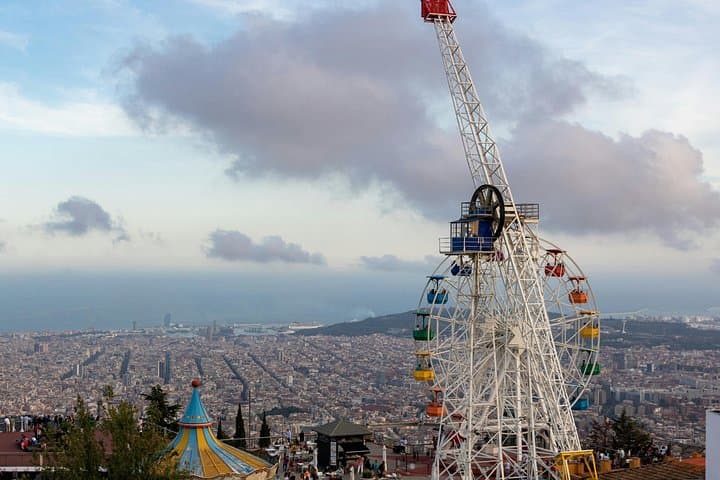
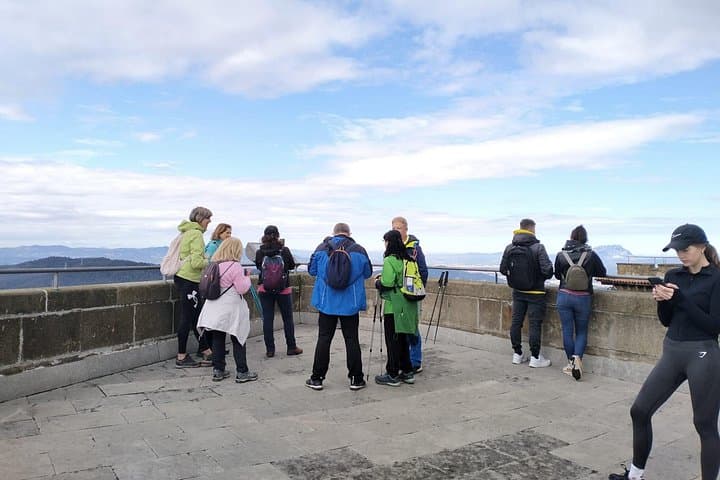
This compact route (about 4–5 km with roughly 300 m of ascent) finishes at Tibidabo’s 512 m summit. Along the way you’ll pass Vil·la Joana, a 19th‑century farmhouse tied to poet Jacint Verdaguer, and a modern landmark: Norman Foster’s Collserola communications tower, an urban punctuation against the green. The trail traces the Catalan Coastal Range—gently folded hills shaped by ancient uplift and erosion—offering sweeping views where the city grid meets the Mediterranean horizon.
Culturally, the top is dominated by the Temple of the Sacred Heart, begun in 1902; you can pay a small fee to ride the lift to the terrace for an elevated photo angle. The route moves between shaded forest and open viewpoints, so timing matters: golden-hour light turns the sea glass-blue and the city’s tiles burn copper.
Practical guide: allow 1.5–2 hours, wear sturdy shoes for loose gravel and roots, and carry 1–1.5 L of water. Public transport (FGC lines S1/S2) and short transfers make this an easy half‑day out from Barcelona. Expect moderate effort—steady climbs reward you with reachable panoramas and a clear sense of how the urban and wild edges of Barcelona meet.
It’s a moderate climb: roughly 4–5 km roundtrip with about 300 m elevation gain; suitable for anyone with regular walking fitness.
Take FGC lines S1 or S2 to Baixador de Vallvidrera, then use the stairs or elevator to the meeting point; it’s well served by public transport.
No—access to the temple terrace lift (~€5) and amusement park attractions are extra and paid on site.
Service animals are allowed per the tour info; check with the operator about non-service pets and leash rules in Collserola Natural Park.
Barcelona Soul Walks operates guided outdoor trips and adventures with an emphasis on safety, stewardship, and memorable experiences.
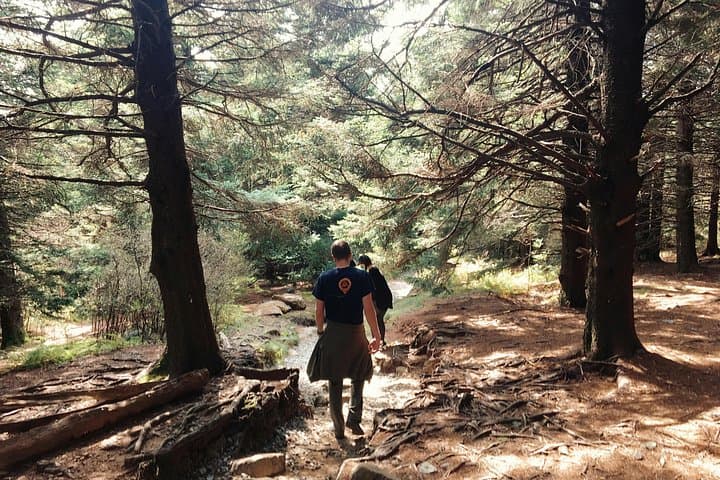

You step off the commuter train at Baixador de Vallvidrera and the city exhales behind you—steel and bustle shrinking beneath the shade of holm oak and pine. The trail climbs steadily through Collserola’s Mediterranean forest, rosemary and thyme releasing sharp, sun-warmed scents that follow you up the switchbacks.
You step off the commuter train at Baixador de Vallvidrera and the city exhales behind you—steel and bustle shrinking beneath the shade of holm oak and pine. The trail climbs steadily through Collserola’s Mediterranean forest, rosemary and thyme releasing sharp, sun-warmed scents that follow you up the switchbacks.
This compact route (about 4–5 km with roughly 300 m of ascent) finishes at Tibidabo’s 512 m summit. Along the way you’ll pass Vil·la Joana, a 19th‑century farmhouse tied to poet Jacint Verdaguer, and a modern landmark: Norman Foster’s Collserola communications tower, an urban punctuation against the green. The trail traces the Catalan Coastal Range—gently folded hills shaped by ancient uplift and erosion—offering sweeping views where the city grid meets the Mediterranean horizon.
Culturally, the top is dominated by the Temple of the Sacred Heart, begun in 1902; you can pay a small fee to ride the lift to the terrace for an elevated photo angle. The route moves between shaded forest and open viewpoints, so timing matters: golden-hour light turns the sea glass-blue and the city’s tiles burn copper.
Practical guide: allow 1.5–2 hours, wear sturdy shoes for loose gravel and roots, and carry 1–1.5 L of water. Public transport (FGC lines S1/S2) and short transfers make this an easy half‑day out from Barcelona. Expect moderate effort—steady climbs reward you with reachable panoramas and a clear sense of how the urban and wild edges of Barcelona meet.
