THE ADVENTURE COLLECTIVE® · Independent discovery and booking for outdoor travel

A full-day, 6 km ridge trek through Phu Quoc’s tropical forest to Tien Son Dinh — expect steep pitches, rocky creek crossings and old fruit trees, finishing near the coastal village of Ham Ninh.
A full-day, 6 km ridge trek through Phu Quoc’s tropical forest to Tien Son Dinh — expect steep pitches, rocky creek crossings and old fruit trees, finishing near the coastal village of Ham Ninh.
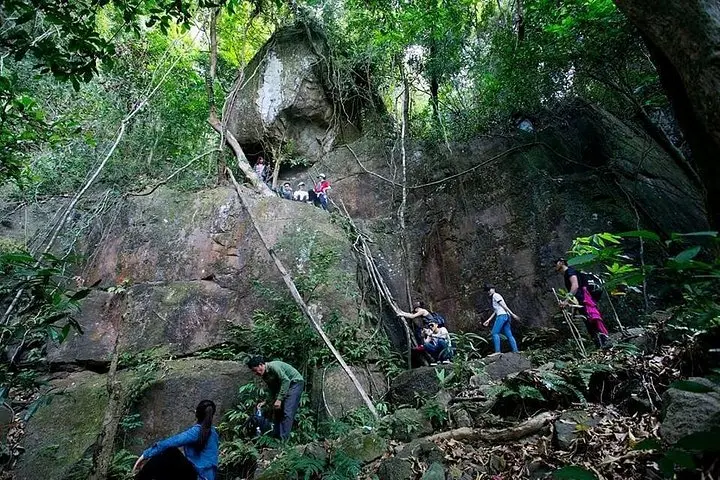
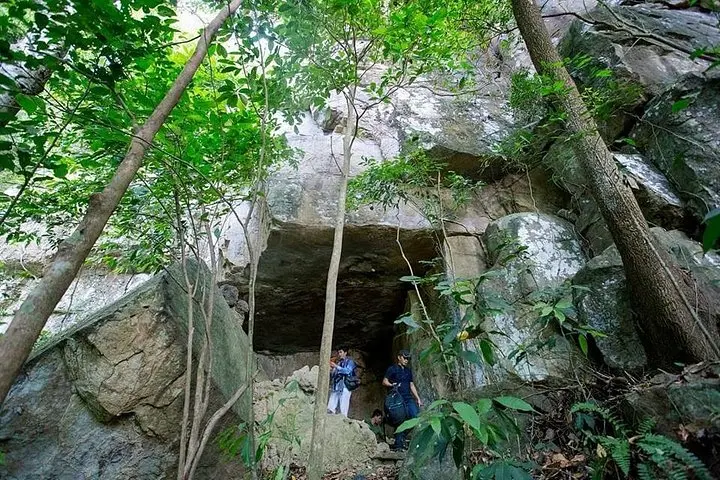
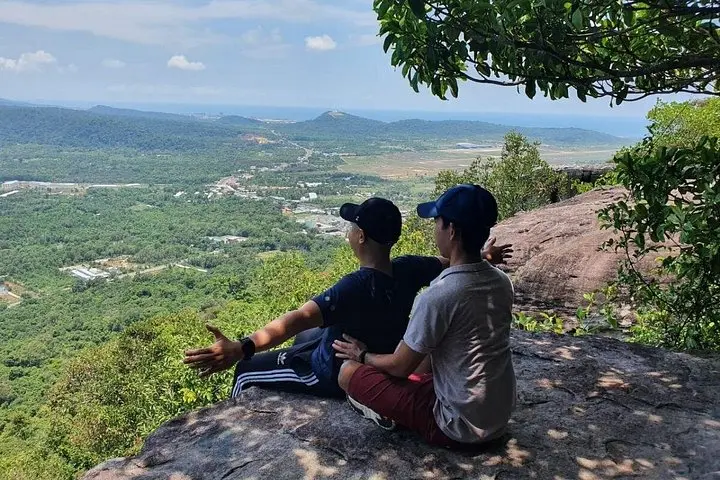
The trail opens with humid air and the distant slap of waves as a minivan drops you at the fringe of Phu Quoc’s primary forest. You step into shade — the path narrows, roots braid across the ground, and the smell of damp earth and durian trees follows. Tien Son Dinh climbs and cuts across ridge lines; at times the jungle tightens, at others it spills open to ledges where the sea glints through palm crowns.
Verified experiences and guided adventures in the surrounding area.
Operated by Local Tours Ha Giang · Phu Quoc, Kien Giang
The trail opens with humid air and the distant slap of waves as a minivan drops you at the fringe of Phu Quoc’s primary forest. You step into shade — the path narrows, roots braid across the ground, and the smell of damp earth and durian trees follows. Tien Son Dinh climbs and cuts across ridge lines; at times the jungle tightens, at others it spills open to ledges where the sea glints through palm crowns.
This tract of forest is part of Phu Quoc’s natural heritage, sitting near protected areas that preserve lowland evergreen species and old-growth fruit trees — jackfruit, star apple, and large banyans that locals have long used for fruit and shelter. Geologically, the island is a low volcanic and sedimentary massif; trails cross rocky outcrops and seasonal streams that swell after monsoon rains.
Culturally you’ll pass signs of island life: small pepper farms, wooden huts, and at the day’s end the fishing village of Ham Ninh, where raised stilt houses and salted-fish racks speak to generations of coastal livelihoods.
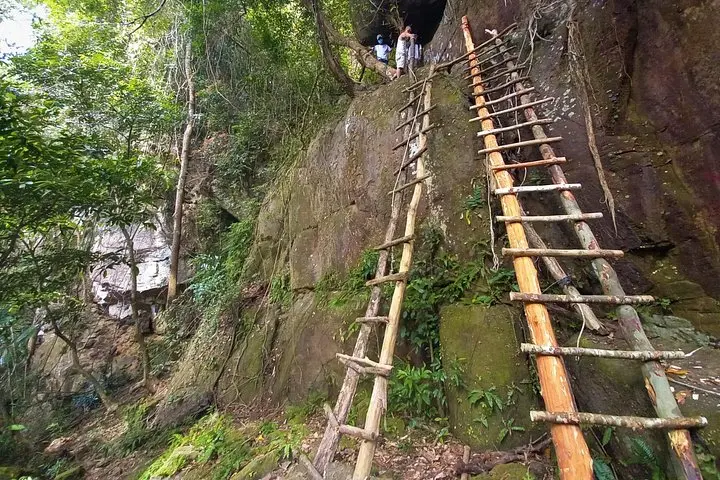
Practically, the route is a 6 km loop with steep pitches, rocky steps and short rapid crossings; guides use basic climbing tools on exposed sections. Expect 6–7 hours out, variable grip underfoot, and muddy patches after rainfall. Bring sturdy footwear, at least 2 liters of water, insect protection, and plan for heat and sudden showers. The guided format is straightforward — follow your guide, keep a steady pace, and allow time for viewpoints and botanical stops. With simple preparation this one-day trek delivers concentrated jungle terrain and a clear slice of Phu Quoc’s wild side.
The guided itinerary covers about 6 km and runs roughly 6–7 hours door-to-door, including transport, breaks and time at viewpoints.
Children over 10 who are comfortable on uneven ground can join; the route includes steep and rocky sections so basic fitness and steadiness are required.
Pick-up from Duong Dong is usually included; guests outside downtown may pay a small extra fee for transfer.
The route can be wet and slippery but typically runs in light rain; operators advise canceling only under severe weather — check the tour’s cancellation window for details.
Local Tours Ha Giang operates guided outdoor trips and adventures with an emphasis on safety, stewardship, and memorable experiences.
The trail opens with humid air and the distant slap of waves as a minivan drops you at the fringe of Phu Quoc’s primary forest. You step into shade — the path narrows, roots braid across the ground, and the smell of damp earth and durian trees follows. Tien Son Dinh climbs and cuts across ridge lines; at times the jungle tightens, at others it spills open to ledges where the sea glints through palm crowns.
The trail opens with humid air and the distant slap of waves as a minivan drops you at the fringe of Phu Quoc’s primary forest. You step into shade — the path narrows, roots braid across the ground, and the smell of damp earth and durian trees follows. Tien Son Dinh climbs and cuts across ridge lines; at times the jungle tightens, at others it spills open to ledges where the sea glints through palm crowns.
This tract of forest is part of Phu Quoc’s natural heritage, sitting near protected areas that preserve lowland evergreen species and old-growth fruit trees — jackfruit, star apple, and large banyans that locals have long used for fruit and shelter. Geologically, the island is a low volcanic and sedimentary massif; trails cross rocky outcrops and seasonal streams that swell after monsoon rains.
Culturally you’ll pass signs of island life: small pepper farms, wooden huts, and at the day’s end the fishing village of Ham Ninh, where raised stilt houses and salted-fish racks speak to generations of coastal livelihoods.
Practically, the route is a 6 km loop with steep pitches, rocky steps and short rapid crossings; guides use basic climbing tools on exposed sections. Expect 6–7 hours out, variable grip underfoot, and muddy patches after rainfall. Bring sturdy footwear, at least 2 liters of water, insect protection, and plan for heat and sudden showers. The guided format is straightforward — follow your guide, keep a steady pace, and allow time for viewpoints and botanical stops. With simple preparation this one-day trek delivers concentrated jungle terrain and a clear slice of Phu Quoc’s wild side.