THE ADVENTURE COLLECTIVE® · Independent discovery and booking for outdoor travel

Escape Budapest for a private six-hour trip to the Tihany Peninsula. With skip-the-line access to the Baroque abbey, lakeside views, lavender fields, and a licensed guide, this day tour blends cultural history with shoreline scenery.
Escape Budapest for a private six-hour trip to the Tihany Peninsula. With skip-the-line access to the Baroque abbey, lakeside views, lavender fields, and a licensed guide, this day tour blends cultural history with shoreline scenery.
You pull away from Budapest’s stone boulevards and, within an hour, the city’s hum gives way to wind on open water. The Tihany Peninsula appears like a low arm reaching into Lake Balaton — forested slopes, lavender terraces, and the pale tower of the Baroque abbey standing watch over the lake.
Verified experiences and guided adventures in the surrounding area.
Operated by Rosotravel Hungary · Tihany, Veszprém County
You pull away from Budapest’s stone boulevards and, within an hour, the city’s hum gives way to wind on open water. The Tihany Peninsula appears like a low arm reaching into Lake Balaton — forested slopes, lavender terraces, and the pale tower of the Baroque abbey standing watch over the lake.
Tihany’s abbey traces its origins to 1055, when King Andrew I founded the Benedictine monastery; the royal crypt and medieval inscriptions anchor the village to Hungary’s early statehood. Geologically the peninsula is a raised basalt ridge and sedimentary fringe; cliffs and pebble shores reveal the lake’s glacial origin and the shallow, slow-moving currents that let reedbeds flex and birds claim their territory. Local life still leans on fishing, viticulture and seasonal lavender harvests; the village streets and thatched cottages reflect a rural cultural continuity that feels intentional, not staged.
On a private day trip from Budapest, skip-the-line access to the abbey saves time, letting you focus on frescoes, the crypt and the clifftop views. Guides often point out the Óvár hill ruins and the small lavender museum, both worth short detours. Expect cobbled lanes, short stair climbs and viewpoints exposed to sun and wind.
Practical guidance: bring dry shoes for shoreline walking, a windproof layer for exposed ridgelines, and a camera with a wide-angle setting. If you’re traveling in summer, arrive early to avoid coach crowds; spring and fall deliver better light for photos and quieter village streets. The trip is accessible to most travelers and pairs cultural depth with an easy, restorative dose of nature.
Typical door-to-door transfer takes about 1–1.5 hours each way depending on traffic and your pickup location in Budapest.
Skip-the-line reduces wait at the ticket office, but you may still queue briefly for security or timed-group entry during peak season.
The tour notes indicate wheelchair-accessible transport and many areas are accessible, but parts of the abbey and village have cobbles and steps—notify the operator of special requirements before booking.
Guides are available in English and Hungarian; German, Spanish, French and Italian may be offered—confirm language at booking.
Rosotravel Hungary operates guided outdoor trips and adventures with an emphasis on safety, stewardship, and memorable experiences.
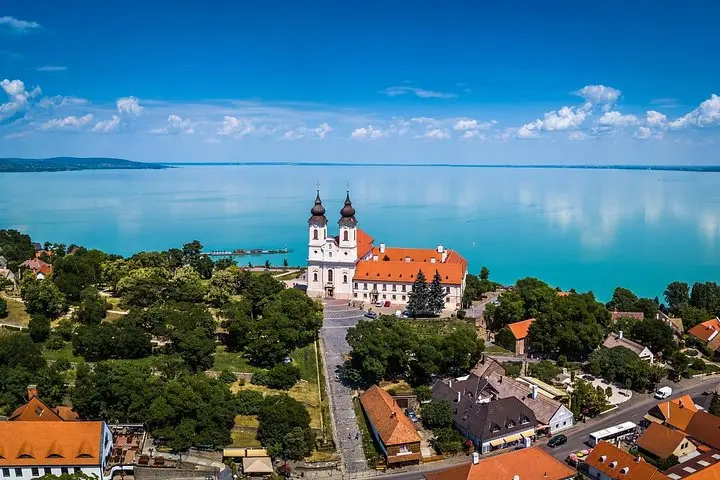


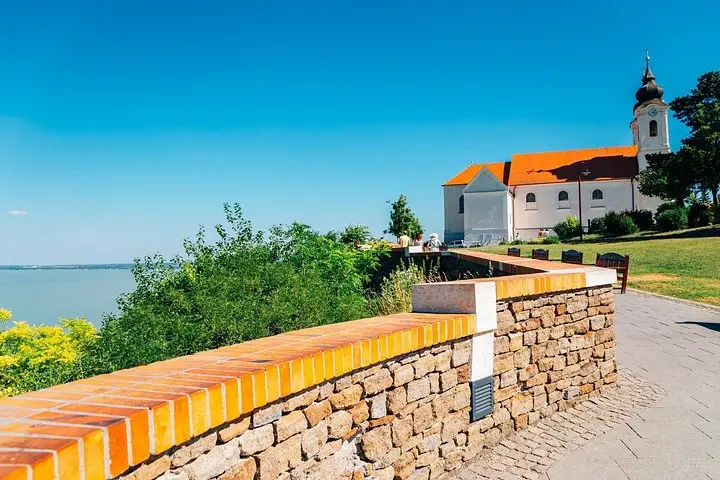
You pull away from Budapest’s stone boulevards and, within an hour, the city’s hum gives way to wind on open water. The Tihany Peninsula appears like a low arm reaching into Lake Balaton — forested slopes, lavender terraces, and the pale tower of the Baroque abbey standing watch over the lake.
You pull away from Budapest’s stone boulevards and, within an hour, the city’s hum gives way to wind on open water. The Tihany Peninsula appears like a low arm reaching into Lake Balaton — forested slopes, lavender terraces, and the pale tower of the Baroque abbey standing watch over the lake.
Tihany’s abbey traces its origins to 1055, when King Andrew I founded the Benedictine monastery; the royal crypt and medieval inscriptions anchor the village to Hungary’s early statehood. Geologically the peninsula is a raised basalt ridge and sedimentary fringe; cliffs and pebble shores reveal the lake’s glacial origin and the shallow, slow-moving currents that let reedbeds flex and birds claim their territory. Local life still leans on fishing, viticulture and seasonal lavender harvests; the village streets and thatched cottages reflect a rural cultural continuity that feels intentional, not staged.
On a private day trip from Budapest, skip-the-line access to the abbey saves time, letting you focus on frescoes, the crypt and the clifftop views. Guides often point out the Óvár hill ruins and the small lavender museum, both worth short detours. Expect cobbled lanes, short stair climbs and viewpoints exposed to sun and wind.
Practical guidance: bring dry shoes for shoreline walking, a windproof layer for exposed ridgelines, and a camera with a wide-angle setting. If you’re traveling in summer, arrive early to avoid coach crowds; spring and fall deliver better light for photos and quieter village streets. The trip is accessible to most travelers and pairs cultural depth with an easy, restorative dose of nature.