THE ADVENTURE COLLECTIVE® · Independent discovery and booking for outdoor travel

Board a purpose-built wildlife vessel from Auckland’s Viaduct and cross the Hauraki Gulf in search of dolphins, Bryde’s whales, seals and seabirds. The day includes live commentary, a stop at either Rotoroa Island or Man O’ War on Waiheke, and a marine-mammal viewing guarantee.
Board a purpose-built wildlife vessel from Auckland’s Viaduct and cross the Hauraki Gulf in search of dolphins, Bryde’s whales, seals and seabirds. The day includes live commentary, a stop at either Rotoroa Island or Man O’ War on Waiheke, and a marine-mammal viewing guarantee.
You step off Princes Wharf into salt-laced air, the city dropping away to a horizon of blue and volcanic silhouettes. The vessel eases from the Auckland Viaduct, engines low, and the Hauraki Gulf opens like a route book of islands—dark cones of Rangitoto, the gentler slopes of Waiheke, and smaller peaks that once erupted in the Auckland volcanic field. Gulls quarrel above the rail while the crew scans the water; the first dorsal fin breaks the plane and the day changes from skyline to wildlife.
Verified experiences and guided adventures in the surrounding area.
Operated by Explore Group Limited · Auckland, Auckland
You step off Princes Wharf into salt-laced air, the city dropping away to a horizon of blue and volcanic silhouettes. The vessel eases from the Auckland Viaduct, engines low, and the Hauraki Gulf opens like a route book of islands—dark cones of Rangitoto, the gentler slopes of Waiheke, and smaller peaks that once erupted in the Auckland volcanic field. Gulls quarrel above the rail while the crew scans the water; the first dorsal fin breaks the plane and the day changes from skyline to wildlife.
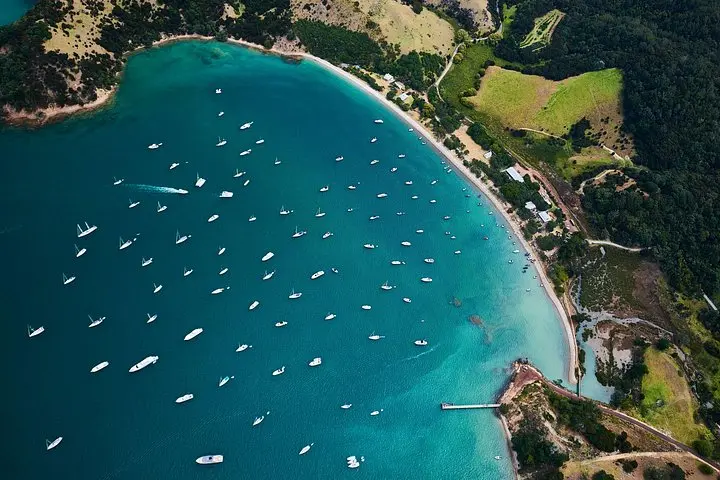
This is Tikapa Moana — the waters that hold Ngāi Tai ki Tāmaki histories, modern conservation projects, and resident marine mammals. The cruise runs roughly 7–8 hours (the operator lists a fixed duration of about 465 minutes) and combines guided marine mammal viewing with an afternoon stop at either Rotoroa Island or Man O’ War Bay on Waiheke. Rotoroa is a restored sanctuary with 8 km of trails and a story of ecological recovery; Man O’ War sits beneath vines and a beachfront cellar door where geology meets viticulture.
Geologically, the Gulf's islands are young—basalt flows and scoria cones formed in explosive bursts. That volcanic backbone shapes everything from sheltered bays to the pebbled intertidal shelves where seals haul out. Culturally, commentary aboard covers both Māori connections to sea and land and the conservation work that supports seabirds, dolphins, and Bryde’s whales.
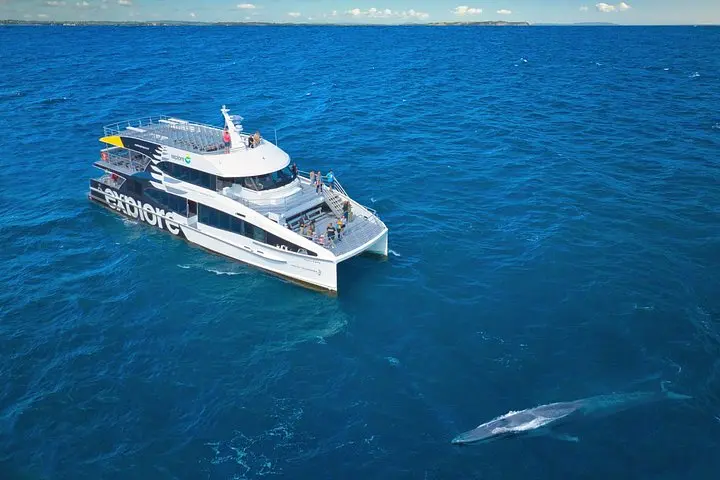
Practical details matter here. Boarding is at the Explore Kiosk opposite the Maritime Museum; scheduled departures typically leave mid-morning and return mid-afternoon. The fleet is built for viewing: large windows, multiple decks, and a licensed café for light food and drinks. The operator offers a marine-mammal-viewing guarantee—if you leave without sightings, they'll invite you back.
For planning: bring layered clothing (wind and spray are real), a waterproof shell, strong sunscreen, and binoculars. If you're prone to seasickness, take medication beforehand and choose a position near the vessel’s centerline. Island stops are short—plan for a brisk walk or a relaxed winery visit depending on which shore you go ashore.
This cruise sits between tourism and conservation—quiet enough to watch a dolphin arc through wake, informative enough to leave knowing why predator control on islands, marine protection, and community stewardship matter. It’s an accessible way to meet Auckland’s marine landscape up close: the sea will test your attention, and often, it will give one of its signatures in return.
The advertised duration is about 465 minutes (roughly 7–8 hours). Typical departures leave mid-morning (around 9:15am) and return mid-afternoon (around 4pm).
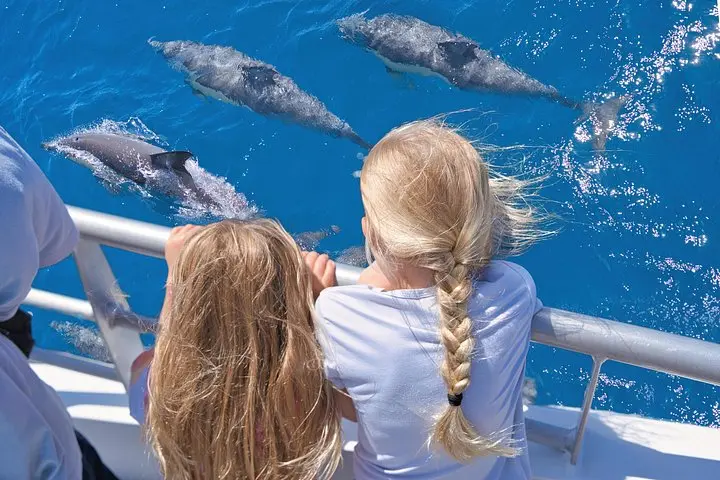
Common sightings include dolphins, Bryde’s whales and New Zealand fur seals; the operator offers a marine-mammal-viewing guarantee—return for free if no mammals are seen on your cruise.
Stops are at either Rotoroa Island (walks, beaches, wildlife) or Man O’ War on Waiheke (vineyard cellar door and beachfront dining); the stop lasts roughly 1–1.5 hours.
Yes—infants and small children can use strollers onboard, and seating is provided for all ages; service animals are allowed.
A licensed café on board sells light refreshments; you can also purchase food at Man O’ War during the island stop.
Vessels have cabin seating and are suitable for many mobility levels, but stepping on/off at island landings may require assistance—contact the operator ahead for special requirements.
Explore Group Limited operates guided outdoor trips and adventures with an emphasis on safety, stewardship, and memorable experiences.
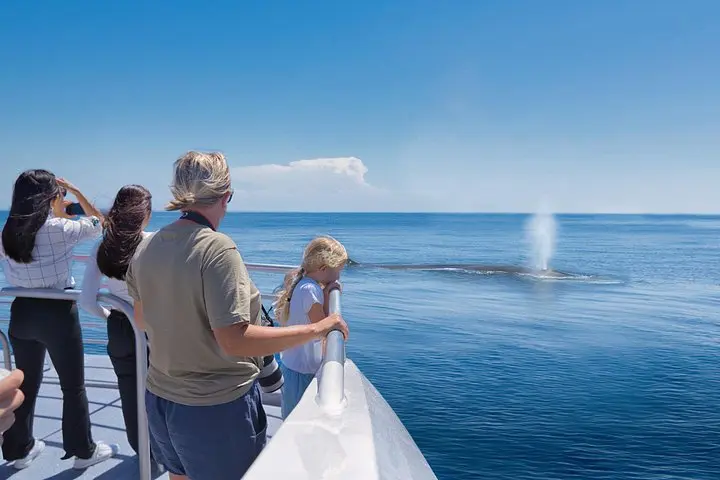
You step off Princes Wharf into salt-laced air, the city dropping away to a horizon of blue and volcanic silhouettes. The vessel eases from the Auckland Viaduct, engines low, and the Hauraki Gulf opens like a route book of islands—dark cones of Rangitoto, the gentler slopes of Waiheke, and smaller peaks that once erupted in the Auckland volcanic field. Gulls quarrel above the rail while the crew scans the water; the first dorsal fin breaks the plane and the day changes from skyline to wildlife.
You step off Princes Wharf into salt-laced air, the city dropping away to a horizon of blue and volcanic silhouettes. The vessel eases from the Auckland Viaduct, engines low, and the Hauraki Gulf opens like a route book of islands—dark cones of Rangitoto, the gentler slopes of Waiheke, and smaller peaks that once erupted in the Auckland volcanic field. Gulls quarrel above the rail while the crew scans the water; the first dorsal fin breaks the plane and the day changes from skyline to wildlife.
This is Tikapa Moana — the waters that hold Ngāi Tai ki Tāmaki histories, modern conservation projects, and resident marine mammals. The cruise runs roughly 7–8 hours (the operator lists a fixed duration of about 465 minutes) and combines guided marine mammal viewing with an afternoon stop at either Rotoroa Island or Man O’ War Bay on Waiheke. Rotoroa is a restored sanctuary with 8 km of trails and a story of ecological recovery; Man O’ War sits beneath vines and a beachfront cellar door where geology meets viticulture.
Geologically, the Gulf's islands are young—basalt flows and scoria cones formed in explosive bursts. That volcanic backbone shapes everything from sheltered bays to the pebbled intertidal shelves where seals haul out. Culturally, commentary aboard covers both Māori connections to sea and land and the conservation work that supports seabirds, dolphins, and Bryde’s whales.
Practical details matter here. Boarding is at the Explore Kiosk opposite the Maritime Museum; scheduled departures typically leave mid-morning and return mid-afternoon. The fleet is built for viewing: large windows, multiple decks, and a licensed café for light food and drinks. The operator offers a marine-mammal-viewing guarantee—if you leave without sightings, they'll invite you back.
For planning: bring layered clothing (wind and spray are real), a waterproof shell, strong sunscreen, and binoculars. If you're prone to seasickness, take medication beforehand and choose a position near the vessel’s centerline. Island stops are short—plan for a brisk walk or a relaxed winery visit depending on which shore you go ashore.
This cruise sits between tourism and conservation—quiet enough to watch a dolphin arc through wake, informative enough to leave knowing why predator control on islands, marine protection, and community stewardship matter. It’s an accessible way to meet Auckland’s marine landscape up close: the sea will test your attention, and often, it will give one of its signatures in return.