THE ADVENTURE COLLECTIVE® · Independent discovery and booking for outdoor travel

A long day that pairs Oradea’s Art Nouveau streets with the raw geology of the Apuseni: visit Meziad and Farcu Crystal Cave to see fossils and fragile crystal formations, then walk Oradea’s theater-lined squares. Practical, full-day tour with cave walking and city strolls.
A long day that pairs Oradea’s Art Nouveau streets with the raw geology of the Apuseni: visit Meziad and Farcu Crystal Cave to see fossils and fragile crystal formations, then walk Oradea’s theater-lined squares. Practical, full-day tour with cave walking and city strolls.
You step out of the minivan as morning light slices across Oradea’s riverfront and a breeze carries the cool scent of limestone from the Apuseni highlands.
Verified experiences and guided adventures in the surrounding area.
Operated by Harangus Ioan-Traian · Oradea, Bihor
You step out of the minivan as morning light slices across Oradea’s riverfront and a breeze carries the cool scent of limestone from the Apuseni highlands.
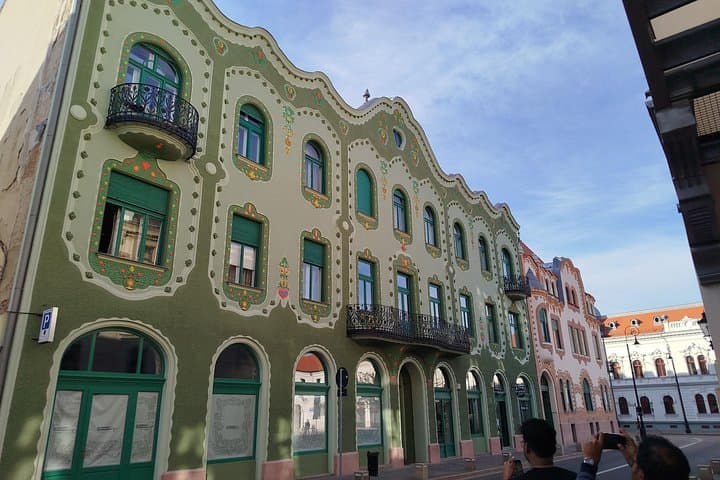
The day moves between human scale and subterranean scale: cobbled squares and Art Nouveau facades give way to narrow mine galleries where light picks out crystal faces. Oradea’s Piata Unirii and Theater Square show the Austro-Hungarian era’s confident architecture—ornate palaces, the Black Eagle passage—before the road climbs toward Bihor’s karst country.
Geology here is immediate. The Apuseni Mountains are limestone folded by ancient seas; caves like Meziad preserve stalactites, stalagmites and fossil-bearing layers. Meziad yielded cave-bear bones and a specialized cave fauna; Farcu’s Crystal Cave offers glittering calcite discs and fragile formations born of slow mineral-rich drips and centuries of mineral deposition.
Culturally the route blends urban life with rural mining history: small mining museums near Farcu explain local extraction and the 20th-century gallery discoveries that revealed the crystals.
Practical guidance: expect a full-day outing (long travel windows), uneven terrain in caves, and low light. Wear sturdy shoes with good grip, bring layers for 10–12°C cave temps, and a headlamp or reliable flashlight. Respect barriers—the crystals are fragile and recovering from past vandalism—and follow your guide’s instructions on footing and photography. Hydrate before and after cave sections and plan for photos in Oradea’s squares during softer afternoon light.
This is a day for contrasts: urban detail and stone-carved quiet, both demanding steady legs and a careful curiosity.
Expect a 12–14 hour day with several hours of driving between Timișoara, Oradea and the Apuseni sites; exact timing varies by traffic and group pace.
The cave routes have uneven steps and low light; not recommended for people with serious mobility issues, and children should be supervised closely.
Bottled water and snacks are included per the itinerary, but plan for no full meals in caves—there will be opportunities in Oradea or nearby towns.
Photography is generally allowed but follow guide instructions; avoid flash or touching formations to prevent damage.
Harangus Ioan-Traian operates guided outdoor trips and adventures with an emphasis on safety, stewardship, and memorable experiences.


You step out of the minivan as morning light slices across Oradea’s riverfront and a breeze carries the cool scent of limestone from the Apuseni highlands.
You step out of the minivan as morning light slices across Oradea’s riverfront and a breeze carries the cool scent of limestone from the Apuseni highlands.
The day moves between human scale and subterranean scale: cobbled squares and Art Nouveau facades give way to narrow mine galleries where light picks out crystal faces. Oradea’s Piata Unirii and Theater Square show the Austro-Hungarian era’s confident architecture—ornate palaces, the Black Eagle passage—before the road climbs toward Bihor’s karst country.
Geology here is immediate. The Apuseni Mountains are limestone folded by ancient seas; caves like Meziad preserve stalactites, stalagmites and fossil-bearing layers. Meziad yielded cave-bear bones and a specialized cave fauna; Farcu’s Crystal Cave offers glittering calcite discs and fragile formations born of slow mineral-rich drips and centuries of mineral deposition.
Culturally the route blends urban life with rural mining history: small mining museums near Farcu explain local extraction and the 20th-century gallery discoveries that revealed the crystals.
Practical guidance: expect a full-day outing (long travel windows), uneven terrain in caves, and low light. Wear sturdy shoes with good grip, bring layers for 10–12°C cave temps, and a headlamp or reliable flashlight. Respect barriers—the crystals are fragile and recovering from past vandalism—and follow your guide’s instructions on footing and photography. Hydrate before and after cave sections and plan for photos in Oradea’s squares during softer afternoon light.
This is a day for contrasts: urban detail and stone-carved quiet, both demanding steady legs and a careful curiosity.