THE ADVENTURE COLLECTIVE® · Independent discovery and booking for outdoor travel

Explore Tiraspol with a local sketch artist on a 2.5-hour private tour through Soviet relics, riverbank views and a kvint factory stop. Expect candid history, urban contrasts and a postcard to take home.
Explore Tiraspol with a local sketch artist on a 2.5-hour private tour through Soviet relics, riverbank views and a kvint factory stop. Expect candid history, urban contrasts and a postcard to take home.
A low winter sun throws long shadows across Tiraspol’s central square as the guide — more friend than lecturer — leads you past a bronze Suvorov and a T-34 tank that refuses to be forgotten. The Dniester keeps moving beside the city, its current daring you to read the layers of history stamped into concrete, poster and pavement.
Verified experiences and guided adventures in the surrounding area.
Operated by Anton Dendemarchenko · Tiraspol, Transnistria
A low winter sun throws long shadows across Tiraspol’s central square as the guide — more friend than lecturer — leads you past a bronze Suvorov and a T-34 tank that refuses to be forgotten. The Dniester keeps moving beside the city, its current daring you to read the layers of history stamped into concrete, poster and pavement.
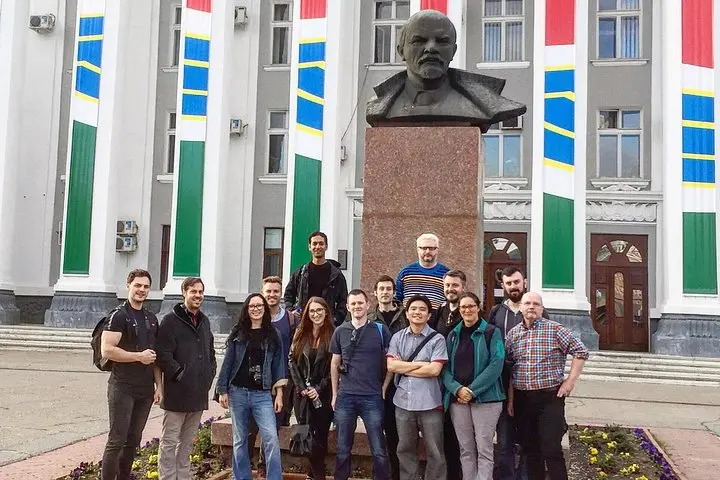
This 2.5-hour private tour threads Soviet-era monuments, a lively local market, and modern city streets with optional stops at a kvint cognac factory and several off-grid “lost places” that recall late‑20th-century industry and civic life. Tiraspol’s layout and architecture reflect its role as an administrative center in the Soviet period; the city contains statues, government buildings and currency motifs still in daily use by locals. Geologically the region sits on the Dniester floodplain — level ground with broad river views rather than steep climbs — so the walk is mostly flat and urban.
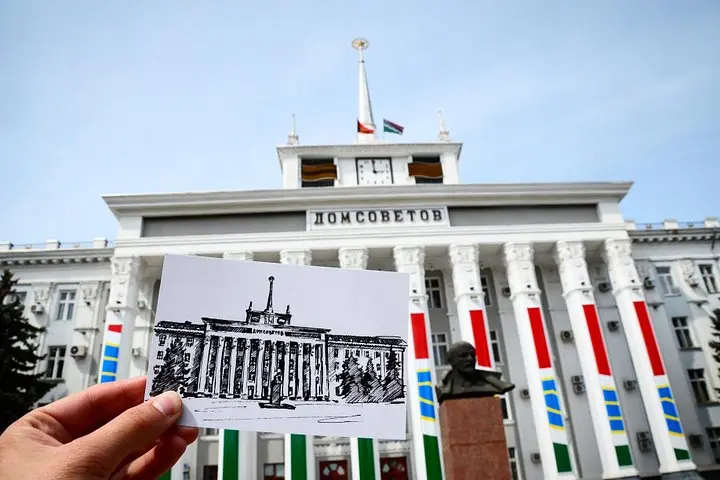
Expect candid local conversation about identity, borders and everyday life in Pridnestrovie; Antony’s sketches and handmade postcards punctuate the route and give tangible context to stories you’ll hear. Photographers will find strong compositional contrasts: rust and stucco against neat municipal parks.
Practical guide: bring your passport and some local cash (small bills), wear comfortable walking shoes and layers for sudden winds off the river, and allow 2–3 hours for the full experience. Border formalities can be quick but prepare documentation — and, if you choose the eerie, off-route places, follow the guide’s safety instructions. The tour aims to show what remains when empires recede: everyday life, leftover iconography and surprising pockets of modernity.
Most visitors pass through with passport stamps at the Moldova–Transnistria checkpoint; visa rules depend on your nationality—check consular guidance before travel.
The route is advertised as wheelchair accessible for main sites, but optional off-route locations may be uneven—confirm accessibility needs when booking.
The kvint factory visit is optional and typically does not include tasting; entry depends on operational schedule and access permissions.
Carry Moldovan leu and small cash; Transnistrian rouble is used locally in some places, but many vendors accept leu or cash in euros for larger purchases.
Anton Dendemarchenko operates guided outdoor trips and adventures with an emphasis on safety, stewardship, and memorable experiences.
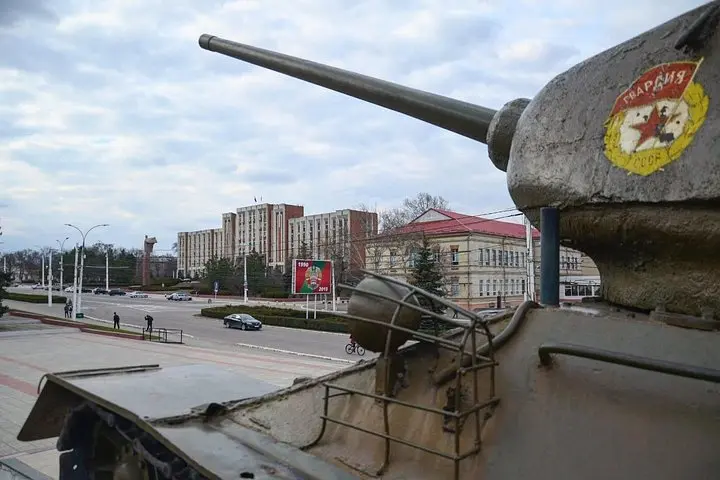
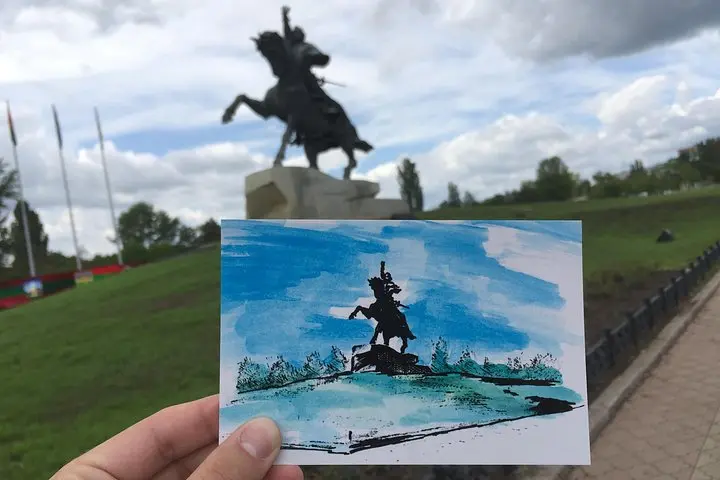
A low winter sun throws long shadows across Tiraspol’s central square as the guide — more friend than lecturer — leads you past a bronze Suvorov and a T-34 tank that refuses to be forgotten. The Dniester keeps moving beside the city, its current daring you to read the layers of history stamped into concrete, poster and pavement.
A low winter sun throws long shadows across Tiraspol’s central square as the guide — more friend than lecturer — leads you past a bronze Suvorov and a T-34 tank that refuses to be forgotten. The Dniester keeps moving beside the city, its current daring you to read the layers of history stamped into concrete, poster and pavement.
This 2.5-hour private tour threads Soviet-era monuments, a lively local market, and modern city streets with optional stops at a kvint cognac factory and several off-grid “lost places” that recall late‑20th-century industry and civic life. Tiraspol’s layout and architecture reflect its role as an administrative center in the Soviet period; the city contains statues, government buildings and currency motifs still in daily use by locals. Geologically the region sits on the Dniester floodplain — level ground with broad river views rather than steep climbs — so the walk is mostly flat and urban.
Expect candid local conversation about identity, borders and everyday life in Pridnestrovie; Antony’s sketches and handmade postcards punctuate the route and give tangible context to stories you’ll hear. Photographers will find strong compositional contrasts: rust and stucco against neat municipal parks.
Practical guide: bring your passport and some local cash (small bills), wear comfortable walking shoes and layers for sudden winds off the river, and allow 2–3 hours for the full experience. Border formalities can be quick but prepare documentation — and, if you choose the eerie, off-route places, follow the guide’s safety instructions. The tour aims to show what remains when empires recede: everyday life, leftover iconography and surprising pockets of modernity.