THE ADVENTURE COLLECTIVE® · Independent discovery and booking for outdoor travel

Escape Rome for a private half‑day to Tivoli where Renaissance fountains and a rocky Roman viewpoint meet. Visit Villa d'Este's engineered gardens, admire Vesta's Temple, and enjoy a classic Italian lunch with valley views.
Escape Rome for a private half‑day to Tivoli where Renaissance fountains and a rocky Roman viewpoint meet. Visit Villa d'Este's engineered gardens, admire Vesta's Temple, and enjoy a classic Italian lunch with valley views.
The minivan eases out of Rome's traffic and, within an hour, the town of Tivoli appears above the Aniene valley — terraced houses, stone stairways and a green rim of trees. At Villa d'Este the air is alive with the hiss and thrum of water; fountains march, leap and whisper down sculpted terraces, and shaded alleys offer relief from mid‑day heat.
Verified experiences and guided adventures in the surrounding area.
Operated by Thybris · Tivoli, Lazio
The minivan eases out of Rome's traffic and, within an hour, the town of Tivoli appears above the Aniene valley — terraced houses, stone stairways and a green rim of trees. At Villa d'Este the air is alive with the hiss and thrum of water; fountains march, leap and whisper down sculpted terraces, and shaded alleys offer relief from mid‑day heat.
Villa d'Este is a 16th‑century Renaissance garden created by Cardinal Ippolito II d'Este, famed for an ambitious hydraulic system that feeds hundreds of jets and basins. Nearby, the circular Temple of Vesta crowns a rocky viewpoint overlooking Villa Gregoriana and the Aniene gorge; the river's work on limestone produced the steep ravines and waterfalls that shaped Tivoli's dramatic topography. Lunch in the historical center exposes simple local cooking — wood‑fired bread, sheep's cheese and robust coffee — and the town's medieval lanes reveal layers of Roman, medieval and Renaissance life.
Practically: expect about six hours total, with roughly two hours at Villa d'Este and time for a relaxed lunch and viewpoint walk. Entrance to Villa d'Este is purchased on site (around €10–15); wear grippy shoes for cobbles and stairs and carry water for summer visits. The private transfer removes navigation stress but the tour's pace is best for travelers comfortable with moderate walking and steps. Arrival in late morning gives fountains full light; afternoon brings softer shadows and cooler pocketed views of the valley. Respect restricted areas and follow ticketed paths — these sites rely on conservation funding and careful foot traffic to keep their hydraulics and ruins intact.
No — the tour does not include Villa d'Este admission; tickets are purchased on site (around €10–15).
Travel time is roughly one hour each way depending on traffic; the itinerary spans about six hours total.
Yes, but participants should manage stairs and moderate walking; children under 18 often have reduced or free entry to sites.
Lunch is independent but the guide can suggest nearby restaurants that handle dietary needs; mention restrictions when booking pickup.
Thybris operates guided outdoor trips and adventures with an emphasis on safety, stewardship, and memorable experiences.
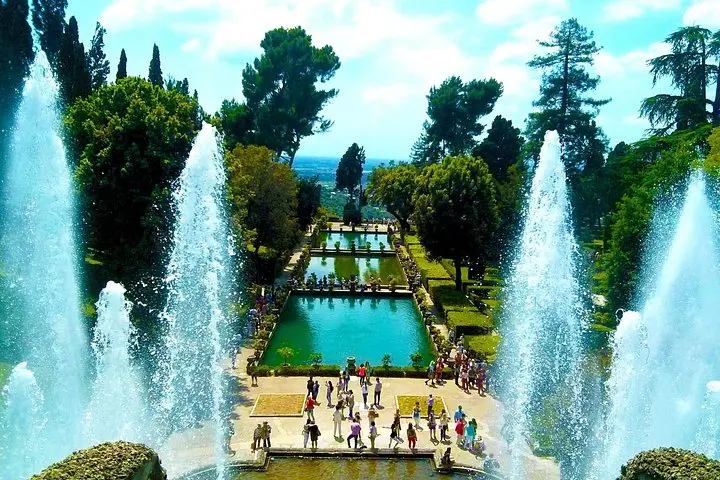
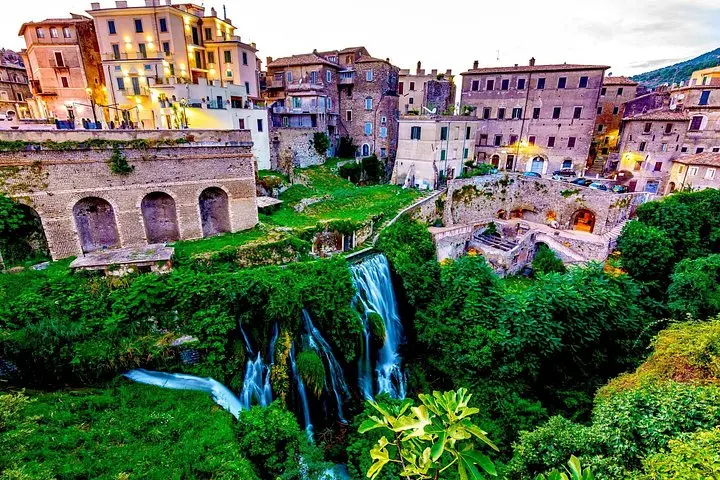
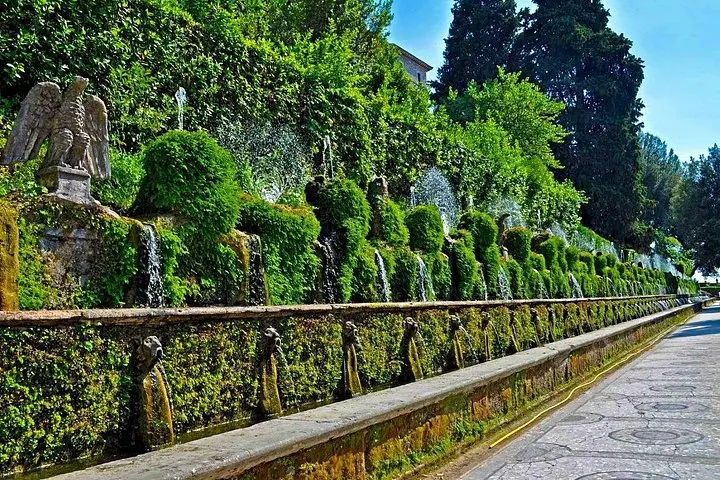
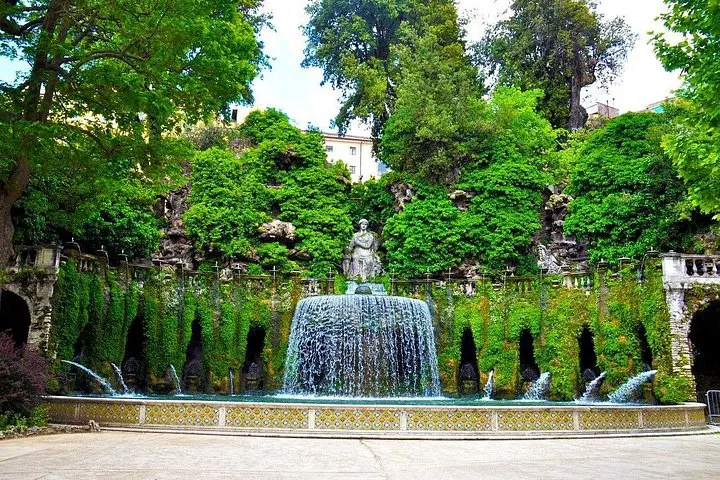
The minivan eases out of Rome's traffic and, within an hour, the town of Tivoli appears above the Aniene valley — terraced houses, stone stairways and a green rim of trees. At Villa d'Este the air is alive with the hiss and thrum of water; fountains march, leap and whisper down sculpted terraces, and shaded alleys offer relief from mid‑day heat.
The minivan eases out of Rome's traffic and, within an hour, the town of Tivoli appears above the Aniene valley — terraced houses, stone stairways and a green rim of trees. At Villa d'Este the air is alive with the hiss and thrum of water; fountains march, leap and whisper down sculpted terraces, and shaded alleys offer relief from mid‑day heat.
Villa d'Este is a 16th‑century Renaissance garden created by Cardinal Ippolito II d'Este, famed for an ambitious hydraulic system that feeds hundreds of jets and basins. Nearby, the circular Temple of Vesta crowns a rocky viewpoint overlooking Villa Gregoriana and the Aniene gorge; the river's work on limestone produced the steep ravines and waterfalls that shaped Tivoli's dramatic topography. Lunch in the historical center exposes simple local cooking — wood‑fired bread, sheep's cheese and robust coffee — and the town's medieval lanes reveal layers of Roman, medieval and Renaissance life.
Practically: expect about six hours total, with roughly two hours at Villa d'Este and time for a relaxed lunch and viewpoint walk. Entrance to Villa d'Este is purchased on site (around €10–15); wear grippy shoes for cobbles and stairs and carry water for summer visits. The private transfer removes navigation stress but the tour's pace is best for travelers comfortable with moderate walking and steps. Arrival in late morning gives fountains full light; afternoon brings softer shadows and cooler pocketed views of the valley. Respect restricted areas and follow ticketed paths — these sites rely on conservation funding and careful foot traffic to keep their hydraulics and ruins intact.