THE ADVENTURE COLLECTIVE® · Independent discovery and booking for outdoor travel

Ride an e-scooter from Shibuya’s neon heart to the quiet of Meiji Shrine on a 2-hour guided photo tour. Expect iconic crossing shots, tree-lined boulevards and practical tips for timing and gear.
Ride an e-scooter from Shibuya’s neon heart to the quiet of Meiji Shrine on a 2-hour guided photo tour. Expect iconic crossing shots, tree-lined boulevards and practical tips for timing and gear.
The city lights of Shibuya pulse as you push off on an e-scooter, the neon reflecting on wet pavement while traffic and pedestrians form patterns around you. In two hours you’ll move from the frenetic geometry of Shibuya Crossing into the calmer shade of tree-lined avenues and the torii gate framing Meiji Shrine, each stop offering a new photographic angle and a different pace.
Verified experiences and guided adventures in the surrounding area.
Operated by NEON NEON TOKYO · Tokyo, Tokyo
The city lights of Shibuya pulse as you push off on an e-scooter, the neon reflecting on wet pavement while traffic and pedestrians form patterns around you. In two hours you’ll move from the frenetic geometry of Shibuya Crossing into the calmer shade of tree-lined avenues and the torii gate framing Meiji Shrine, each stop offering a new photographic angle and a different pace.
Shibuya grew from a riverside village into Tokyo’s modern crossroads during the 20th century; Meiji Shrine, completed in 1920, anchors the area with Shinto formality and cedar groves that feel centuries-old compared to the glass towers nearby. The route crosses varied urban geology—reclaimed river terraces, paved boulevards, and parks where ginkgo trees line Gaien and turn gold in autumn.
Culturally the ride contrasts Tokyo’s showmanship with quieter ritual: vending machines and storefronts give way to gravel paths and ritual purification at the shrine. Local guides point out photo angles that capture both motion and stillness: crosswalks framed by building facades, and shrine gates isolating sky and timber.
Practical guidance: the tour runs about 2 hours at regulated speeds (up to 20 km/h). Wear closed-toe shoes, bring a compact rain layer and a charged phone for photos. Follow your guide, keep to bike lanes where available, and dismount in pedestrian-heavy zones and shrine grounds. Morning or early evening sessions avoid the highest crowds and give cleaner light for photos.
Most operators provide helmets or safety vests—confirm at booking; wearing a helmet is recommended for all riders.
Tours often require riders to be at least 12–16 years old and able to reach the scooter controls; check the operator’s specific policy when booking.
Compact cameras and phones are fine; bulky tripods make scooter handling unsafe—pack lightweight gear or rely on guide photos.
Tours typically cancel in heavy rain; providers offer refunds or rescheduling if weather prevents safe riding—confirm the cancellation window at booking.
NEON NEON TOKYO operates guided outdoor trips and adventures with an emphasis on safety, stewardship, and memorable experiences.
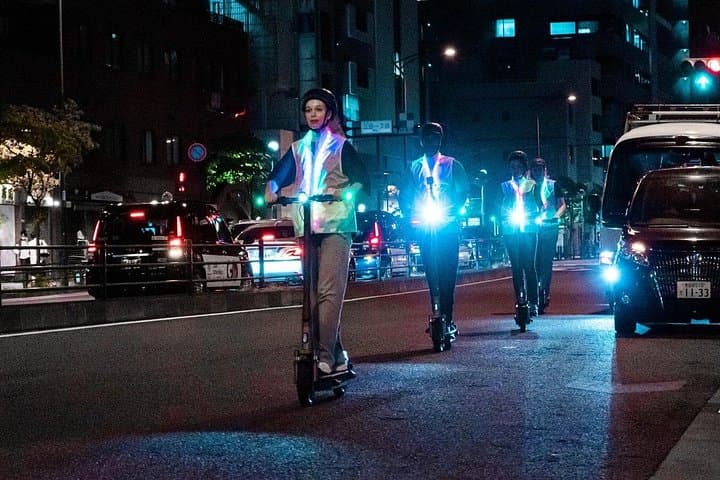
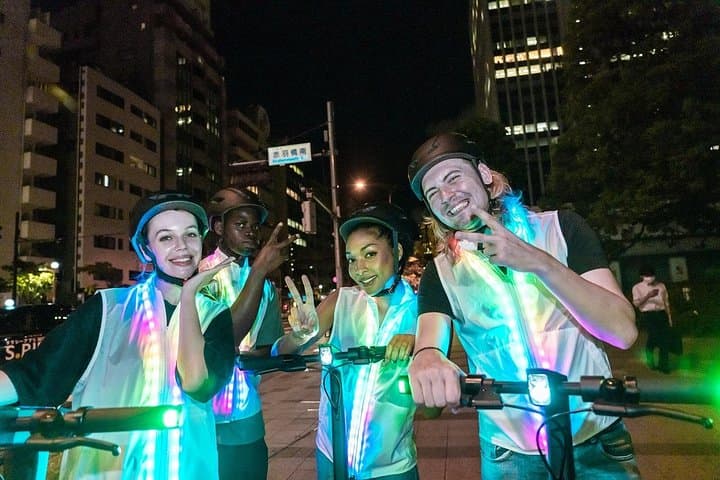
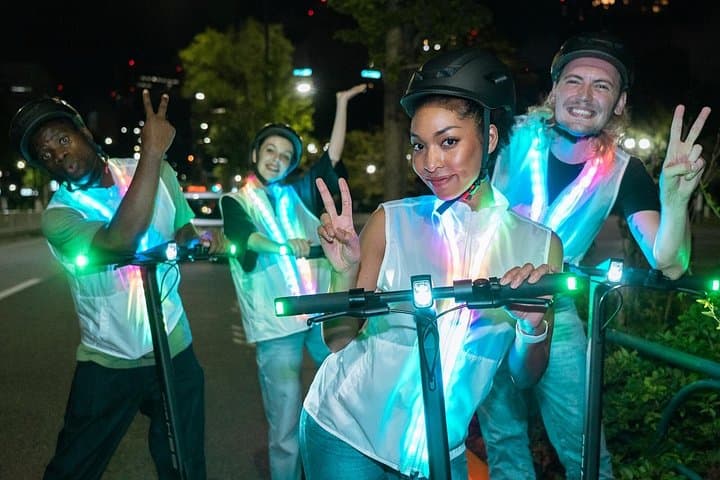
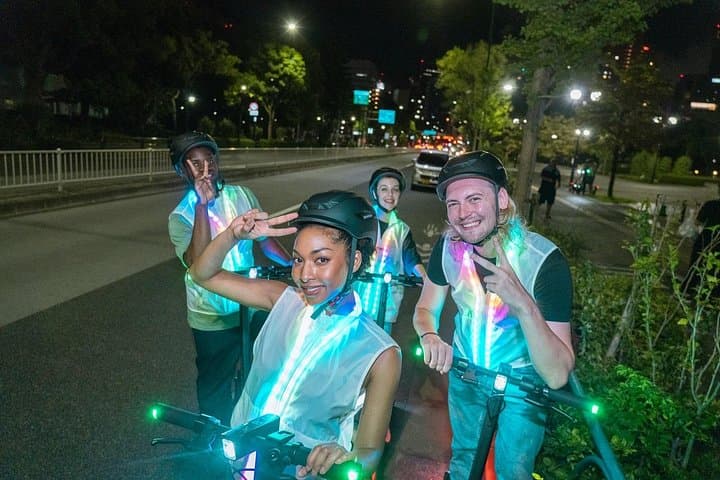
The city lights of Shibuya pulse as you push off on an e-scooter, the neon reflecting on wet pavement while traffic and pedestrians form patterns around you. In two hours you’ll move from the frenetic geometry of Shibuya Crossing into the calmer shade of tree-lined avenues and the torii gate framing Meiji Shrine, each stop offering a new photographic angle and a different pace.
The city lights of Shibuya pulse as you push off on an e-scooter, the neon reflecting on wet pavement while traffic and pedestrians form patterns around you. In two hours you’ll move from the frenetic geometry of Shibuya Crossing into the calmer shade of tree-lined avenues and the torii gate framing Meiji Shrine, each stop offering a new photographic angle and a different pace.
Shibuya grew from a riverside village into Tokyo’s modern crossroads during the 20th century; Meiji Shrine, completed in 1920, anchors the area with Shinto formality and cedar groves that feel centuries-old compared to the glass towers nearby. The route crosses varied urban geology—reclaimed river terraces, paved boulevards, and parks where ginkgo trees line Gaien and turn gold in autumn.
Culturally the ride contrasts Tokyo’s showmanship with quieter ritual: vending machines and storefronts give way to gravel paths and ritual purification at the shrine. Local guides point out photo angles that capture both motion and stillness: crosswalks framed by building facades, and shrine gates isolating sky and timber.
Practical guidance: the tour runs about 2 hours at regulated speeds (up to 20 km/h). Wear closed-toe shoes, bring a compact rain layer and a charged phone for photos. Follow your guide, keep to bike lanes where available, and dismount in pedestrian-heavy zones and shrine grounds. Morning or early evening sessions avoid the highest crowds and give cleaner light for photos.