THE ADVENTURE COLLECTIVE® · Independent discovery and booking for outdoor travel

Walk the grounds of Edo Castle with a private guide on a 90-minute tour of the Imperial Palace. Explore historic gates, moats and gardens while learning how Tokyo’s civic center evolved from samurai fortress to imperial residence.
Walk the grounds of Edo Castle with a private guide on a 90-minute tour of the Imperial Palace. Explore historic gates, moats and gardens while learning how Tokyo’s civic center evolved from samurai fortress to imperial residence.
Morning light slants over stone walls as the city hums beyond the trees; you step through a gate once watched by samurai and feel Tokyo slow to the pace of the palace grounds.
Verified experiences and guided adventures in the surrounding area.
Operated by Trip Port · Tokyo, Tokyo
Morning light slants over stone walls as the city hums beyond the trees; you step through a gate once watched by samurai and feel Tokyo slow to the pace of the palace grounds.
This private 90-minute walk follows the footprint of Edo Castle, tracing moats, restored gates and gardens where imperial ceremony and urban life overlap. Guides lay out the palace’s arc—from a feudal stronghold in the Tokugawa era to the modern Imperial residence—and point out surviving masonry, the layered defensive design and later Meiji-era adaptations.
Geologically the site sits on low terrace plains with engineered moats and leveled courtyards rather than dramatic relief; the drama is human-made, a city’s long negotiations with water and stone. Culturally, the palace remains a working symbol of Japan’s continuity: restricted areas, ceremonial bridges and seasonal plantings all reflect protocols that shape how the public experiences the site.
Practical guidance is straightforward: the route is mostly paved with short steps at some gates, accessible for most walkers and stroller-friendly in parts. Wear supportive shoes, bring a light rain layer in changeable weather, and carry a bottle—the tour moves at a steady, explanatory pace with photo stops at Nijubashi Bridge and the East Gardens viewpoint.
Respect restricted zones and follow your guide’s directions; photography is welcome in public areas but not inside official buildings. A private tour trims navigation time and adds context, turning stones and waterways into readable chapters of Tokyo’s past amid the modern skyline.
Meeting instructions are provided at booking; most tours meet at a designated gate near the Imperial Palace moats within easy reach of Tokyo Station or Otemachi subway exits.
Yes—parts of the route are stroller-accessible, though some historic gates have short steps; contact the operator for specifics with very young children.
Photography is allowed in public areas and at viewpoints like Nijubashi Bridge, but not inside official residences or restricted ceremonial spaces—follow your guide’s direction.
The tour is generally suitable for those with limited mobility on paved sections, but some gates and routes may present obstacles; verify accessibility needs when booking.
Trip Port operates guided outdoor trips and adventures with an emphasis on safety, stewardship, and memorable experiences.
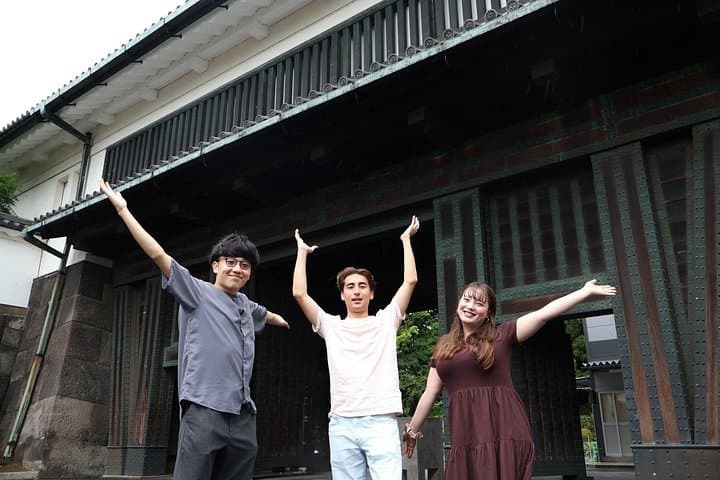

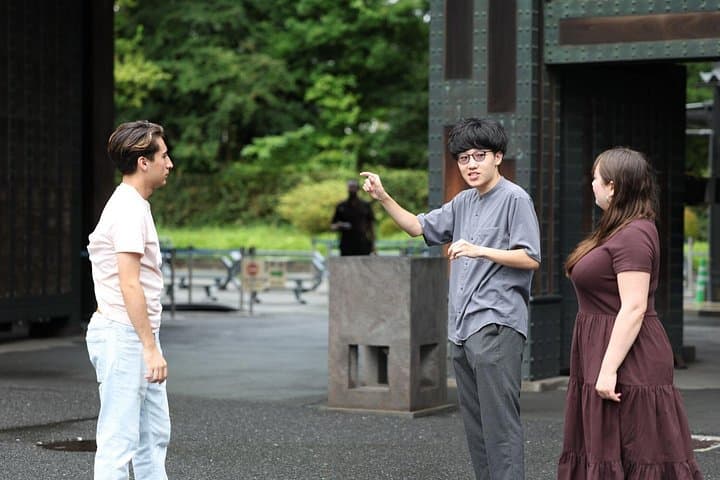

Morning light slants over stone walls as the city hums beyond the trees; you step through a gate once watched by samurai and feel Tokyo slow to the pace of the palace grounds.
Morning light slants over stone walls as the city hums beyond the trees; you step through a gate once watched by samurai and feel Tokyo slow to the pace of the palace grounds.
This private 90-minute walk follows the footprint of Edo Castle, tracing moats, restored gates and gardens where imperial ceremony and urban life overlap. Guides lay out the palace’s arc—from a feudal stronghold in the Tokugawa era to the modern Imperial residence—and point out surviving masonry, the layered defensive design and later Meiji-era adaptations.
Geologically the site sits on low terrace plains with engineered moats and leveled courtyards rather than dramatic relief; the drama is human-made, a city’s long negotiations with water and stone. Culturally, the palace remains a working symbol of Japan’s continuity: restricted areas, ceremonial bridges and seasonal plantings all reflect protocols that shape how the public experiences the site.
Practical guidance is straightforward: the route is mostly paved with short steps at some gates, accessible for most walkers and stroller-friendly in parts. Wear supportive shoes, bring a light rain layer in changeable weather, and carry a bottle—the tour moves at a steady, explanatory pace with photo stops at Nijubashi Bridge and the East Gardens viewpoint.
Respect restricted zones and follow your guide’s directions; photography is welcome in public areas but not inside official buildings. A private tour trims navigation time and adds context, turning stones and waterways into readable chapters of Tokyo’s past amid the modern skyline.