THE ADVENTURE COLLECTIVE® · Independent discovery and booking for outdoor travel

Drive a life‑size Tomica EV around Lake Kawaguchiko with a local guide and staged photo stops framed by Mount Fuji. This three‑hour, low‑effort tour pairs playful vehicles with classic lakeside viewpoints and straightforward logistics.
Drive a life‑size Tomica EV around Lake Kawaguchiko with a local guide and staged photo stops framed by Mount Fuji. This three‑hour, low‑effort tour pairs playful vehicles with classic lakeside viewpoints and straightforward logistics.
Morning light pools on the tiny hood of a full‑size Tomica EV as visitors gather at Kawaguchiko’s base camp. The cars look like toys but handle like compact electric vehicles — the guide briefs the group, checks international permits, and then the parade slips onto narrow lakeside roads with Mount Fuji watching every turn.
Verified experiences and guided adventures in the surrounding area.
Operated by Fuji Go Q tours · Fujikawaguchiko, Yamanashi
Morning light pools on the tiny hood of a full‑size Tomica EV as visitors gather at Kawaguchiko’s base camp. The cars look like toys but handle like compact electric vehicles — the guide briefs the group, checks international permits, and then the parade slips onto narrow lakeside roads with Mount Fuji watching every turn.
Lake Kawaguchiko sits on the northern edge of the Fuji Five Lakes, cut from volcanic episodes that built Fuji’s lower slopes and filled basins with glacial and lahar deposits. The lakeside villages grew around fishing, hot springs and pilgrimage routes; today they mix ryokan culture with souvenir shops and seasonal flower displays, especially lavender in August.
The route focuses on accessible viewpoints: Yagisaki Park for the small floating shrine in low-water months, quiet neighborhood shrines, and bridge crossings with framed Fuji vistas. Local guides time stops for light, composition and short costume photo sessions — the operator even provides playful accessories for memorable shots.
Practicalities are straightforward: the tour lasts roughly three hours, requires a valid International Driving Permit per the Geneva Convention to drive (passengers welcome without one), and runs on public and quiet local roads where etiquette and yielding to larger vehicles matter. Bring a charged phone for photos, wear closed shoes for quick entry/exit, and plan arrivals around sunrise or late afternoon for softer light. Weather can change fast near Fuji; a light shell and layered clothing make the experience comfortable year‑round.
You must present a valid International Driving Permit (booklet) recognized in Japan to drive; otherwise you can join as a passenger and participate in photo sessions.
The tour runs about three hours and starts/ends near Kawaguchiko Station with a short transfer to the operator’s base camp.
Children can be passengers but check capacity limits and safety seat requirements with the operator in advance.
Tours may be canceled for poor weather; the operator's policy is all sales final but they will cancel if conditions are unsafe and inform guests beforehand.
Fuji Go Q tours operates guided outdoor trips and adventures with an emphasis on safety, stewardship, and memorable experiences.
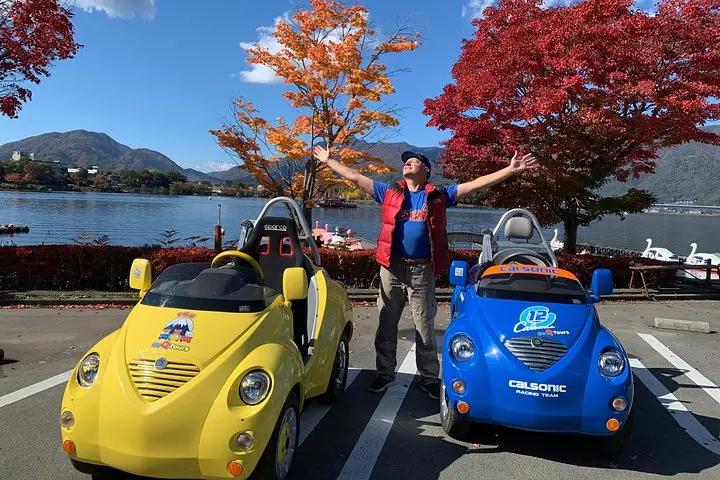
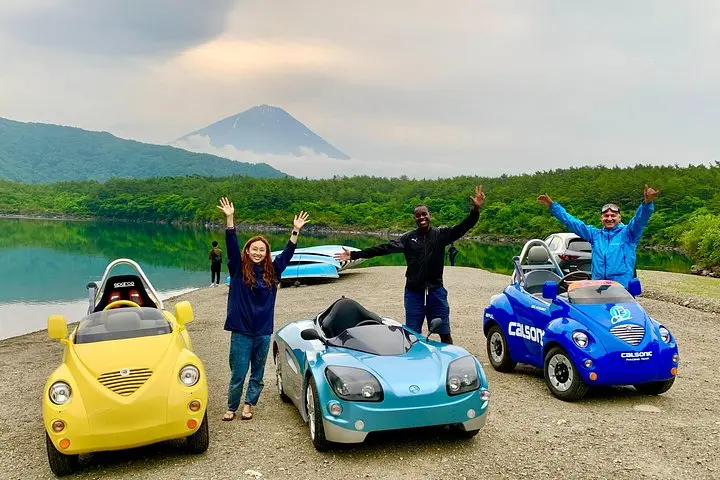
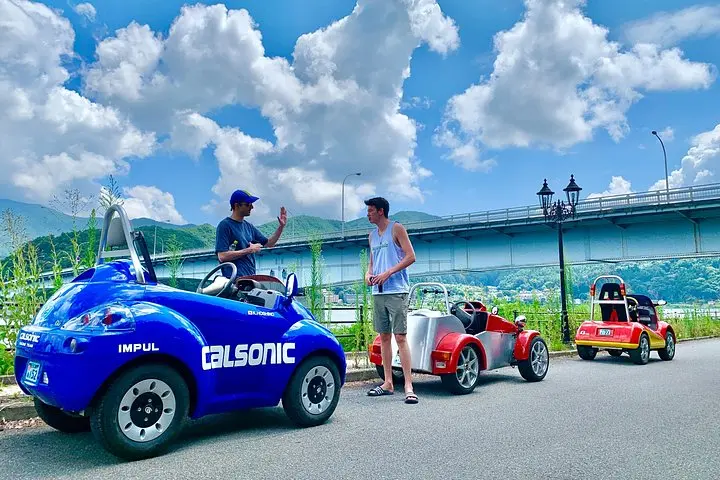
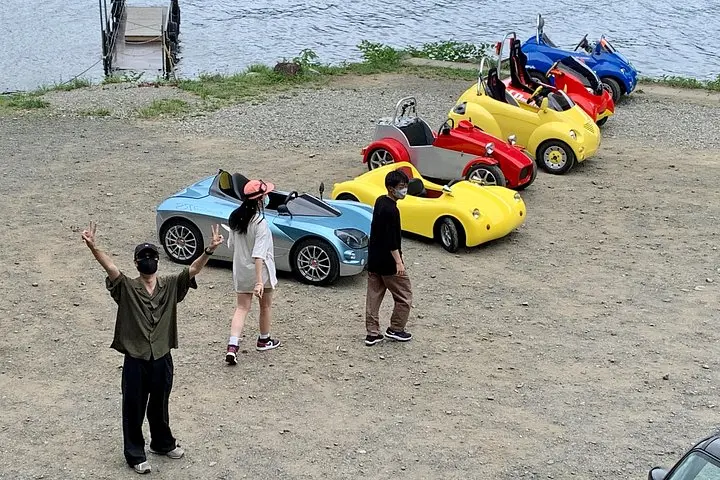
Morning light pools on the tiny hood of a full‑size Tomica EV as visitors gather at Kawaguchiko’s base camp. The cars look like toys but handle like compact electric vehicles — the guide briefs the group, checks international permits, and then the parade slips onto narrow lakeside roads with Mount Fuji watching every turn.
Morning light pools on the tiny hood of a full‑size Tomica EV as visitors gather at Kawaguchiko’s base camp. The cars look like toys but handle like compact electric vehicles — the guide briefs the group, checks international permits, and then the parade slips onto narrow lakeside roads with Mount Fuji watching every turn.
Lake Kawaguchiko sits on the northern edge of the Fuji Five Lakes, cut from volcanic episodes that built Fuji’s lower slopes and filled basins with glacial and lahar deposits. The lakeside villages grew around fishing, hot springs and pilgrimage routes; today they mix ryokan culture with souvenir shops and seasonal flower displays, especially lavender in August.
The route focuses on accessible viewpoints: Yagisaki Park for the small floating shrine in low-water months, quiet neighborhood shrines, and bridge crossings with framed Fuji vistas. Local guides time stops for light, composition and short costume photo sessions — the operator even provides playful accessories for memorable shots.
Practicalities are straightforward: the tour lasts roughly three hours, requires a valid International Driving Permit per the Geneva Convention to drive (passengers welcome without one), and runs on public and quiet local roads where etiquette and yielding to larger vehicles matter. Bring a charged phone for photos, wear closed shoes for quick entry/exit, and plan arrivals around sunrise or late afternoon for softer light. Weather can change fast near Fuji; a light shell and layered clothing make the experience comfortable year‑round.