THE ADVENTURE COLLECTIVE® · Independent discovery and booking for outdoor travel

Cross Tonle Sap on a two-hour boat transfer linking Siem Reap and Phnom Penh. This combined land-and-boat journey offers floating villages, open-water vistas and efficient transport between cities in about 4.5 hours.
Cross Tonle Sap on a two-hour boat transfer linking Siem Reap and Phnom Penh. This combined land-and-boat journey offers floating villages, open-water vistas and efficient transport between cities in about 4.5 hours.
The boat slips away from the pier, oars whispering against brown water as the skyline of rice paddies and stilt houses recede. Tonle Sap widens ahead—an inland sea that pushes and pulls with the seasons—inviting travelers into Cambodia’s water-world where floating villages bob like small towns on a restless canvas.
Verified experiences and guided adventures in the surrounding area.
Operated by Angkor Guide Adventure · Siem Reap, Siem Reap Province
The boat slips away from the pier, oars whispering against brown water as the skyline of rice paddies and stilt houses recede. Tonle Sap widens ahead—an inland sea that pushes and pulls with the seasons—inviting travelers into Cambodia’s water-world where floating villages bob like small towns on a restless canvas.
This route follows a landscape shaped by the Mekong’s flood pulse: shallow lakebeds that swell each rainy season, depositing rich silt that underpins local fisheries. The floating communities here evolved generations ago to live with the water’s mood; you’ll pass houseboats, schools on stilts and market platforms that rise and fall with the tide. The crossing also threads recent history—French colonial trade routes and, more recently, the livelihoods of families who depend on migratory fish runs.
Expect two hours on open water covering roughly 90 km, bookended by comfortable A/C transfers and short land legs (140 km from Phnom Penh side; about 15 km to Chong Kneas from Siem Reap). Guides steer through reed-choked channels and reveal how locals read the lake’s levels and fish behavior.
Practical side: carry sun protection, a lightweight rain layer, and cash for village purchases. Boats have basic facilities; restrooms and shade are intermittent. The operator requires a minimum of four passengers and offers hotel pick-up in both cities—plan departures early to avoid midday heat and check seasonal water levels during the rainy months. This crossing is an efficient, scenic connector between Siem Reap and Phnom Penh and a clear window into Cambodia’s living waterways.
The open-water portion is about 90 km and takes roughly 2 hours; the full door-to-door service is around 4.5 hours.
Many components are wheelchair and stroller accessible, but boarding small boats involves steps and some uneven surfaces—advise the operator of needs in advance.
The operator may contact you with alternative options, reschedule, or offer a refund; check the booking policy for 24‑hour cancellation terms.
Facilities are basic; bring water and snacks — drinking water is provided in the transfer but onboard amenities vary.
Angkor Guide Adventure operates guided outdoor trips and adventures with an emphasis on safety, stewardship, and memorable experiences.
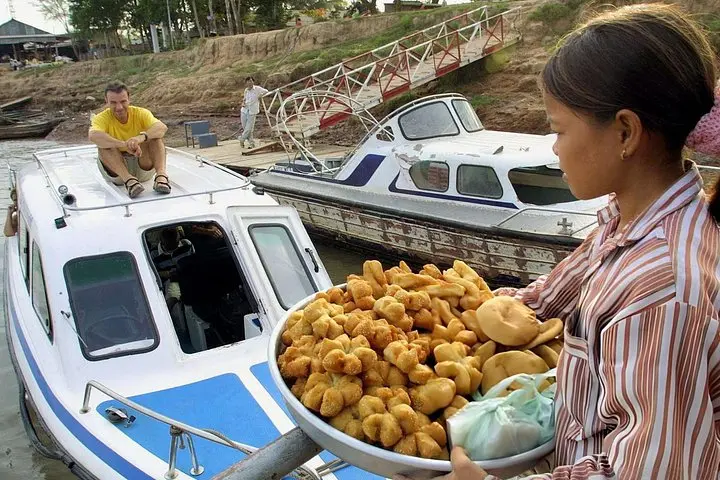
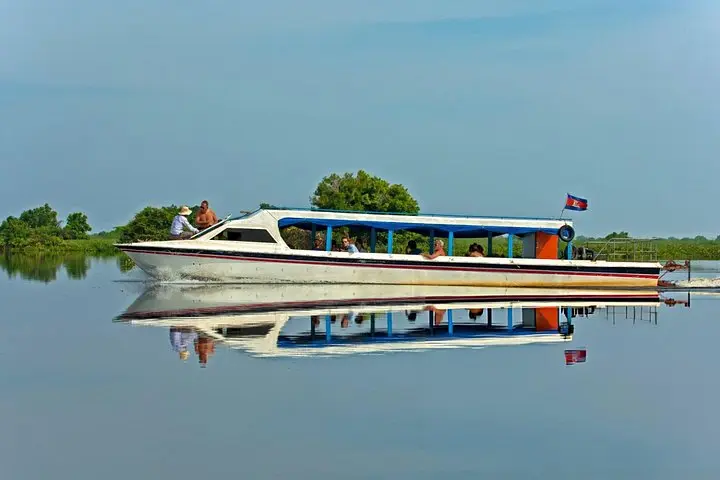
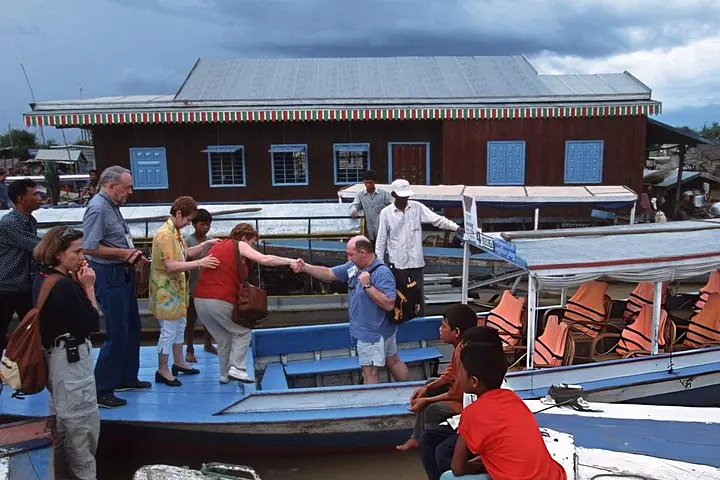
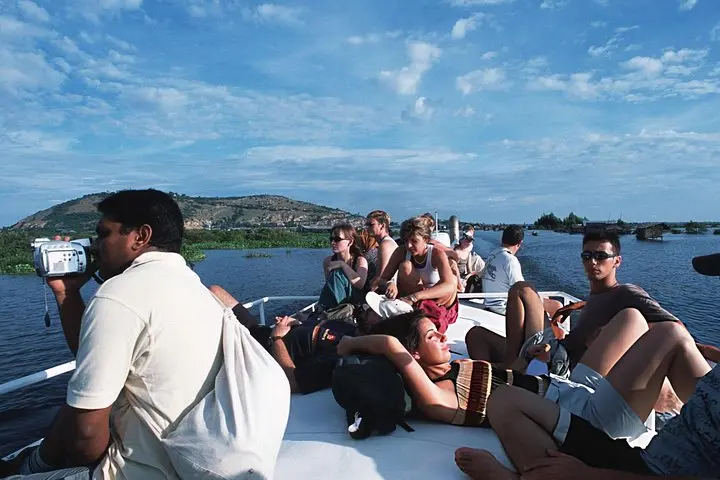
The boat slips away from the pier, oars whispering against brown water as the skyline of rice paddies and stilt houses recede. Tonle Sap widens ahead—an inland sea that pushes and pulls with the seasons—inviting travelers into Cambodia’s water-world where floating villages bob like small towns on a restless canvas.
The boat slips away from the pier, oars whispering against brown water as the skyline of rice paddies and stilt houses recede. Tonle Sap widens ahead—an inland sea that pushes and pulls with the seasons—inviting travelers into Cambodia’s water-world where floating villages bob like small towns on a restless canvas.
This route follows a landscape shaped by the Mekong’s flood pulse: shallow lakebeds that swell each rainy season, depositing rich silt that underpins local fisheries. The floating communities here evolved generations ago to live with the water’s mood; you’ll pass houseboats, schools on stilts and market platforms that rise and fall with the tide. The crossing also threads recent history—French colonial trade routes and, more recently, the livelihoods of families who depend on migratory fish runs.
Expect two hours on open water covering roughly 90 km, bookended by comfortable A/C transfers and short land legs (140 km from Phnom Penh side; about 15 km to Chong Kneas from Siem Reap). Guides steer through reed-choked channels and reveal how locals read the lake’s levels and fish behavior.
Practical side: carry sun protection, a lightweight rain layer, and cash for village purchases. Boats have basic facilities; restrooms and shade are intermittent. The operator requires a minimum of four passengers and offers hotel pick-up in both cities—plan departures early to avoid midday heat and check seasonal water levels during the rainy months. This crossing is an efficient, scenic connector between Siem Reap and Phnom Penh and a clear window into Cambodia’s living waterways.