THE ADVENTURE COLLECTIVE® · Independent discovery and booking for outdoor travel

Trade Darwin for sandstone cliffs, billabongs and plunge pools on this 5-day 4WD camping safari. Hike to waterfalls, cruise Katherine Gorge, and stand beneath some of Australia’s oldest rock art while sleeping in permanent safari tents under the southern stars.
Trade Darwin for sandstone cliffs, billabongs and plunge pools on this 5-day 4WD camping safari. Hike to waterfalls, cruise Katherine Gorge, and stand beneath some of Australia’s oldest rock art while sleeping in permanent safari tents under the southern stars.
Dawn in Darwin is hot and still; the town yawns as a single 4WD truck lines up outside the Travelodge, packed with canvas, cold water and a small band of travelers ready to trade city streets for sandstone escarpments and plunge pools. By midmorning the Top End opens up — long floodplain vistas, pandanus-fringed billabongs that dare you to peer into their shallows, and sandstone cliffs that hold millennia of stories in ochre paint.
Verified experiences and guided adventures in the surrounding area.
Operated by Autopia Tours · Darwin, Northern Territory
Dawn in Darwin is hot and still; the town yawns as a single 4WD truck lines up outside the Travelodge, packed with canvas, cold water and a small band of travelers ready to trade city streets for sandstone escarpments and plunge pools. By midmorning the Top End opens up — long floodplain vistas, pandanus-fringed billabongs that dare you to peer into their shallows, and sandstone cliffs that hold millennia of stories in ochre paint.
Over five days this trip threads the major chapters of the Top End: Kakadu's ancient rock art and wetland wildlife, the cathedral walls of Nitmiluk (Katherine) Gorge, and the cool cascades of Litchfield. Geologically the region is old country — sandstone plateaus carved by seasonal torrents into sheer escarpments and plunge pools. Culturally, you move through Bininj and Jawoyn country; the rock shelters at Ubirr and Burrungkuy contain some of the best-preserved Aboriginal paintings on the continent and are living sites where stories are still told.
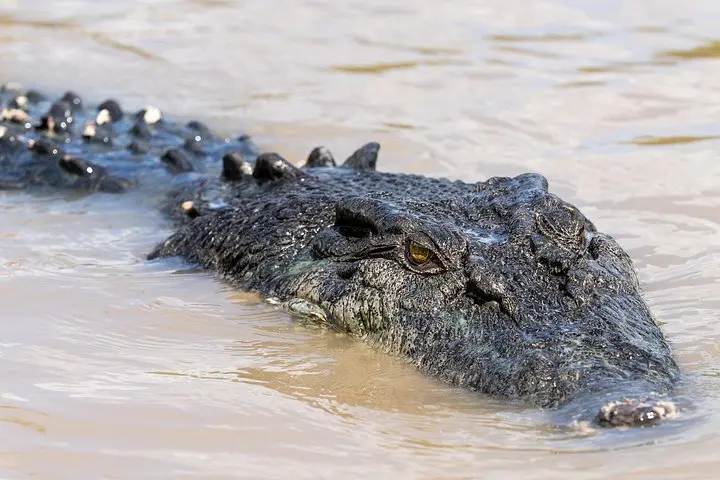
Expect contrasts: coastal wetland ecology with saltwater crocodiles that patrol river mouths; inland monsoon rainforest pockets that explode with green after rain; and termite-built architecture on the plains. Guides are accredited outback driver-guides who interpret Dreaming stories and point out the ecology that keeps this landscape working, from seasonal water cycles to the role of fire.
Practically, this is a 4WD camping safari with comfort in mind. You’ll sleep in permanent safari tents or single swags at private campsites and share meals prepared in an enclosed camp kitchen. Daily walking distances are short but often steep: plan for 1–4 km walks each day, with an overall walking workload of roughly 9–11 km across the trip. Driving legs are long — a typical day can include 150–470 km transfer distances and off-road sections of at least 40 km each way into remote waterfalls.
Fitness matters: several hikes involve rocky scrambling in direct sun and high humidity. Bring high-traction footwear, a hydration system (2–3 L daily), broad-spectrum sun protection and strong insect repellent. Be prepared to assist with communal camp duties — it’s part of the rhythm of bush travel and a good way to meet fellow travelers.
Timing is everything: the dry season (May–October) is the most reliable window for access to waterfalls and gorges; the wet season may close tracks and swimming holes. Always follow your guide’s safety briefings around water — crocodiles are a real presence in the Top End. With sensible preparation this itinerary delivers a compact, active survey of the Top End’s dramatic landscapes, ancient culture and wild waterways.
Meet outside The Leea Darwin Hotel (formerly Travelodge), 64 Cavenagh St, at 6:30–7:00 am on day one—don’t wait in the foyer or you risk missing the bus.
Walks range from 1–4 km daily with rocky and steep sections; a moderate to advanced fitness level is recommended and some days include up to grade 5/6 terrain.
Guides will advise approved swimming holes; never swim in areas that are not explicitly designated croc-safe and signposted as such.
Each traveler is limited to one 15 kg travel bag and one 5 kg day bag due to limited vehicle storage.
Yes if advised at booking—remote travel limits last-minute sourcing, so notify your agent of allergies or special diets ahead of time.
Children 8–17 must be accompanied by an adult; not recommended for infants or mobility-impaired travelers due to terrain and vehicle access.
Autopia Tours operates guided outdoor trips and adventures with an emphasis on safety, stewardship, and memorable experiences.
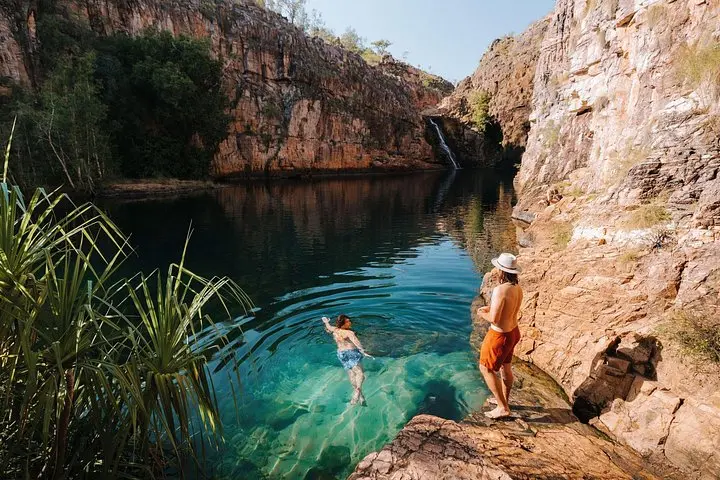
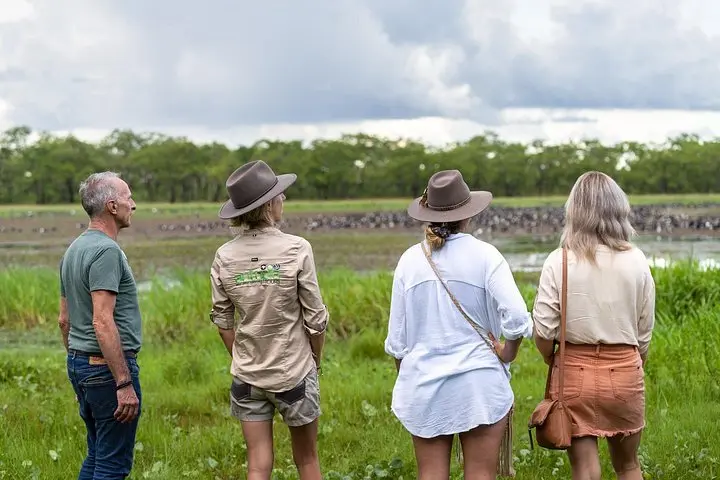
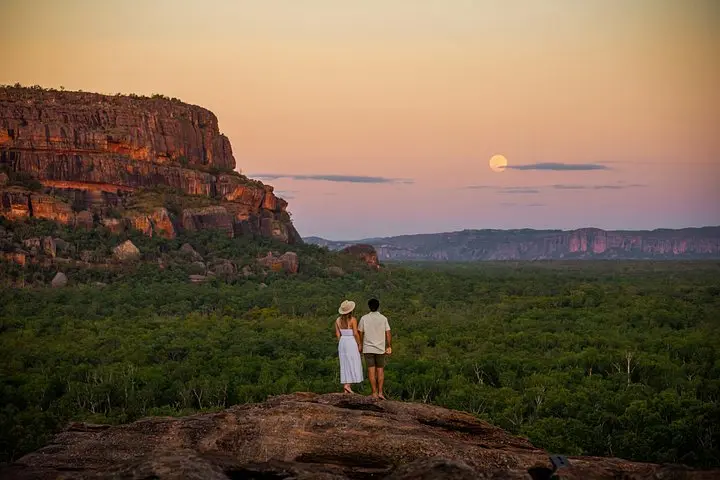
Dawn in Darwin is hot and still; the town yawns as a single 4WD truck lines up outside the Travelodge, packed with canvas, cold water and a small band of travelers ready to trade city streets for sandstone escarpments and plunge pools. By midmorning the Top End opens up — long floodplain vistas, pandanus-fringed billabongs that dare you to peer into their shallows, and sandstone cliffs that hold millennia of stories in ochre paint.
Dawn in Darwin is hot and still; the town yawns as a single 4WD truck lines up outside the Travelodge, packed with canvas, cold water and a small band of travelers ready to trade city streets for sandstone escarpments and plunge pools. By midmorning the Top End opens up — long floodplain vistas, pandanus-fringed billabongs that dare you to peer into their shallows, and sandstone cliffs that hold millennia of stories in ochre paint.
Over five days this trip threads the major chapters of the Top End: Kakadu's ancient rock art and wetland wildlife, the cathedral walls of Nitmiluk (Katherine) Gorge, and the cool cascades of Litchfield. Geologically the region is old country — sandstone plateaus carved by seasonal torrents into sheer escarpments and plunge pools. Culturally, you move through Bininj and Jawoyn country; the rock shelters at Ubirr and Burrungkuy contain some of the best-preserved Aboriginal paintings on the continent and are living sites where stories are still told.
Expect contrasts: coastal wetland ecology with saltwater crocodiles that patrol river mouths; inland monsoon rainforest pockets that explode with green after rain; and termite-built architecture on the plains. Guides are accredited outback driver-guides who interpret Dreaming stories and point out the ecology that keeps this landscape working, from seasonal water cycles to the role of fire.
Practically, this is a 4WD camping safari with comfort in mind. You’ll sleep in permanent safari tents or single swags at private campsites and share meals prepared in an enclosed camp kitchen. Daily walking distances are short but often steep: plan for 1–4 km walks each day, with an overall walking workload of roughly 9–11 km across the trip. Driving legs are long — a typical day can include 150–470 km transfer distances and off-road sections of at least 40 km each way into remote waterfalls.
Fitness matters: several hikes involve rocky scrambling in direct sun and high humidity. Bring high-traction footwear, a hydration system (2–3 L daily), broad-spectrum sun protection and strong insect repellent. Be prepared to assist with communal camp duties — it’s part of the rhythm of bush travel and a good way to meet fellow travelers.
Timing is everything: the dry season (May–October) is the most reliable window for access to waterfalls and gorges; the wet season may close tracks and swimming holes. Always follow your guide’s safety briefings around water — crocodiles are a real presence in the Top End. With sensible preparation this itinerary delivers a compact, active survey of the Top End’s dramatic landscapes, ancient culture and wild waterways.