THE ADVENTURE COLLECTIVE® · Independent discovery and booking for outdoor travel

Drive to the furthest reaches of mainland Britain on a private day tour through Caithness. From the John O’ Groats sign to Duncansby Stacks, castles and cliff-top lighthouses, this itinerary pairs dramatic coastal geology with maritime history.
Drive to the furthest reaches of mainland Britain on a private day tour through Caithness. From the John O’ Groats sign to Duncansby Stacks, castles and cliff-top lighthouses, this itinerary pairs dramatic coastal geology with maritime history.
A stiff wind off the Pentland Firth meets the road as you round the headland toward John O’ Groats — cliffs loom, sea-spray flecks the air, and the iconic signpost waits for a quick photo. The private tour moves at a deliberate pace: short walks to viewpoints, pauses at ruined harbours, and time to let the far northern light open the coastline.
Verified experiences and guided adventures in the surrounding area.
Operated by Highland Guided Tours · John O' Groats, Scotland
A stiff wind off the Pentland Firth meets the road as you round the headland toward John O’ Groats — cliffs loom, sea-spray flecks the air, and the iconic signpost waits for a quick photo. The private tour moves at a deliberate pace: short walks to viewpoints, pauses at ruined harbours, and time to let the far northern light open the coastline.
This stretch of Caithness records a tectonic story in raw stone — fractured sandstone and ancient flagstone worn by ice and sea — while human history layers Viking settlements, herring ports and estate castles like Dunrobin and the Castle of Mey. The Duncansby Stacks and Duncansby Head Lighthouse stand as geological punctuation marks, carved by relentless waves and favoured by seabirds whose calls animate the cliffs.
Culturally, Wick and Scrabster speak of maritime trade and whisky; Old Pulteney’s legacy is tied to the town’s fishing boom. Expect local guides who can point out the Sutherland clan history and explain life where sea and moorland meet.
Practical guidance: dress for wind and rain, allow time for photography and short coastal walks, and plan fuel and comfort stops — the northern roads are remote. The tour’s private-vehicle format makes it accessible for varied fitness levels, but cliff edges and steep steps (Whaligoe) require steady footwear and caution. Bring binoculars for seabirds and seals; windows on the Pentland Firth sometimes reveal porpoises and, in season, cetaceans. With basic planning — layered clothing, water, and a charged camera — this northern circuit delivers big scenery and close-up history in a single long day.
Tour length varies by pickup: typical departures from Inverness run around 11 hours; Scrabster departures are shorter — confirm your pickup location when booking.
Some castle visits (Dunrobin, Castle of Mey) may require separate admission — the itinerary notes when visits are included or optional depending on departure and season.
Yes; the tour is private and paced, suitable for all fitness levels, though cliff walks and Whaligoe Steps can be challenging for limited mobility.
No — sightings of puffins, seals and whales depend on season and weather; binoculars improve your chances but sightings are never guaranteed.
Highland Guided Tours operates guided outdoor trips and adventures with an emphasis on safety, stewardship, and memorable experiences.



A stiff wind off the Pentland Firth meets the road as you round the headland toward John O’ Groats — cliffs loom, sea-spray flecks the air, and the iconic signpost waits for a quick photo. The private tour moves at a deliberate pace: short walks to viewpoints, pauses at ruined harbours, and time to let the far northern light open the coastline.
A stiff wind off the Pentland Firth meets the road as you round the headland toward John O’ Groats — cliffs loom, sea-spray flecks the air, and the iconic signpost waits for a quick photo. The private tour moves at a deliberate pace: short walks to viewpoints, pauses at ruined harbours, and time to let the far northern light open the coastline.
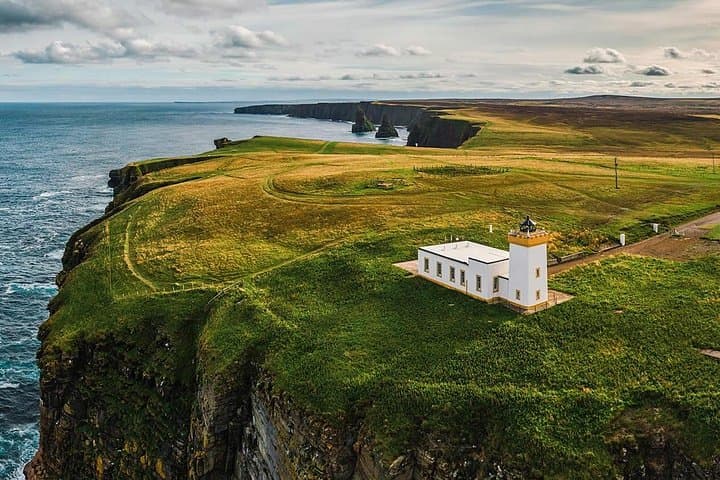
This stretch of Caithness records a tectonic story in raw stone — fractured sandstone and ancient flagstone worn by ice and sea — while human history layers Viking settlements, herring ports and estate castles like Dunrobin and the Castle of Mey. The Duncansby Stacks and Duncansby Head Lighthouse stand as geological punctuation marks, carved by relentless waves and favoured by seabirds whose calls animate the cliffs.
Culturally, Wick and Scrabster speak of maritime trade and whisky; Old Pulteney’s legacy is tied to the town’s fishing boom. Expect local guides who can point out the Sutherland clan history and explain life where sea and moorland meet.
Practical guidance: dress for wind and rain, allow time for photography and short coastal walks, and plan fuel and comfort stops — the northern roads are remote. The tour’s private-vehicle format makes it accessible for varied fitness levels, but cliff edges and steep steps (Whaligoe) require steady footwear and caution. Bring binoculars for seabirds and seals; windows on the Pentland Firth sometimes reveal porpoises and, in season, cetaceans. With basic planning — layered clothing, water, and a charged camera — this northern circuit delivers big scenery and close-up history in a single long day.