THE ADVENTURE COLLECTIVE® · Independent discovery and booking for outdoor travel

Step off the dock and into a rainforest that wakes after sunset—two hours of guided night exploration in Tortuguero reveal frogs, caimans and silent canopy mammals. Learn where to meet, what you’ll likely see, and how to prepare for slippery trails and tropical rain.
Step off the dock and into a rainforest that wakes after sunset—two hours of guided night exploration in Tortuguero reveal frogs, caimans and silent canopy mammals. Learn where to meet, what you’ll likely see, and how to prepare for slippery trails and tropical rain.
The boat drops you at the village dock and the forest smells of warmed earth and wet leaves. As the group slips off the main wharf and follows a narrow trail, the rainforest leans closer; leaves rustle like a chorus, and the dark channels flash with reflected moonlight. Your guide’s flashlight cuts through clumps of bromeliads and palms, and tiny eyes blink back from the understory.
Verified experiences and guided adventures in the surrounding area.
Operated by Tuanis Tour Tortuguero · Tortuguero, Limón
The boat drops you at the village dock and the forest smells of warmed earth and wet leaves. As the group slips off the main wharf and follows a narrow trail, the rainforest leans closer; leaves rustle like a chorus, and the dark channels flash with reflected moonlight. Your guide’s flashlight cuts through clumps of bromeliads and palms, and tiny eyes blink back from the understory.
Tortuguero sits on Costa Rica’s Caribbean edge—lowland tropical rainforest carved by a network of rivers and canals formed by coastal sedimentation. Historically, the area is defined by its relationship to water: indigenous communities, the early banana trade, and, more recently, conservation driven by sea turtle protection. Geology here is recent—sandy soils, peat, and organic layers that feed the dense growth of epiphytes and towering figs.
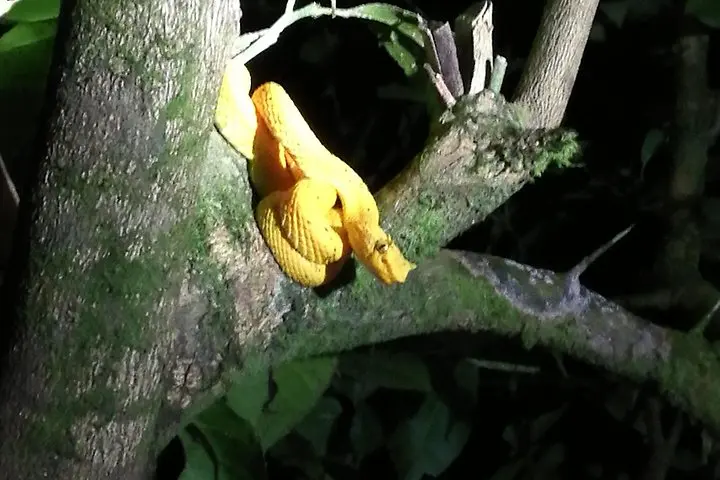
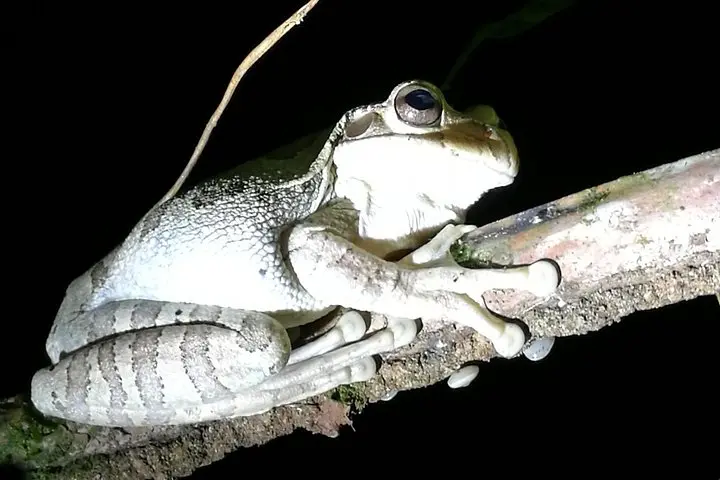
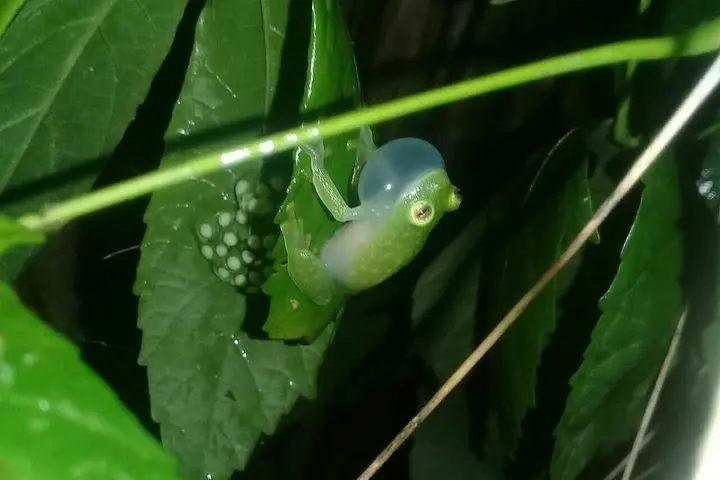
At night the park’s character changes: tree frogs claim the air, crickets keep a steady tempo, and caimans patrol canal edges; sloths and kinkajous move silently above. The experience is sensory—damp soil underfoot, sudden insect choruses, the soft thump of a distant waterfall.
Practical notes: tours meet near the main dock at the Tuanis office 50m south of the wharf; small groups (up to seven) keep disturbance low. The walk lasts about two hours, suitable for most fitness levels, but expect muddy, uneven paths and occasional rain. Wear grippy, waterproof footwear, bring insect repellent and a headlamp, and follow your guide’s instructions—lighting and pace are adjusted to protect wildlife and reveal nocturnal activity.
The experience runs about two hours, starting from the Tuanis Tour Office near the main dock.
Guides are skilled at locating nocturnal species but sightings aren’t guaranteed—expect frogs, insects, caimans, and sometimes arboreal mammals like kinkajous or sloths.
Yes—this tour is listed as suitable for all physical fitness levels, though very young children should be closely supervised and kept close to the group.
Most visitors arrive by boat from La Pavona or the lodge docks; the meeting point is 50 meters south of Tortuguero’s main wharf at the Tuanis Tour Office.
Tuanis Tour Tortuguero operates guided outdoor trips and adventures with an emphasis on safety, stewardship, and memorable experiences.
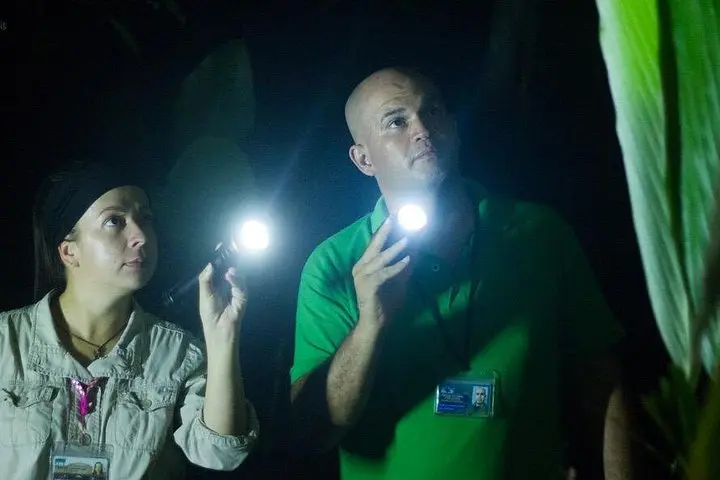
The boat drops you at the village dock and the forest smells of warmed earth and wet leaves. As the group slips off the main wharf and follows a narrow trail, the rainforest leans closer; leaves rustle like a chorus, and the dark channels flash with reflected moonlight. Your guide’s flashlight cuts through clumps of bromeliads and palms, and tiny eyes blink back from the understory.
The boat drops you at the village dock and the forest smells of warmed earth and wet leaves. As the group slips off the main wharf and follows a narrow trail, the rainforest leans closer; leaves rustle like a chorus, and the dark channels flash with reflected moonlight. Your guide’s flashlight cuts through clumps of bromeliads and palms, and tiny eyes blink back from the understory.
Tortuguero sits on Costa Rica’s Caribbean edge—lowland tropical rainforest carved by a network of rivers and canals formed by coastal sedimentation. Historically, the area is defined by its relationship to water: indigenous communities, the early banana trade, and, more recently, conservation driven by sea turtle protection. Geology here is recent—sandy soils, peat, and organic layers that feed the dense growth of epiphytes and towering figs.
At night the park’s character changes: tree frogs claim the air, crickets keep a steady tempo, and caimans patrol canal edges; sloths and kinkajous move silently above. The experience is sensory—damp soil underfoot, sudden insect choruses, the soft thump of a distant waterfall.
Practical notes: tours meet near the main dock at the Tuanis office 50m south of the wharf; small groups (up to seven) keep disturbance low. The walk lasts about two hours, suitable for most fitness levels, but expect muddy, uneven paths and occasional rain. Wear grippy, waterproof footwear, bring insect repellent and a headlamp, and follow your guide’s instructions—lighting and pace are adjusted to protect wildlife and reveal nocturnal activity.