THE ADVENTURE COLLECTIVE® · Independent discovery and booking for outdoor travel

Glide silent canals at dawn after a cup of Costa Rican coffee and watch caimans, toucans and monkeys wake the rainforest. This small-group canoe tour prioritizes quiet encounters and expert interpretation—perfect for early-risers and photographers.
Glide silent canals at dawn after a cup of Costa Rican coffee and watch caimans, toucans and monkeys wake the rainforest. This small-group canoe tour prioritizes quiet encounters and expert interpretation—perfect for early-risers and photographers.
Before the sun clears the mangrove skyline, the village dock smells of strong Costa Rican coffee and wet earth. Guests gather at Tree Coffee House, mugs in hand, as guides fit life jackets and hand over binoculars. By 6:00 a.m. the group slips out in a low, stable paddle canoe; the jungle narrows overhead and the only soundtrack is feathers, distant monkey calls and the quiet push of the paddle.
Verified experiences and guided adventures in the surrounding area.
Operated by Travel Tortuguero. · Tortuguero, Limón
Before the sun clears the mangrove skyline, the village dock smells of strong Costa Rican coffee and wet earth. Guests gather at Tree Coffee House, mugs in hand, as guides fit life jackets and hand over binoculars. By 6:00 a.m. the group slips out in a low, stable paddle canoe; the jungle narrows overhead and the only soundtrack is feathers, distant monkey calls and the quiet push of the paddle.
Tortuguero sits on Costa Rica’s Caribbean coast and grew around fishing and sea-turtle conservation. The park’s lowlands are riverine and swampy, formed by sediments from the San Juan and nearby rivers. The complex of narrow canals, floodplain forest and mangroves creates microhabitats that concentrate birds, reptiles and mammals into viewable corridors accessible only by non-motorized craft.
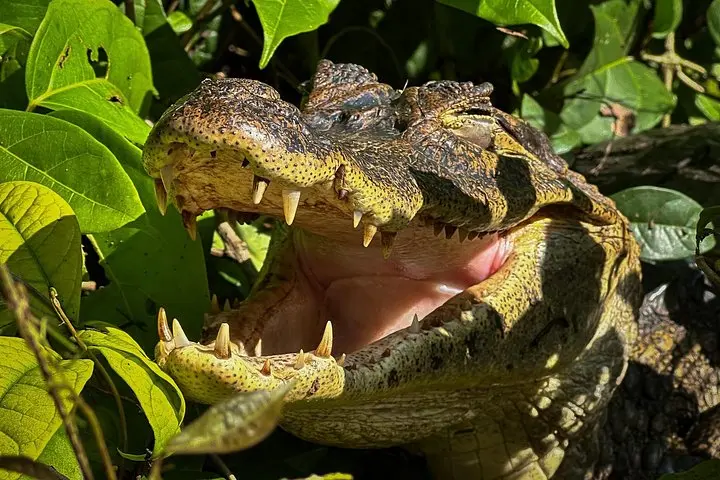
Caimans paddle like dark commas against tannin-stained water, toucans perch like bright punctuation, and howler monkeys mark the canopy with guttural calls. Guides are typically local naturalists who read the subtle sounds and signs of the rainforest and explain nesting cycles, feeding behavior and the park’s protected status.
Practically, expect early starts, stable seating with backrests, and slow paddling for photography. National Park entrance fees are required separately; dress in quick-dry layers, bring insect repellent and a waterproof camera or case. Tours are small—maximum eight guests—so book early, and plan hotel transfers from La Pavona or Tortuguero Village docks. This is a calm, observational trip: go ready to move slowly, listen closely, and let the canals reveal wildlife on their own timetable.
Families are welcome; infants must sit on an adult’s lap. Guides accommodate slow paces, but confirm comfort with early start times.
Yes—life jackets are provided for all guests and can be adjusted for fit.
No—the national park entrance ticket is required but not included in the tour price; purchase it locally or through your operator in advance.
Yes—binoculars and dry bags are provided, but many guests bring their own optics or waterproof cameras for closer, personalized viewing.
Travel Tortuguero. operates guided outdoor trips and adventures with an emphasis on safety, stewardship, and memorable experiences.
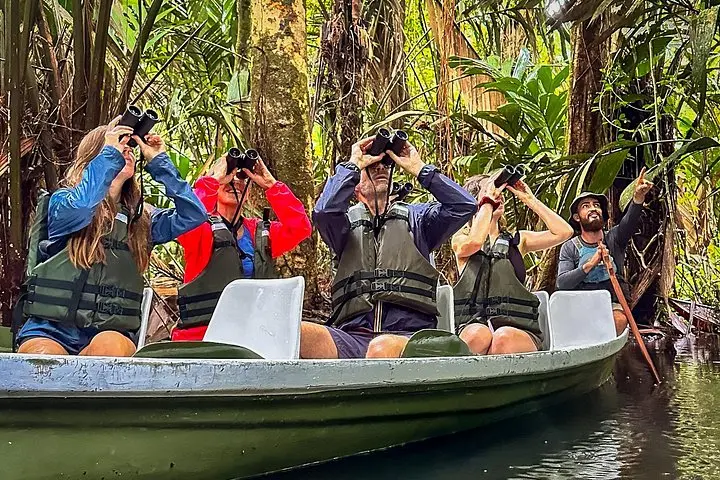
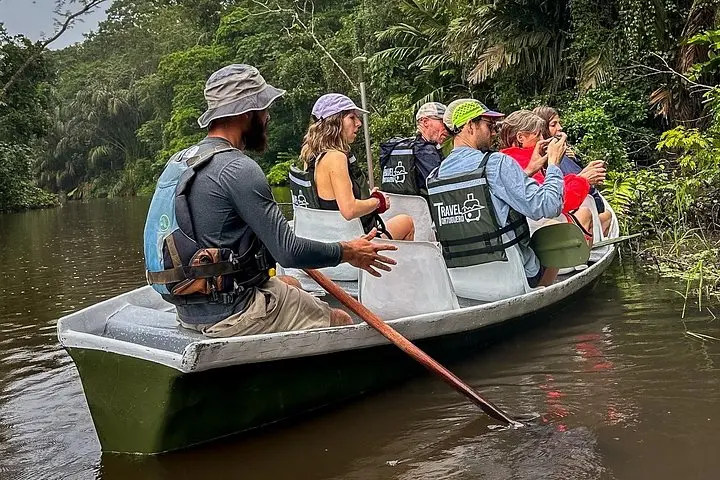
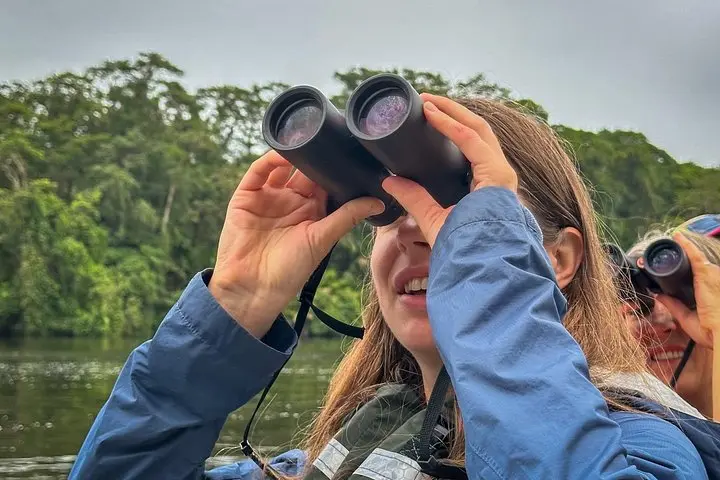
Before the sun clears the mangrove skyline, the village dock smells of strong Costa Rican coffee and wet earth. Guests gather at Tree Coffee House, mugs in hand, as guides fit life jackets and hand over binoculars. By 6:00 a.m. the group slips out in a low, stable paddle canoe; the jungle narrows overhead and the only soundtrack is feathers, distant monkey calls and the quiet push of the paddle.
Before the sun clears the mangrove skyline, the village dock smells of strong Costa Rican coffee and wet earth. Guests gather at Tree Coffee House, mugs in hand, as guides fit life jackets and hand over binoculars. By 6:00 a.m. the group slips out in a low, stable paddle canoe; the jungle narrows overhead and the only soundtrack is feathers, distant monkey calls and the quiet push of the paddle.
Tortuguero sits on Costa Rica’s Caribbean coast and grew around fishing and sea-turtle conservation. The park’s lowlands are riverine and swampy, formed by sediments from the San Juan and nearby rivers. The complex of narrow canals, floodplain forest and mangroves creates microhabitats that concentrate birds, reptiles and mammals into viewable corridors accessible only by non-motorized craft.
Caimans paddle like dark commas against tannin-stained water, toucans perch like bright punctuation, and howler monkeys mark the canopy with guttural calls. Guides are typically local naturalists who read the subtle sounds and signs of the rainforest and explain nesting cycles, feeding behavior and the park’s protected status.
Practically, expect early starts, stable seating with backrests, and slow paddling for photography. National Park entrance fees are required separately; dress in quick-dry layers, bring insect repellent and a waterproof camera or case. Tours are small—maximum eight guests—so book early, and plan hotel transfers from La Pavona or Tortuguero Village docks. This is a calm, observational trip: go ready to move slowly, listen closely, and let the canals reveal wildlife on their own timetable.