THE ADVENTURE COLLECTIVE® · Independent discovery and booking for outdoor travel

Float across Piuray Lagoon in a traditional totora reed boat while local paddlers explain reedcraft, weaving culture, and high-Andean life. This half-day Chinchero experience blends calm paddling with cultural insight—ideal for travelers acclimatizing in Cusco.
Float across Piuray Lagoon in a traditional totora reed boat while local paddlers explain reedcraft, weaving culture, and high-Andean life. This half-day Chinchero experience blends calm paddling with cultural insight—ideal for travelers acclimatizing in Cusco.
The sun lifts slowly over high pasture as you step from a dusty village road onto bulrush banks. The reed hull creaks underfoot; the lagoon breathes, pushing light across water that has supported livelihoods for centuries. On this half-day outing from Cusco you glide in a traditional totora reed boat across Piuray Lagoon, guided by local paddlers who move with practiced, patient strokes.
Verified experiences and guided adventures in the surrounding area.
Operated by Machupicchu USA · Chinchero, Cusco Region
The sun lifts slowly over high pasture as you step from a dusty village road onto bulrush banks. The reed hull creaks underfoot; the lagoon breathes, pushing light across water that has supported livelihoods for centuries. On this half-day outing from Cusco you glide in a traditional totora reed boat across Piuray Lagoon, guided by local paddlers who move with practiced, patient strokes.
Chinchero sits at the edge of the high Andes and remains an active center of Andean textile traditions. Totora reeds—used for boats across the Altiplano and coastal wetlands—anchor the lake’s human history, while the surrounding Andes show glacial geology: folded volcanic and sedimentary layers rising to snow-capped peaks like Veronica and Salkantay. Cultural threads are visible in Pongobamba’s weaving demonstrations and in the Inca terraces still visible on nearby slopes.
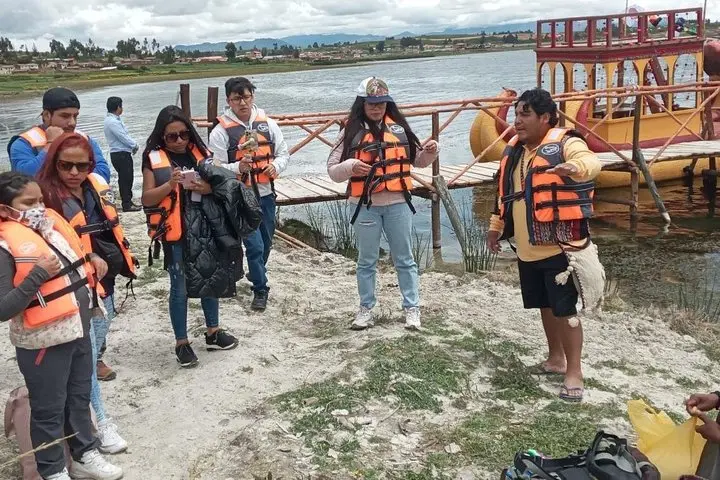
Expect calm paddling, short shore-side talks about reed harvesting and weaving, and broad views that extend to Cusco’s mountain ring. The experience is low-impact and accessible but sits at 3,700 m (12,140 ft), where breath comes measured.
Practical notes: dress in layers for sun and wind, carry water and sun protection, and allow extra time for gentle acclimatization in Cusco. Photography is straightforward—bring a polarizer to cut glare. Respect reed beds and local protocols when stepping ashore, and tip paddlers for private guided experiences. The tour connects easily to other Sacred Valley routes if you plan onward travel to Inca sites or Machu Picchu.
The core totora boat experience and cultural briefing take about 3–4 hours within a half-day (6-hour) program including transfers.
Yes—operators note it’s suitable for most fitness levels, but infants should sit on an adult’s lap and everyone should be steady boarding low boats.
Possibly—Piuray sits at ~3,700 m. Plan to rest in Cusco first, stay hydrated, and speak to your guide if you feel unwell.
Yes—operators often coordinate onward travel; the itinerary notes a connection option to Machu Picchu routes on a subsequent day.
Machupicchu USA operates guided outdoor trips and adventures with an emphasis on safety, stewardship, and memorable experiences.
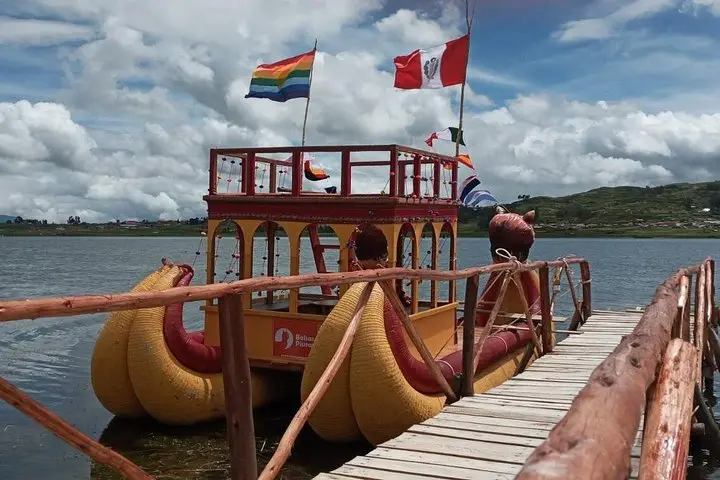
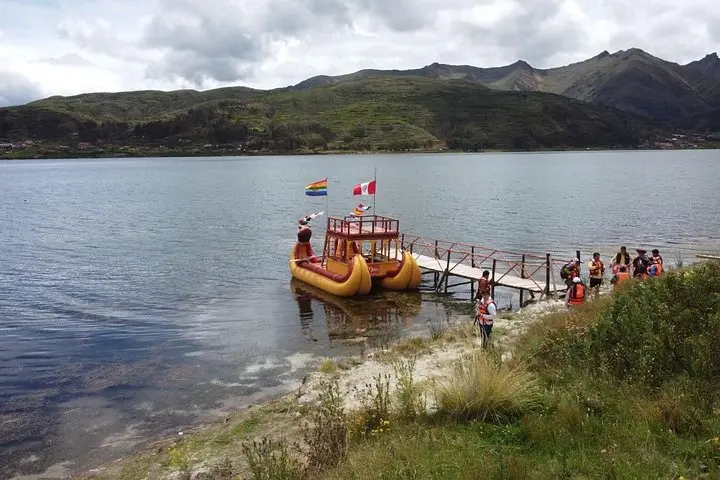
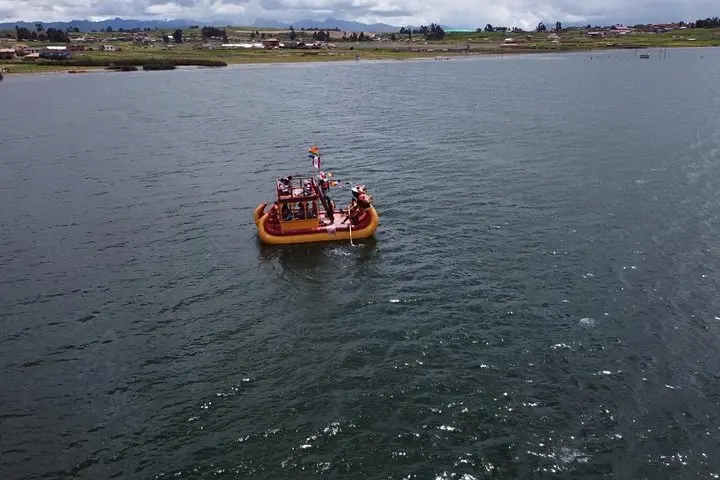
The sun lifts slowly over high pasture as you step from a dusty village road onto bulrush banks. The reed hull creaks underfoot; the lagoon breathes, pushing light across water that has supported livelihoods for centuries. On this half-day outing from Cusco you glide in a traditional totora reed boat across Piuray Lagoon, guided by local paddlers who move with practiced, patient strokes.
The sun lifts slowly over high pasture as you step from a dusty village road onto bulrush banks. The reed hull creaks underfoot; the lagoon breathes, pushing light across water that has supported livelihoods for centuries. On this half-day outing from Cusco you glide in a traditional totora reed boat across Piuray Lagoon, guided by local paddlers who move with practiced, patient strokes.
Chinchero sits at the edge of the high Andes and remains an active center of Andean textile traditions. Totora reeds—used for boats across the Altiplano and coastal wetlands—anchor the lake’s human history, while the surrounding Andes show glacial geology: folded volcanic and sedimentary layers rising to snow-capped peaks like Veronica and Salkantay. Cultural threads are visible in Pongobamba’s weaving demonstrations and in the Inca terraces still visible on nearby slopes.
Expect calm paddling, short shore-side talks about reed harvesting and weaving, and broad views that extend to Cusco’s mountain ring. The experience is low-impact and accessible but sits at 3,700 m (12,140 ft), where breath comes measured.
Practical notes: dress in layers for sun and wind, carry water and sun protection, and allow extra time for gentle acclimatization in Cusco. Photography is straightforward—bring a polarizer to cut glare. Respect reed beds and local protocols when stepping ashore, and tip paddlers for private guided experiences. The tour connects easily to other Sacred Valley routes if you plan onward travel to Inca sites or Machu Picchu.