THE ADVENTURE COLLECTIVE® · Independent discovery and booking for outdoor travel

A hands-on, three-hour guided circuit of Warrenton’s shoreline and Fort Stevens: shipwrecks, coastal batteries, and a peek at the river/ocean collision called the Graveyard of the Pacific. Practical stops, local fishing lore, and a small scavenger hunt make this a compact coastal primer.
A hands-on, three-hour guided circuit of Warrenton’s shoreline and Fort Stevens: shipwrecks, coastal batteries, and a peek at the river/ocean collision called the Graveyard of the Pacific. Practical stops, local fishing lore, and a small scavenger hunt make this a compact coastal primer.
You step out of the air-conditioned van onto wind-scoured sand and salt-bright air — the Columbia River and Pacific Ocean collide here with a low, restless roar. Guides gesture toward the skeletal ribs of the Peter Iredale shipwreck half-buried on Clatsop Spit while gulls wheel above; the scavenger-hunt route threads through the same shoreline Lewis and Clark reached in 1805.
Verified experiences and guided adventures in the surrounding area.
Operated by Onward Adventures · Warrenton, Oregon
You step out of the air-conditioned van onto wind-scoured sand and salt-bright air — the Columbia River and Pacific Ocean collide here with a low, restless roar. Guides gesture toward the skeletal ribs of the Peter Iredale shipwreck half-buried on Clatsop Spit while gulls wheel above; the scavenger-hunt route threads through the same shoreline Lewis and Clark reached in 1805.
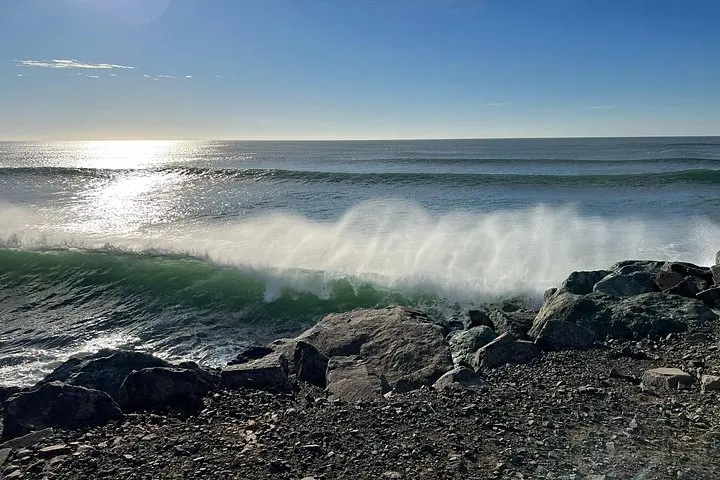
This three-hour circular tour visits Fort Stevens’ Battery Russell and the former Corps of Discovery winter site, explains the coastal geology that makes this stretch the ‘Graveyard of the Pacific,’ and shows how longshore currents and the Columbia’s silty outflow built the jetties. You’ll pass commercial docks where anglers sell crabs off the boats and stop briefly at the South Jetty to watch breakers reconfigure the sand in real time.
Local culture here is maritime and practical — crab pots, Coast Guard history, and small-town seafood economies — and the guide threads in legal basics for recreational crabbing and fishing. Onward Adventures encourages reusable water bottles; active guests receive a sand dollar keepsake as thanks.
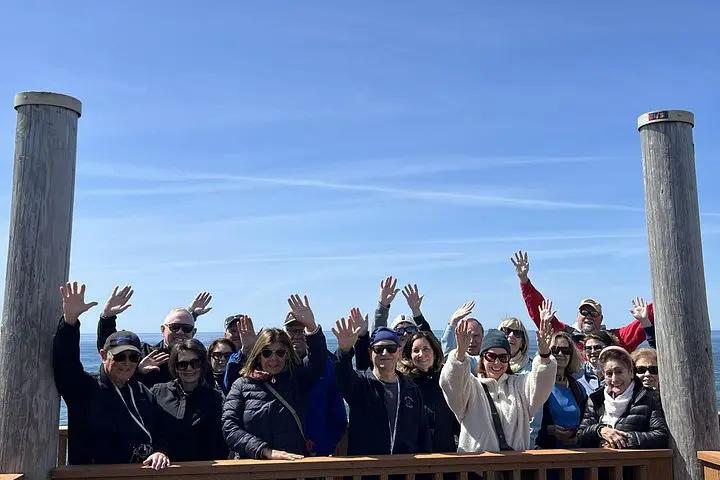
Practicalities: tours run about three hours, operate in groups up to a dozen, and include short on-foot stops plus driving between viewpoints. Wear sturdy shoes for wet sand and windproof layers; tides, wind, and seasonal gray whales affect what you’ll see. Bring a refillable bottle, a camera with a windproof cover, and expect short walks of 10–20 minutes at each stop. The route is engaging for moderately fit travelers who can handle uneven beach terrain and gusty exposed viewpoints.
The tour lasts about three hours and includes several short, guided walks of 10–30 minutes at each stop; most travel between sites is by vehicle.
Children who can handle short beach walks are welcome; the tour requires moderate mobility and is not recommended for those with significant spinal or cardiovascular issues.
The tour uses an air-conditioned vehicle and may offer pickup; the guide may text you on arrival — confirm pickup specifics at booking.
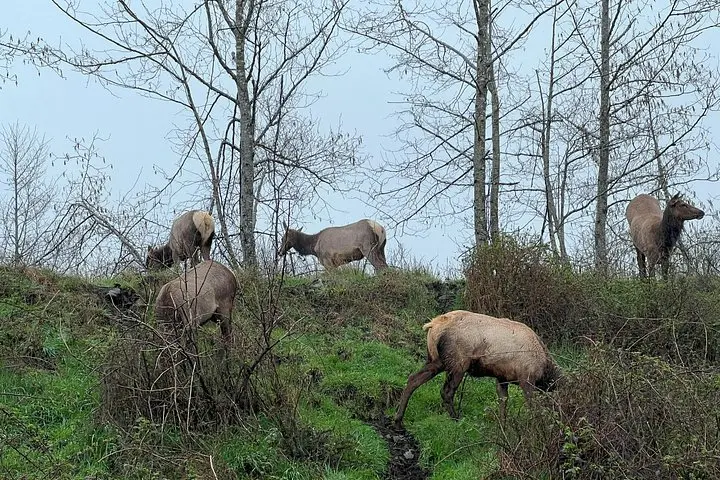
Bring layered clothing, sturdy shoes, sunscreen, and a camera; binoculars are useful for wildlife viewing and tides/wind forecasts inform timing.
Onward Adventures operates guided outdoor trips and adventures with an emphasis on safety, stewardship, and memorable experiences.
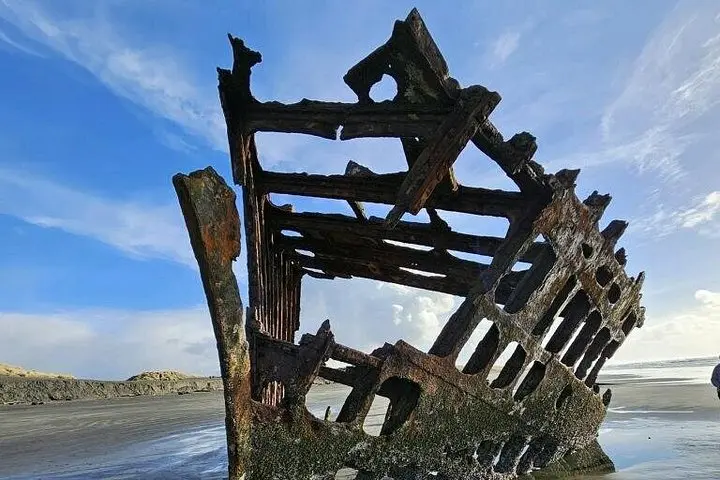
You step out of the air-conditioned van onto wind-scoured sand and salt-bright air — the Columbia River and Pacific Ocean collide here with a low, restless roar. Guides gesture toward the skeletal ribs of the Peter Iredale shipwreck half-buried on Clatsop Spit while gulls wheel above; the scavenger-hunt route threads through the same shoreline Lewis and Clark reached in 1805.
You step out of the air-conditioned van onto wind-scoured sand and salt-bright air — the Columbia River and Pacific Ocean collide here with a low, restless roar. Guides gesture toward the skeletal ribs of the Peter Iredale shipwreck half-buried on Clatsop Spit while gulls wheel above; the scavenger-hunt route threads through the same shoreline Lewis and Clark reached in 1805.
This three-hour circular tour visits Fort Stevens’ Battery Russell and the former Corps of Discovery winter site, explains the coastal geology that makes this stretch the ‘Graveyard of the Pacific,’ and shows how longshore currents and the Columbia’s silty outflow built the jetties. You’ll pass commercial docks where anglers sell crabs off the boats and stop briefly at the South Jetty to watch breakers reconfigure the sand in real time.
Local culture here is maritime and practical — crab pots, Coast Guard history, and small-town seafood economies — and the guide threads in legal basics for recreational crabbing and fishing. Onward Adventures encourages reusable water bottles; active guests receive a sand dollar keepsake as thanks.
Practicalities: tours run about three hours, operate in groups up to a dozen, and include short on-foot stops plus driving between viewpoints. Wear sturdy shoes for wet sand and windproof layers; tides, wind, and seasonal gray whales affect what you’ll see. Bring a refillable bottle, a camera with a windproof cover, and expect short walks of 10–20 minutes at each stop. The route is engaging for moderately fit travelers who can handle uneven beach terrain and gusty exposed viewpoints.