THE ADVENTURE COLLECTIVE® · Independent discovery and booking for outdoor travel

Explore 3.4 km of London history on a smartphone-led scavenger hunt around the Tower of London. This self-guided walk visits 28 locations, pairs local stories with challenges, and takes about 2–3 hours.
Explore 3.4 km of London history on a smartphone-led scavenger hunt around the Tower of London. This self-guided walk visits 28 locations, pairs local stories with challenges, and takes about 2–3 hours.
You step out at Tower Hill with the river’s breath ahead and the Tower’s stone bulk to your left—an urban route that moves from Roman fragments to wartime ruins, from fortified walls to glass-clad skyscrapers across the Thames.
Verified experiences and guided adventures in the surrounding area.
Operated by Tourist Scavenger Hunt · London, England
You step out at Tower Hill with the river’s breath ahead and the Tower’s stone bulk to your left—an urban route that moves from Roman fragments to wartime ruins, from fortified walls to glass-clad skyscrapers across the Thames.
The 3.4 km route threads the Tower of London’s perimeter, crosses Tower Bridge, follows the Queen’s Walk past HMS Belfast, then returns over London Bridge. The path exposes layers of London history: a surviving stretch of the Roman wall at Wakefield Gardens, medieval strongholds retooled as prisons and palaces, the imprint of the Great Fire of 1666, and scars from the Blitz. Geology here is subtle—the Thames’ river terraces shaped where wharves and docks sprang up—and the river itself pushes the city’s pace, ferrying gulls and swans as you go.
This tour is a smartphone-led scavenger hunt: 28 stops, roughly 26 challenges, and no Tower of London entry included. It’s designed for families and independent explorers who want context with movement; you can pause at memorials, read plaques, and answer questions that unlock the next waypoint.
Practical edge: allow 2–3 hours, carry a charged phone with data and a power bank, and wear shoes suited to paved streets and occasional steps. Start early to avoid rush-hour crowds on the bridges and aim for dry weather if you want river views from the arches. The route is largely wheelchair accessible, but some older steps and crowded sidewalks can complicate movement—check local transport links for the easiest access. Bring water, follow traffic signals, and respect memorial sites: this is both a history walk and a living city.
No; this self-guided route walks around the Tower’s exterior but does not include admission—purchase Tower entry separately if you want to go inside.
Begin at Tower Hill (near the Tower Hill Underground). Use the supplied mobile instructions to unlock your first challenge and follow the route at your own pace.
Most of the riverside walk and public squares are wheelchair accessible, but some older sections, narrow sidewalks and bridge approaches may be difficult—plan accordingly.
Yes; the experience is family-friendly with child-appropriate challenges, though supervision is recommended near busy roads and the river.
Tourist Scavenger Hunt operates guided outdoor trips and adventures with an emphasis on safety, stewardship, and memorable experiences.
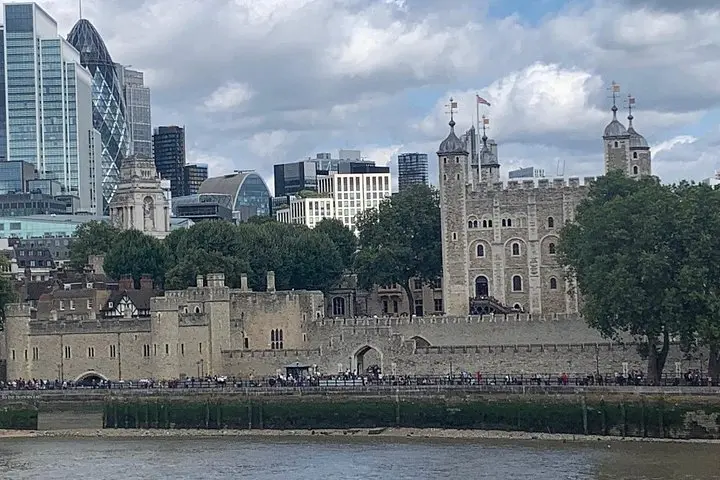



You step out at Tower Hill with the river’s breath ahead and the Tower’s stone bulk to your left—an urban route that moves from Roman fragments to wartime ruins, from fortified walls to glass-clad skyscrapers across the Thames.
You step out at Tower Hill with the river’s breath ahead and the Tower’s stone bulk to your left—an urban route that moves from Roman fragments to wartime ruins, from fortified walls to glass-clad skyscrapers across the Thames.
The 3.4 km route threads the Tower of London’s perimeter, crosses Tower Bridge, follows the Queen’s Walk past HMS Belfast, then returns over London Bridge. The path exposes layers of London history: a surviving stretch of the Roman wall at Wakefield Gardens, medieval strongholds retooled as prisons and palaces, the imprint of the Great Fire of 1666, and scars from the Blitz. Geology here is subtle—the Thames’ river terraces shaped where wharves and docks sprang up—and the river itself pushes the city’s pace, ferrying gulls and swans as you go.
This tour is a smartphone-led scavenger hunt: 28 stops, roughly 26 challenges, and no Tower of London entry included. It’s designed for families and independent explorers who want context with movement; you can pause at memorials, read plaques, and answer questions that unlock the next waypoint.
Practical edge: allow 2–3 hours, carry a charged phone with data and a power bank, and wear shoes suited to paved streets and occasional steps. Start early to avoid rush-hour crowds on the bridges and aim for dry weather if you want river views from the arches. The route is largely wheelchair accessible, but some older steps and crowded sidewalks can complicate movement—check local transport links for the easiest access. Bring water, follow traffic signals, and respect memorial sites: this is both a history walk and a living city.